
Light
Bright Indirect Light
Thrives in bright, indirect sunlight or light shade; harsh direct summer sun can cause sunburn.
 Reference image
 Reference image
Bodenbender's Chin Cactus
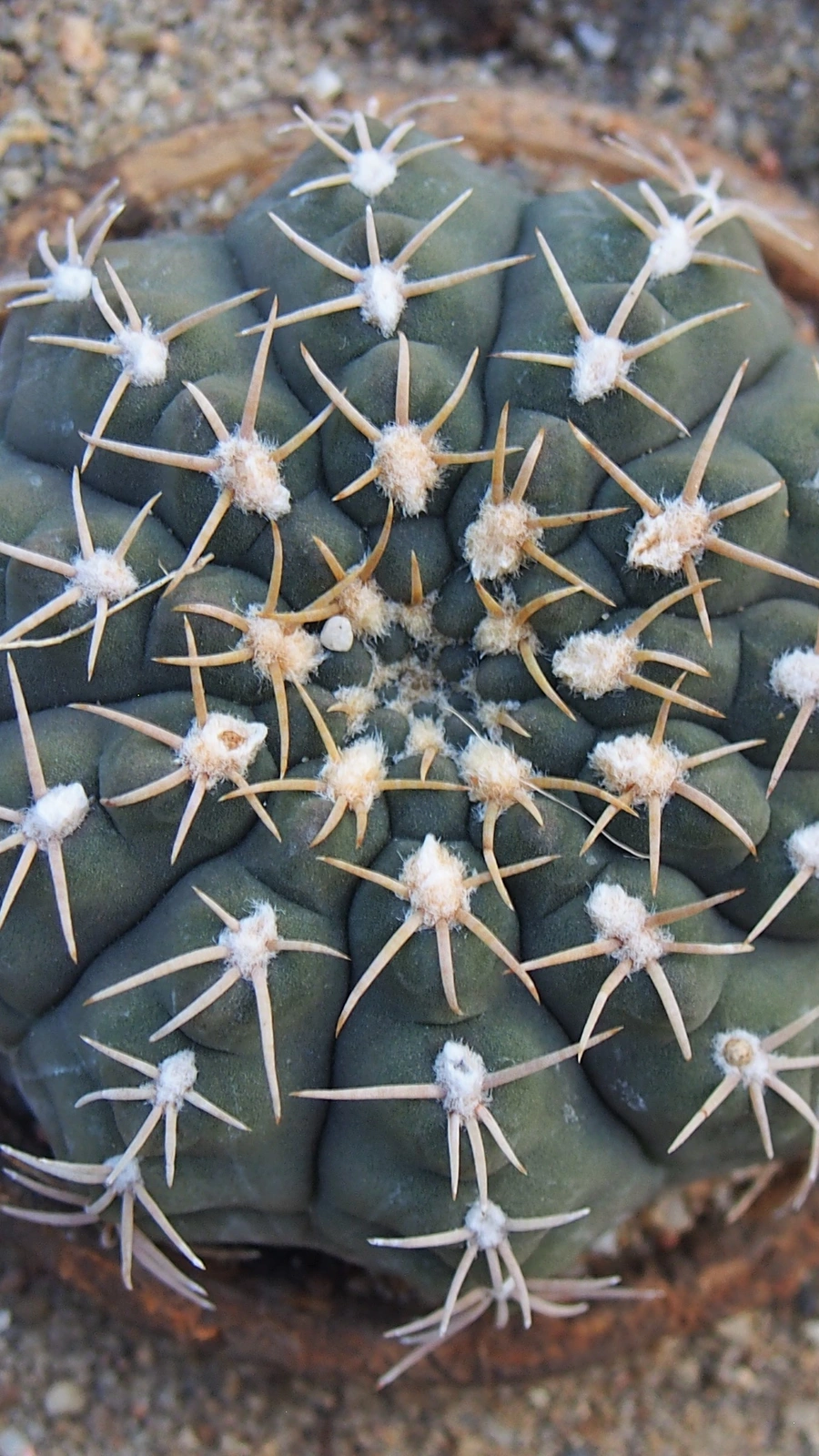
Gymnocalycium bodenbenderianum is a highly sought-after, geophytic, solitary globose cactus species from the family Cactaceae. Known for its flattened, disc-like brownish-grey stem and appressed spider-like spines, it is a classic representation of the low-profile "chin cacti" favored by succulent enthusiasts 1.
Described in the early 20th century, the species is named in honor of Dr. Wilhelm Bodenbender, a prominent German-Argentinian geologist and professor. Taxonomically, it belongs to the genus Gymnocalycium, characterized by naked flower buds containing no hairs or spines.
This species is native to southern South America, specifically endemic to northern and western Argentina, including provinces such as Catamarca, San Juan, and La Rioja 2. It populates hyper-arid shrublands and gravelly desert soils, often growing under the protective canopy of xerophytic shrubs.
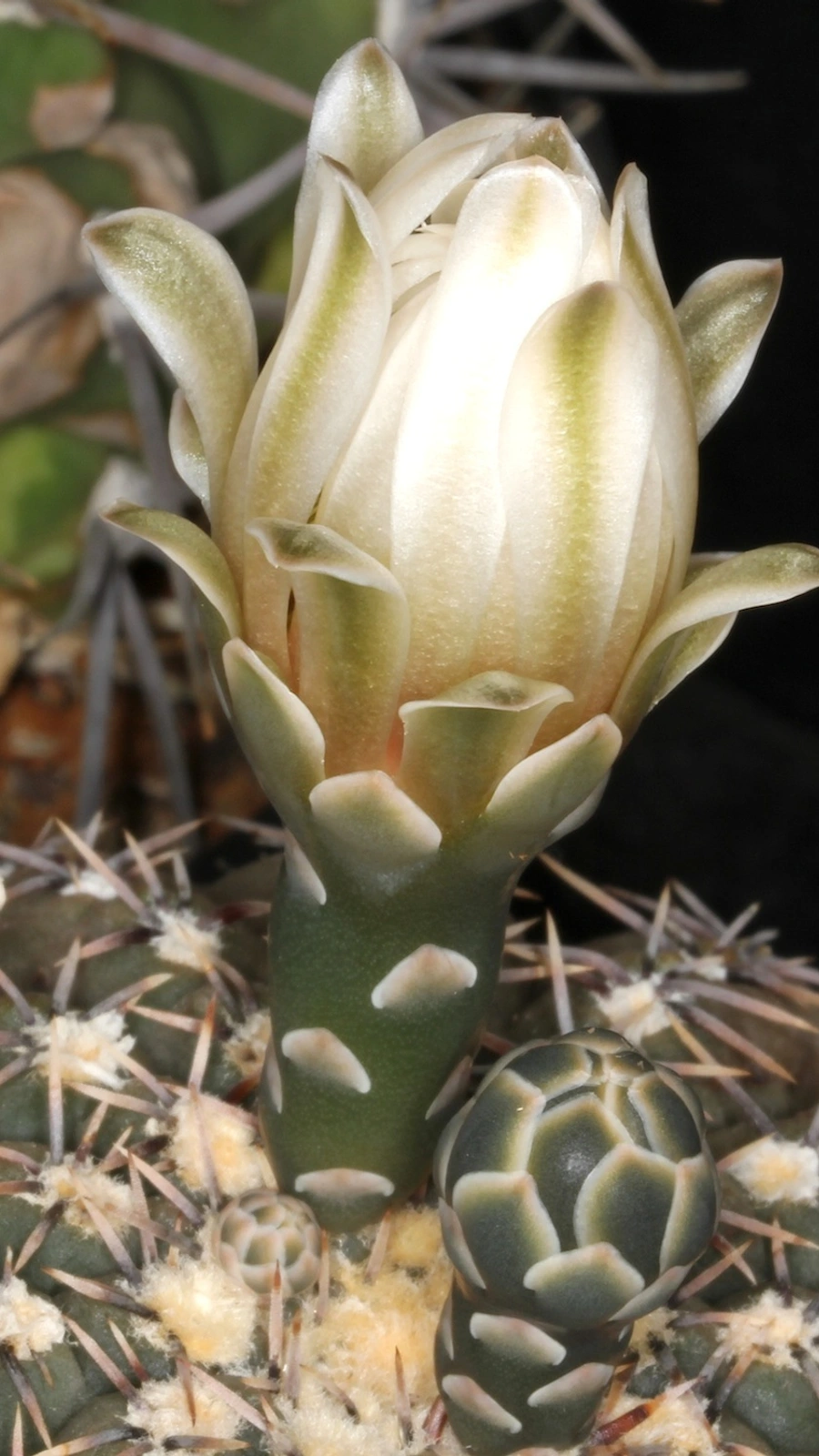
The stem is solitary, extremely flattened, measuring up to 8-10 cm in diameter and only a few centimeters tall. It exhibits a dull greyish-green, ochre, or dark chocolate-brown color. It has 11 to 15 broad, low ribs adorned with chins. Areoles bear 3 to 5 short, dark, backwards-curved spines that lie flat against the stem. The flowers are funnelform, white to pale pinkish-white.
This species requires a very porous, grit-rich substrate. It thrives in bright, indirect light or filtered sunlight. Water thoroughly during the hot summer months only when the soil is dry, and maintain a completely dry, cool period during winter dormancy.
The most prevalent failure is root rot due to waterlogged, heavy soils. Insufficient light results in etiolation, causing the flat, attractive stem to stretch vertically and weaken.
Thrives in bright, indirect sunlight or light shade; harsh direct summer sun can cause sunburn.
Water only after the substrate has dried out completely. Keep completely dry in winter.
Requires an open, highly mineral compost with plenty of coarse sand, pumice, or grit.
Non-toxic to pets, but the sharp, rigid spines can cause physical injury upon contact.
Very easy to care for, making it ideal for beginners who can resist the urge to overwater.
Endemic to the arid, stony regions of western and northern Argentina, where it survives in dry shrublands sheltered under larger plants.
