
Light
Bright Indirect Light
Prefers bright, indirect sunlight or partial shade. Harsh midday sun can cause sunburn.
 Reference image
 Reference image
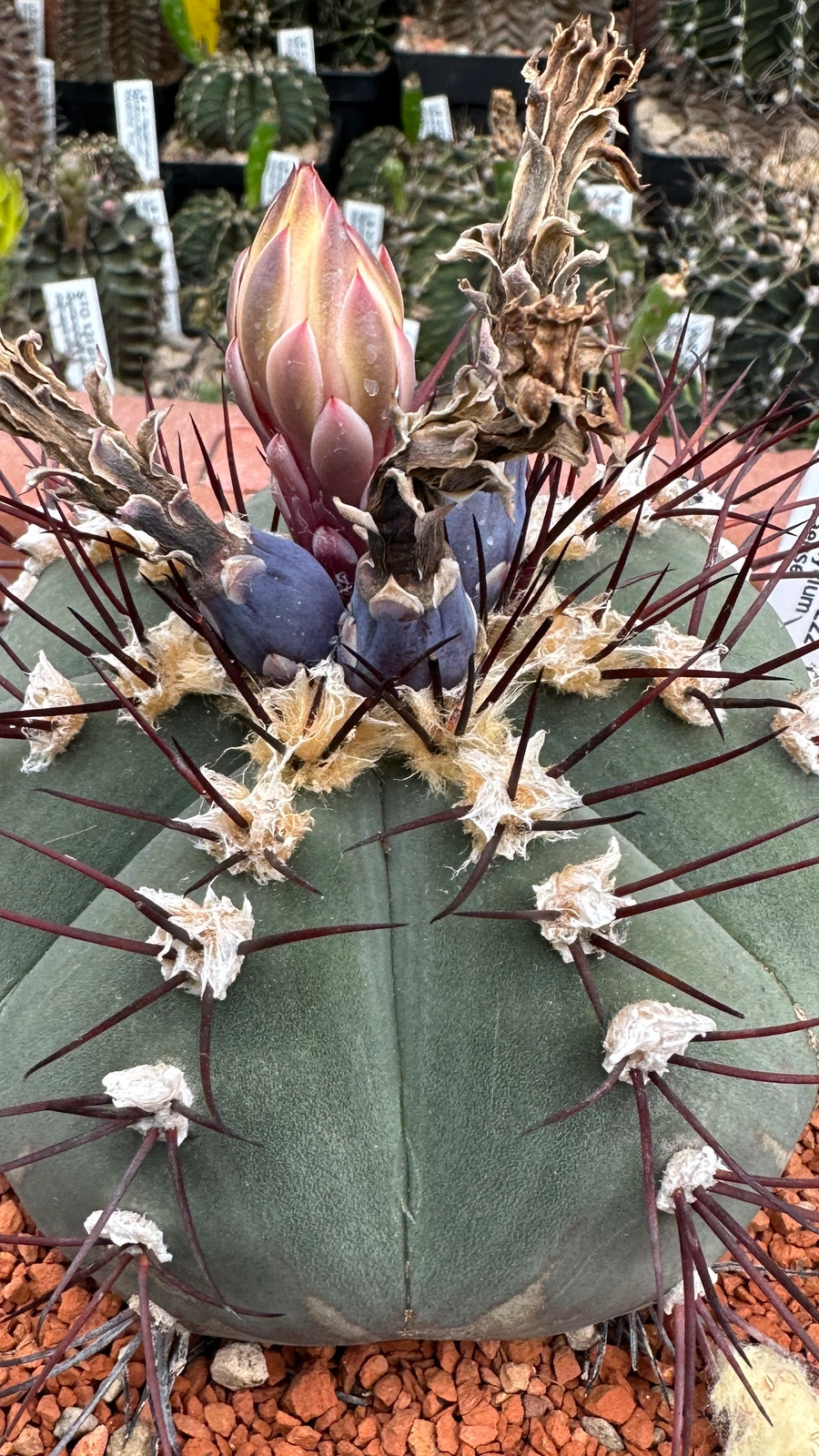
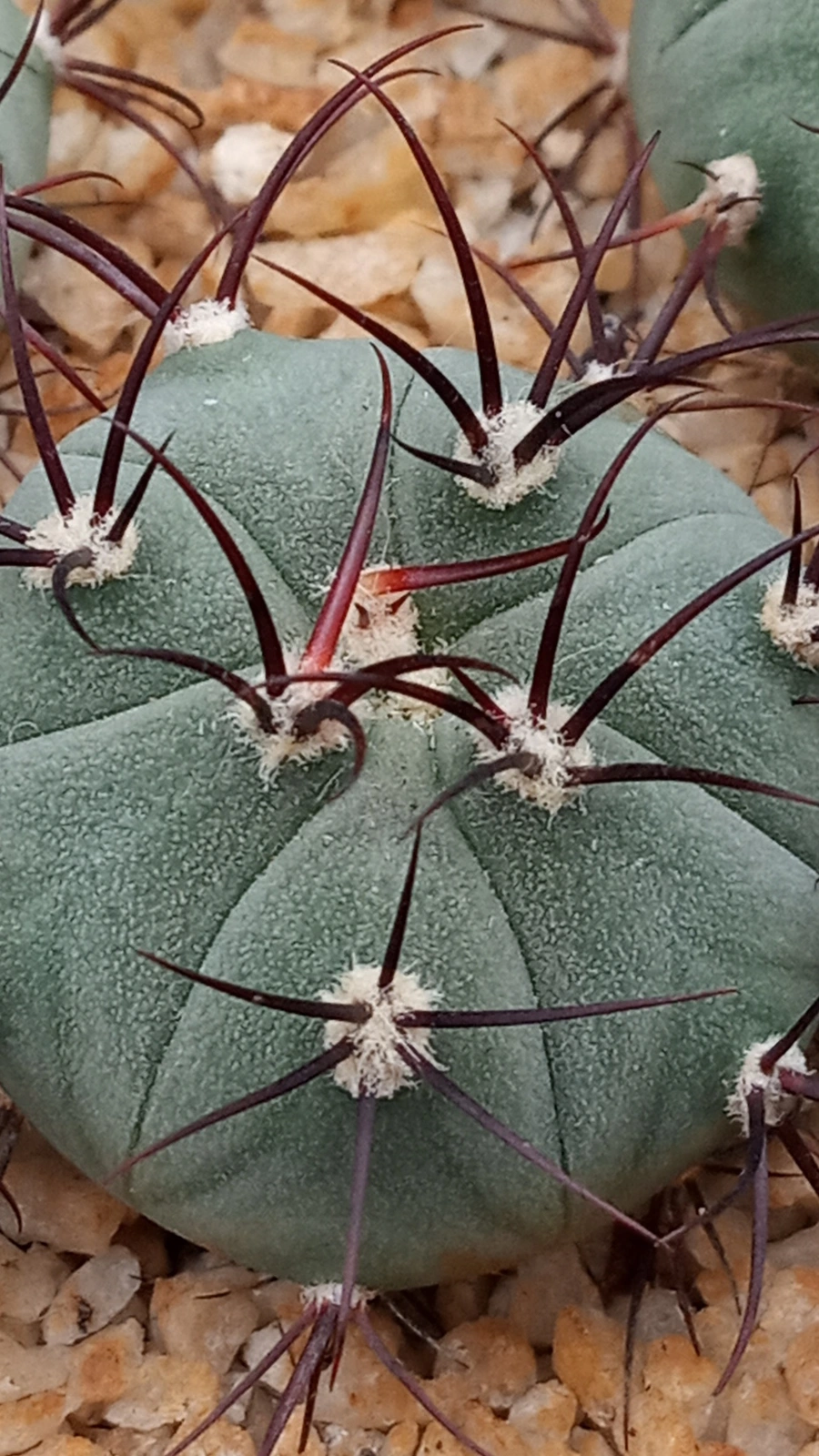
Cabrera's Chin Cactus
Gymnocalycium cabreraense is a highly sought-after, slow-growing globose cactus valued by collectors for its compact form and beautiful, naked-bud flowers 1.
Belonging to the Cactaceae family, the genus name Gymnocalycium comes from the Greek terms for "naked" (gymnos) and "bud" (kalyx), describing the scale-free and hairless flower buds 2. The specific epithet honors the botanist Cabrera.
This species is native to Paraguay, where it thrives in seasonally dry tropical biomes 3. It is typically found growing in stony, gravelly soils, often sheltered under low shrubs or grass in dry deciduous forest clearings.
The stem is solitary, flattened-globose, and displays a greyish-green to brownish-bronze hue depending on sun exposure. It features well-defined ribs with robust, slightly curved spines. The flowers emerge from the apical meristem in shades of white, cream, or light pink.
In cultivation, it requires bright, indirect sunlight and excellent ventilation. Watering should follow a soak-and-dry method during the active spring and summer growth phases 1. During winter, watering must be suspended to promote dormancy and prevent rot.
Overwatering and poor soil drainage are the primary causes of failure, quickly leading to root and stem rot 2. Additionally, keeping the plant in a dark, warm environment during winter prevents flowering and encourages etiolation.
Prefers bright, indirect sunlight or partial shade. Harsh midday sun can cause sunburn.
Water thoroughly only when the soil is dry. Keep almost completely dry in winter.
Requires a highly mineral, fast-draining substrate with low organic matter.
Non-toxic, but features sharp spines that can cause physical injury to curious pets and children.
An easy-care succulent suited for beginners, provided its drainage and watering requirements are respected.
Native to the arid and rocky plains of Paraguay, this cactus survives in gravelly soils within seasonally dry environments, often shaded by sparse vegetation.
