
Light
Bright Indirect Light
Prefers bright, indirect sunlight. Protect from scorching mid-day summer sun.
 Reference image
 Reference image
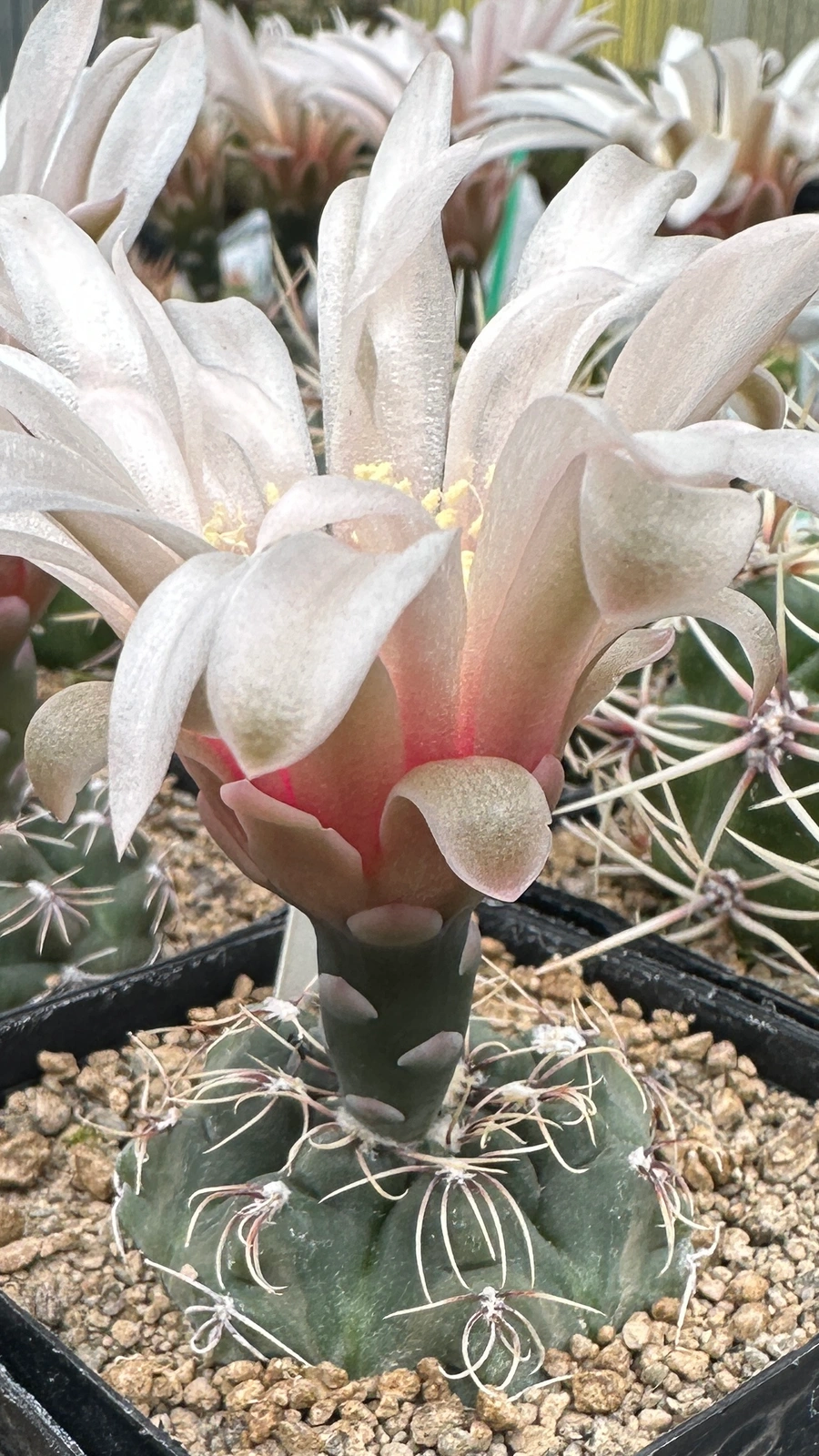
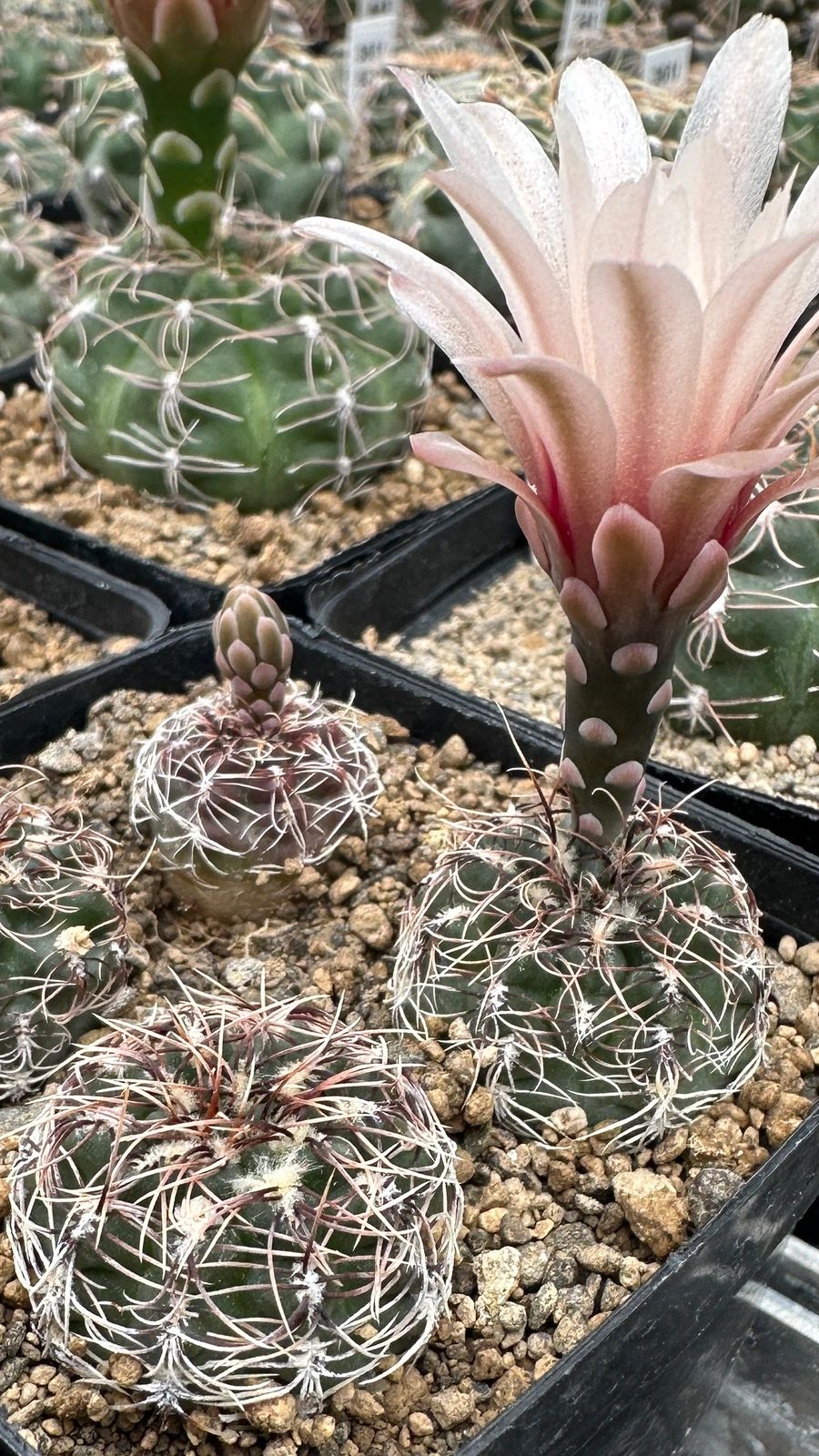
Campestre Chin Cactus
Gymnocalycium campestre is a charming, flattened-globose cactus species belonging to the Cactaceae family. Adapted to subtropical biomes, it exemplifies the characteristic compact form and beautiful symmetry of the chin cacti group.
The genus name 'Gymnocalycium' is derived from Greek roots meaning 'naked calyx', referring to the hairless and spineless flower buds. The specific epithet 'campestre' originates from Latin, denoting fields, plains, or grassland habitats where the species is typically found 1.
Native to southern South America, Gymnocalycium campestre is widely distributed in Argentina across various provinces including Córdoba, Buenos Aires, Santa Fe, and La Pampa. It thrives in stony, well-draining soils, often tucked beneath low shrubs for protection 2.
The stem is solitary, low-growing, and exhibits a matte greyish-green hue. It features distinct ribs with prominent chin-like tubercles beneath each areole. Radial spines are slightly curved backward, displaying pale brown to creamy-grey colors. The elegant, bell-shaped flowers are produced at the apex, showcasing shades of white to pale pink.
This species is highly rewarding for container culture. It prefers bright, filtered sunlight and excellent aeration. Watering must be thorough but infrequent, allowing the substrate to dry completely between cycles. During winter, a dry and cool resting phase is essential to stimulate next spring's blooms.
The most prevalent pitfall is overwatering or using compacted soil, which quickly triggers root rot 2. Insufficient light exposure will result in etiolation, causing the symmetrical globose body to stretch awkwardly toward the light source.
Prefers bright, indirect sunlight. Protect from scorching mid-day summer sun.
Allow soil to dry out completely before watering. Keep completely dry in winter.
Requires a highly porous, gritty mix containing pumice, lava rock, and coarse sand.
Non-toxic, but features sharp spines that can cause physical discomfort; handle with care.
Very easy to care for, provided you do not kill it with excessive watering.
Sparsely distributed across central and northern Argentina, adapting to stony plains and subtropical scrublands where it enjoys dappled shade from surrounding vegetation.
