
Light
Filtered Sun
Bright filtered or indirect sunlight; protect from harsh afternoon summer sun.
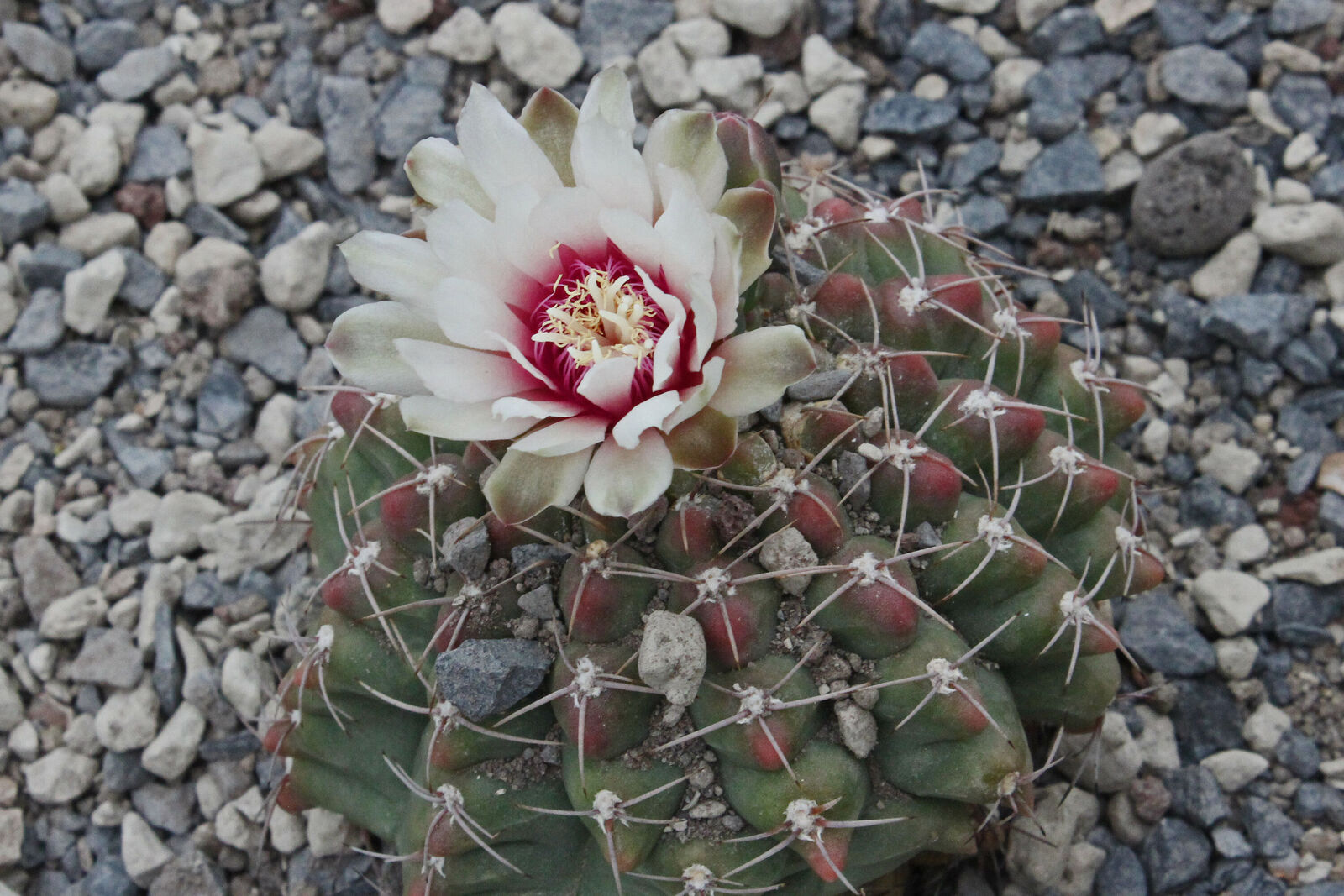 Reference image
Gymnocalycium capillense is a small-sized, succulent subshrub belonging to the Cactaceae (Cactus) family. Well-regarded for its flattened globose stem and delicate pastel blossoms, it is a favored species among succulent enthusiasts globally 1.
Originally described by the Argentine botanist Carlos Luis Spegazzini, it belongs to the genus Gymnocalycium. The generic name is derived from the Greek words "gymnos" (naked) and "kalyx" (bud), referring to the characteristic hairless flower buds that lack spines or wool 2.
This species is native to southern South America, primarily within the Córdoba and San Luis provinces of Argentina. It thrives in subtropical climates, growing in rocky crevices, granite outcrops, and gravelly grasslands where it is partially shaded by taller vegetation 3.
The stem is solitary or slowly offsetting, flattened-globose, and possesses a dull grayish-green to bluish-green epidermis. It typically features 8 to 13 low, rounded ribs divided into distinct tubercles. The spines are weak, needle-like, and curved flat against the stem. The funnelform flowers are pale pink or creamy white, appearing at the crown during late spring.
In cultivation, Gymnocalycium capillense requires highly porous mineral soil with excellent drainage. It responds well to regular watering during the warm growing season, provided the medium dries out fully between applications. It prefers bright, filtered light over direct, scorching midday sun 2.
The most prevalent failure is root rot caused by overwatering or poorly draining soil, especially during winter dormancy. Lack of light results in etiolation, causing the natural globose form to stretch and weaken.
Bright filtered or indirect sunlight; protect from harsh afternoon summer sun.
Water thoroughly when soil is dry in summer; keep completely dry in winter.
Highly porous, grit-rich, and fast-draining mineral cactus substrate.
Non-toxic to pets and humans; spines are relatively soft but handle with care.
Very easy to grow, making it perfect for beginners and small indoor spaces.
Occurs in the rocky, hilly regions of central Argentina, growing in granite crevices and tucked under sparse grasses in subtropical grasslands.
