
Light
Bright Indirect Light
Prefers bright, indirect light or filtered morning sun. Avoid scorching afternoon sun.
 Reference image
 Reference image
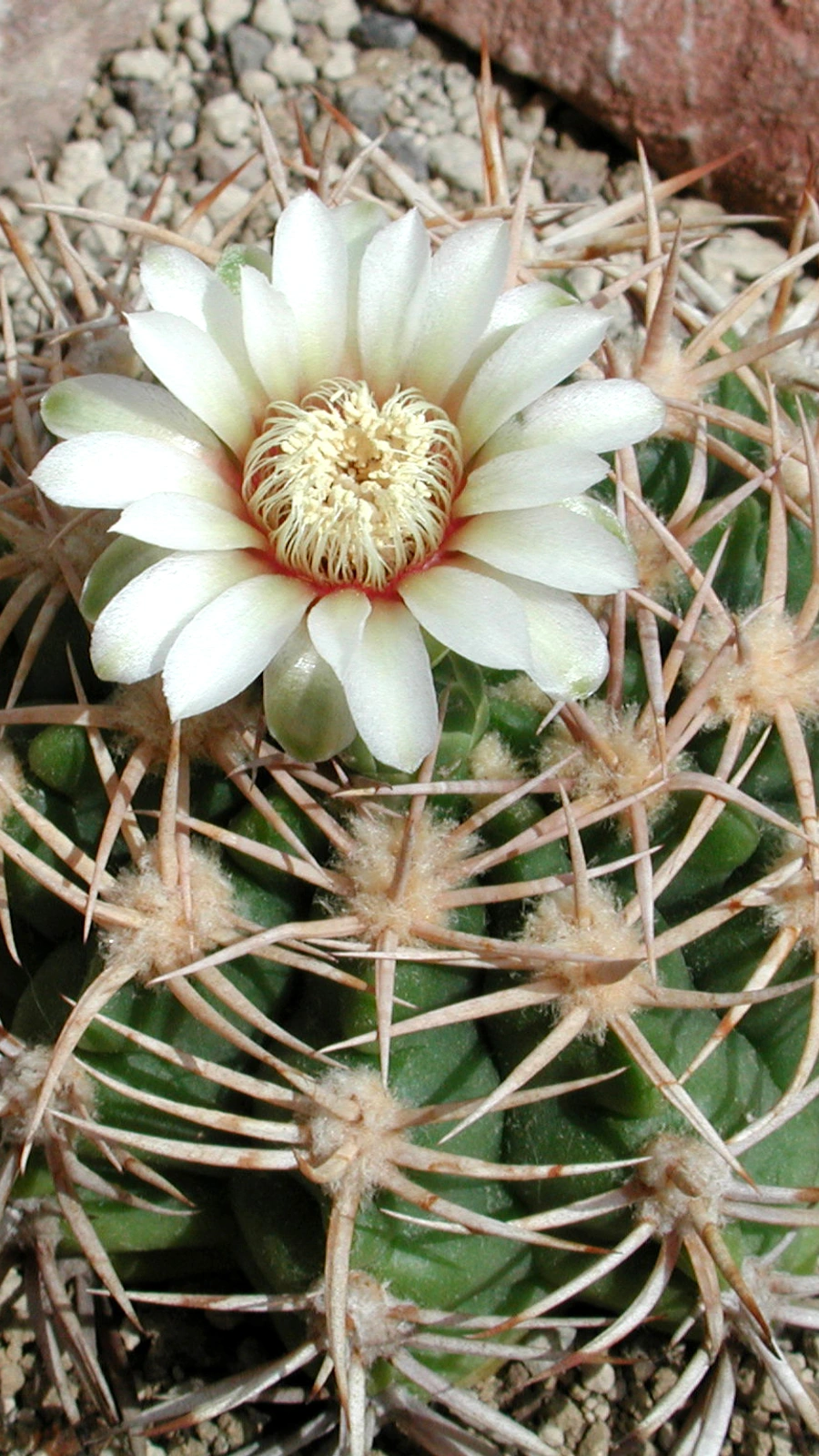
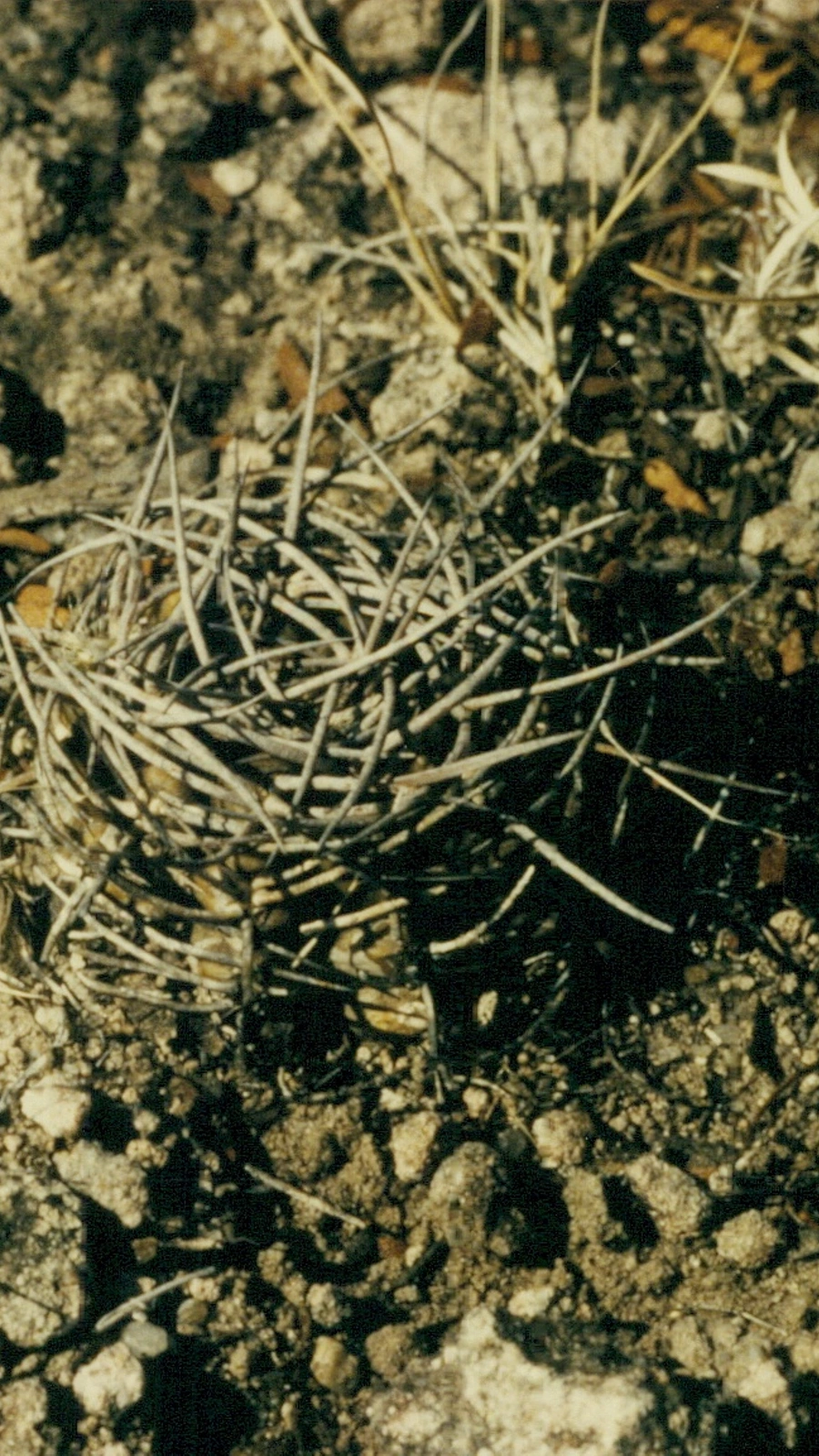
Castellanos Chin Cactus
Gymnocalycium castellanosii is a slow-growing, solitary, and globose cactus species belonging to the family Cactaceae. Highly prized by succulent enthusiasts, this species is distinguished by its attractive bluish-grey epidermis, prominent tubercles, and robust, recurved spines that give it a highly textured, wild appearance.
The species epithet 'castellanosii' honors the prominent Argentine botanist Alberto Castellanos 1. The genus name Gymnocalycium is derived from the Greek words 'gymnos' (naked) and 'kalyx' (bud), referencing the hairless and spineless flower buds that characterize the genus 2.
Gymnocalycium castellanosii is native to central and northwestern Argentina, particularly spanning provinces such as San Juan, La Rioja, San Luis, and Córdoba 1. It thrives in dry, subtropical shrublands and rocky slopes, often sheltered from intense direct sun under the canopy of nurse bushes.
The stem is depressed-globose to short cylindrical, reaching up to 15 cm in height. It features 10 to 12 broad ribs divided into prominent chin-like tubercles. Areoles bear stout, curved, greyish spines. In late spring, it produces funnel-shaped white to pale pink flowers that open near the crown of the stem.
In cultivation, this species requires a highly porous, mineral-rich potting medium to facilitate rapid drainage. It prefers bright, filtered sunlight; direct midday summer sun may cause epidermis scorching. Watering should be deep but infrequent, allowing the substrate to dry out entirely between applications 2.
The most prevalent issue is root rot resulting from overwatering or poorly draining soil, especially during winter dormancy. Additionally, inadequate light levels will lead to etiolation, causing the naturally globose stem to stretch and weaken.
Prefers bright, indirect light or filtered morning sun. Avoid scorching afternoon sun.
Allow the potting medium to dry out completely before watering. Keep bone dry in winter.
Extremely well-draining mineral mix with plenty of pumice, perlite, and coarse sand.
Non-toxic to pets, but the sharp, rigid spines can cause physical injury. Handle with care.
Very easy for beginners, provided they do not overwater or let it sit in stagnant moisture.
Found natively in the arid, stony hills and shrubby plains of central and western Argentina, where it grows tucked under the shade of sparse native vegetation.
