
Light
Filtered Sun
Prefers bright, filtered sunlight; shield from harsh afternoon direct sun.
 Reference image
 Reference image
Chiquito Chin Cactus
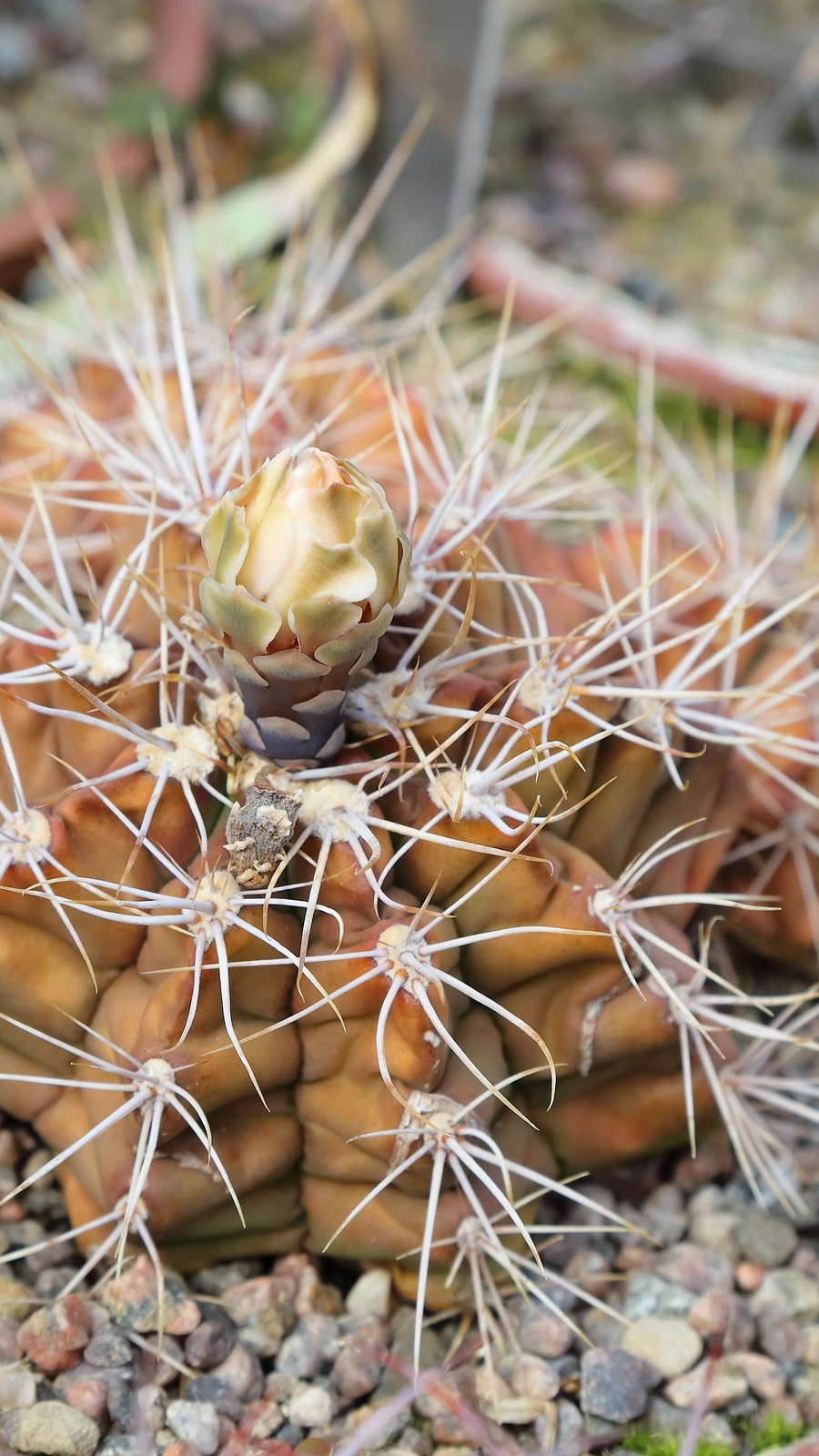
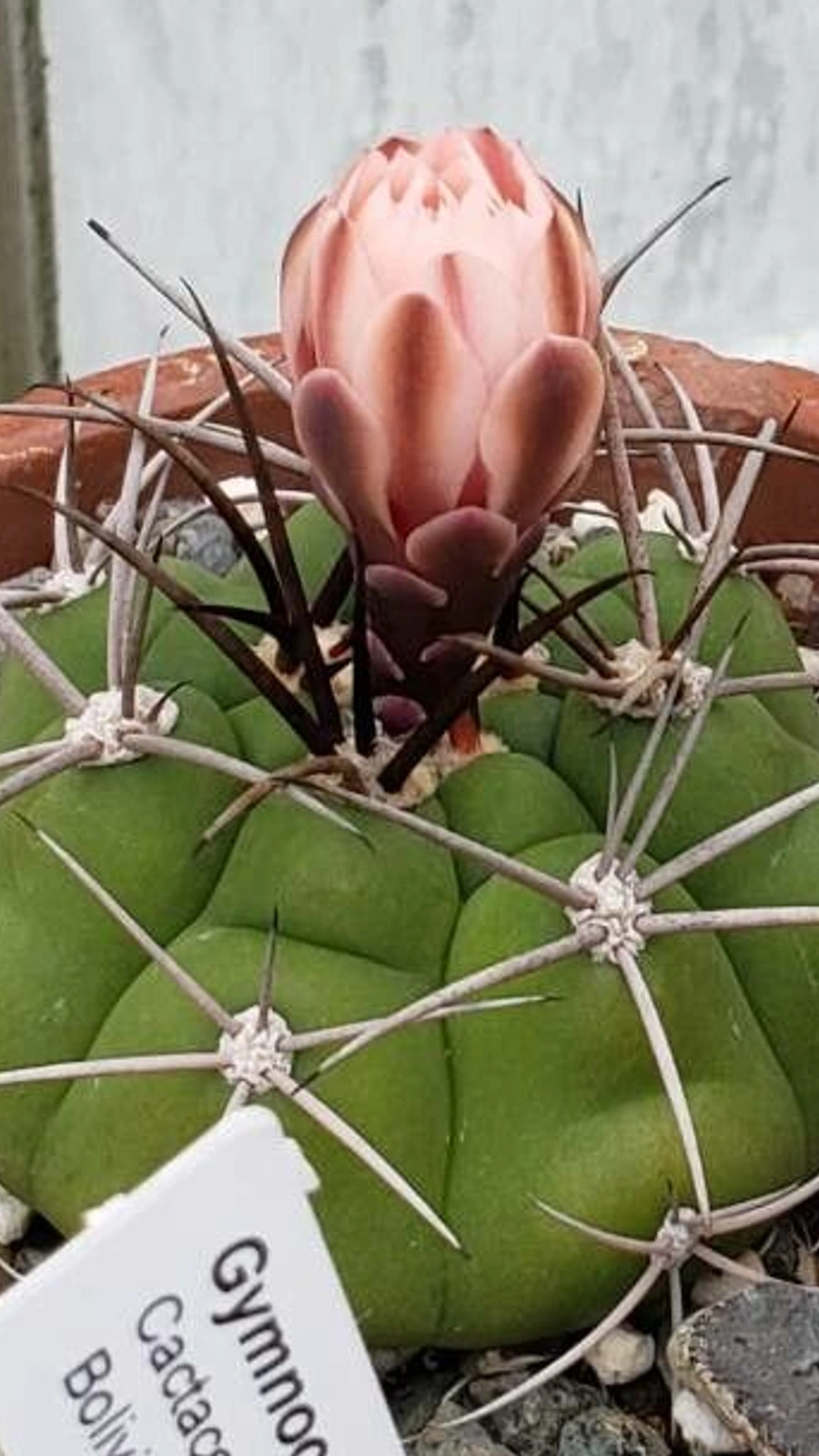
Gymnocalycium chiquitanum is a popular, slow-growing, globose cactus species from the Cactaceae family, prized by succulent enthusiasts for its compact size and delicate pale pink flowers 1.
The genus name Gymnocalycium comes from the Greek words for 'naked calyx', referring to the hairless, scale-free flower buds that characterize the genus. The specific epithet chiquitanum refers to the Chiquitos province in Bolivia, where the plant was discovered 2.
Native to Bolivia, this species thrives in dry shrublands, rocky slopes, and deciduous dry forests. It typically grows in crevices between rocks or under the light shade of sparse vegetation, well-adapted to prolonged dry seasons 1.
The stem is solitary or slowly clustering at the base, with a green to grayish-green epidermis. It features prominent, curved spines lining its rounded ribs. During late spring and summer, it produces funnel-shaped flowers in shades of soft pink to white from the crown.
In cultivation, it requires highly porous, well-draining soil and filtered, bright light. Overwatering is its main enemy; the soil must dry out completely between waterings. During winter dormancy, watering should be minimized or withheld completely.
The most frequent issue is root rot due to poorly draining soil or frequent watering. Sunburn can also occur if the plant is moved directly into harsh, unfiltered midday summer sun 2.
Prefers bright, filtered sunlight; shield from harsh afternoon direct sun.
Allow the potting medium to dry out 100% before watering again.
Requires very porous soil with excellent drainage, such as pumice and grit.
Non-toxic to pets, but has sharp spines that require careful handling.
Very easy to care for, making it ideal for beginners starting with cacti.
Native to the rocky habitats and dry shrubby landscapes of the Chiquitos region in Bolivia.
