
Light
Bright Indirect Light
Prefers bright, indirect sunlight or filtered morning sun. Avoid scorching direct midday sun.
 Reference image
 Reference image
Esperanza Chin Cactus
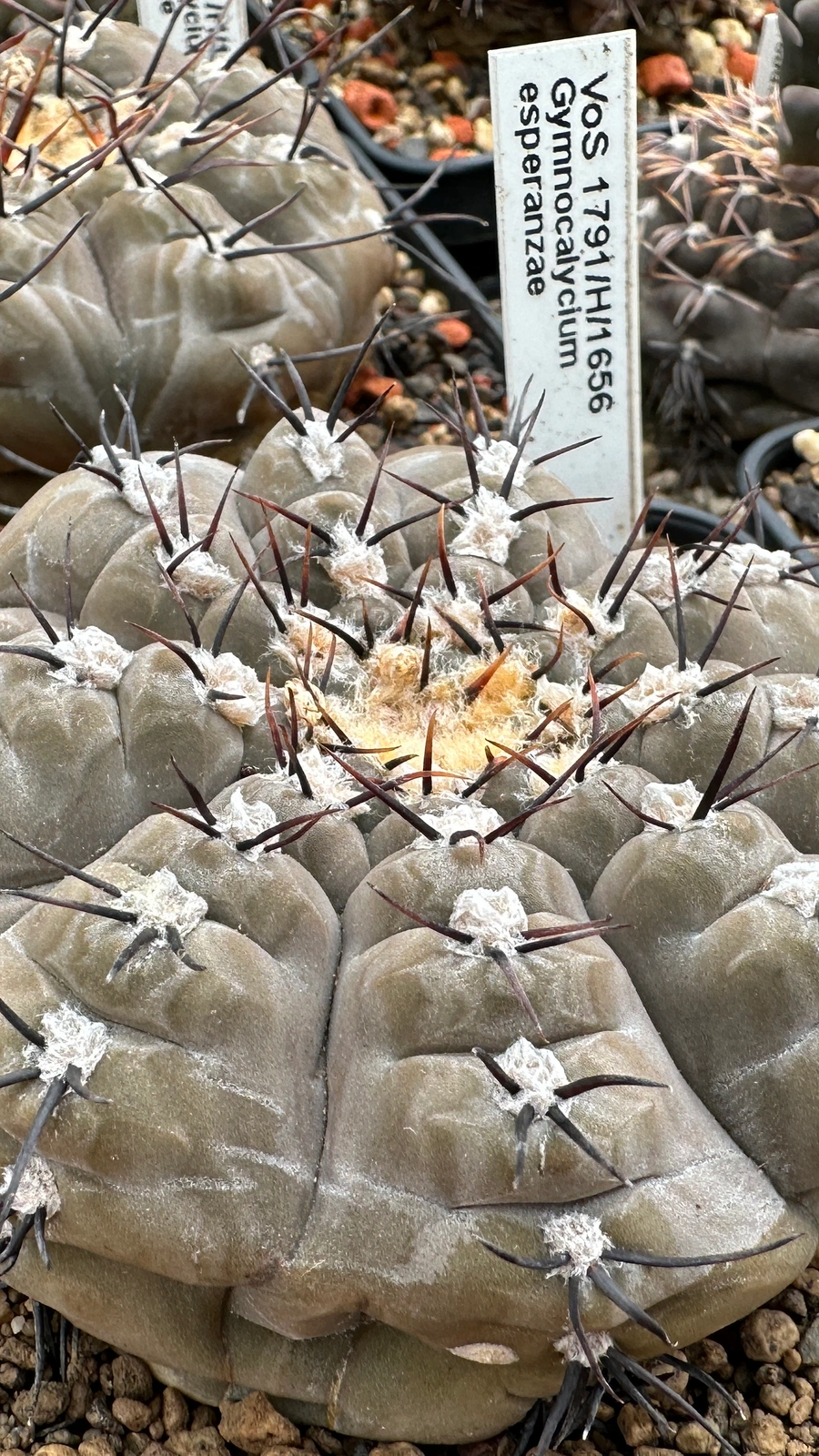
Gymnocalycium esperanzae is a rare and highly sought-after collector's cactus belonging to the Cactaceae family 1. It features a flattened globose stem, characterized by its deep greyish-green to bluish-green coloration and stout, recurved spines that hug the plant body tightly.
This species was described relatively recently within the genus Gymnocalycium, representing a highly specialized taxon 1. The specific epithet esperanzae refers to its localized geographical discovery site and the ecological niches it occupies in South America.
Gymnocalycium esperanzae is native to Southern South America, specifically the arid and semi-arid subtropical ecoregions of Argentina 2. It grows primarily in rocky soils, often tucked under the shade of sparse shrubs or grasses that protect it from extreme solar radiation.
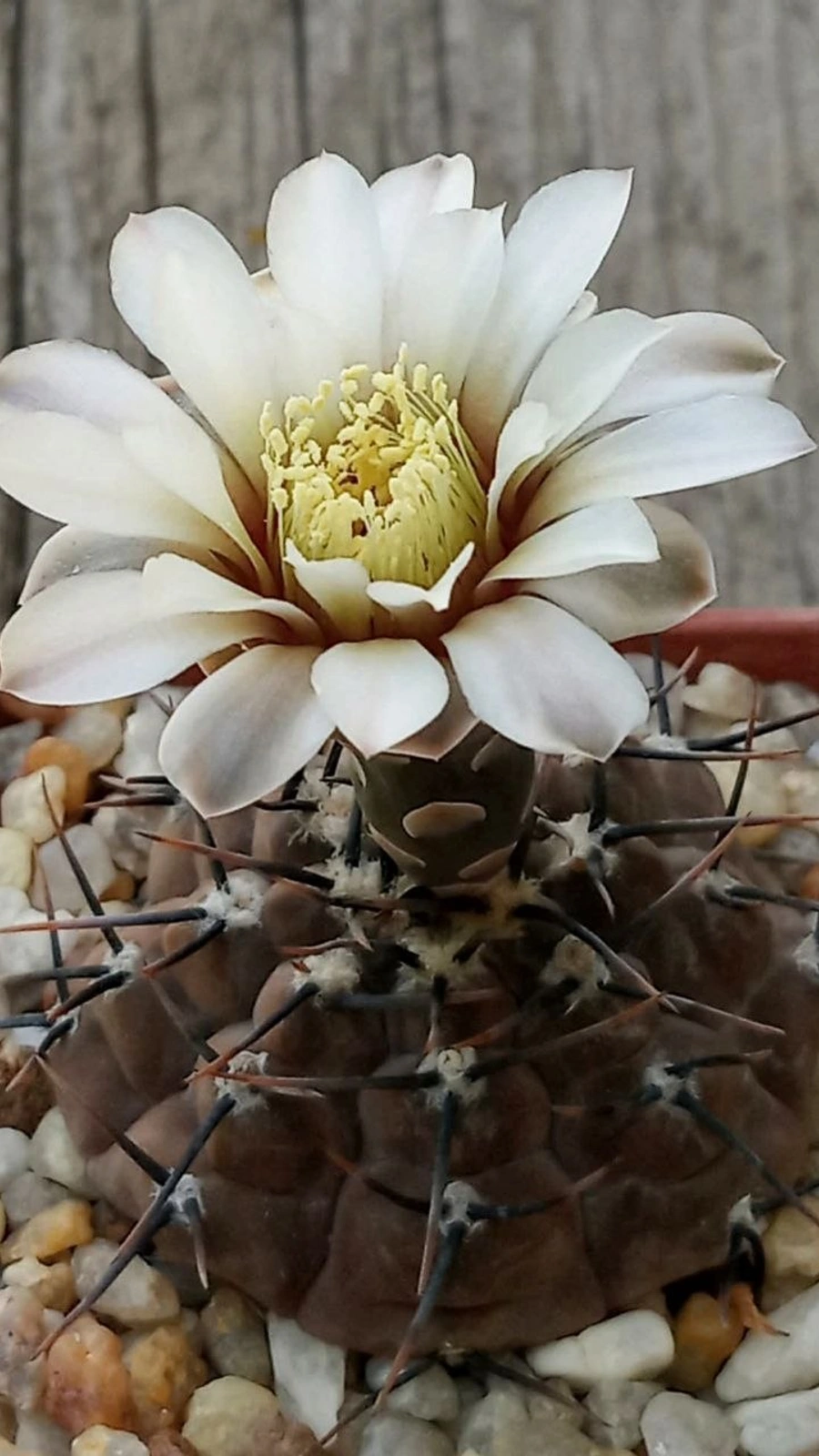
The solitary stem is heavily ribbed with prominent chin-like tubercles. Areoles bear thick, dark, curving spines that contrast beautifully with the glaucous epidermis. Its flowers are typically cream-white to pale pinkish, emerging from the crown of the cactus with the characteristic naked, scale-free floral tube of the genus.
In cultivation, Gymnocalycium esperanzae is straightforward to care for. It thrives in bright, indirect light or filtered morning sun. During the active growing season (spring and summer), watering should be thorough but infrequent, allowing the potting substrate to dry out completely between sessions. During winter, it requires a dry, cool rest period.
The most frequent mistake is overwatering, which rapidly leads to root rot 2. Inadequate drainage and exposing the plant to harsh, direct midday sun without prior acclimation can also cause permanent cosmetic damage or sunburn scars.
Prefers bright, indirect sunlight or filtered morning sun. Avoid scorching direct midday sun.
Water thoroughly once the soil dries out completely in summer; keep completely dry in winter.
Requires excellent drainage. Use a mix rich in pumice, gravel, and minimal organic matter.
Non-toxic, but sharp, rigid spines can cause physical injury. Handle with care.
Very easy if kept dry during winter and potted in well-draining mineral soil.
Endemic to the subtropical, semi-arid regions of Argentina, where it thrives in rocky, mineral-rich substrates. It typically grows sheltered under low-lying desert shrubs, adapting to periods of seasonal drought.
