
Light
Bright Indirect Light
Prefers bright, indirect sunlight or filtered light. Protect from intense afternoon sun.
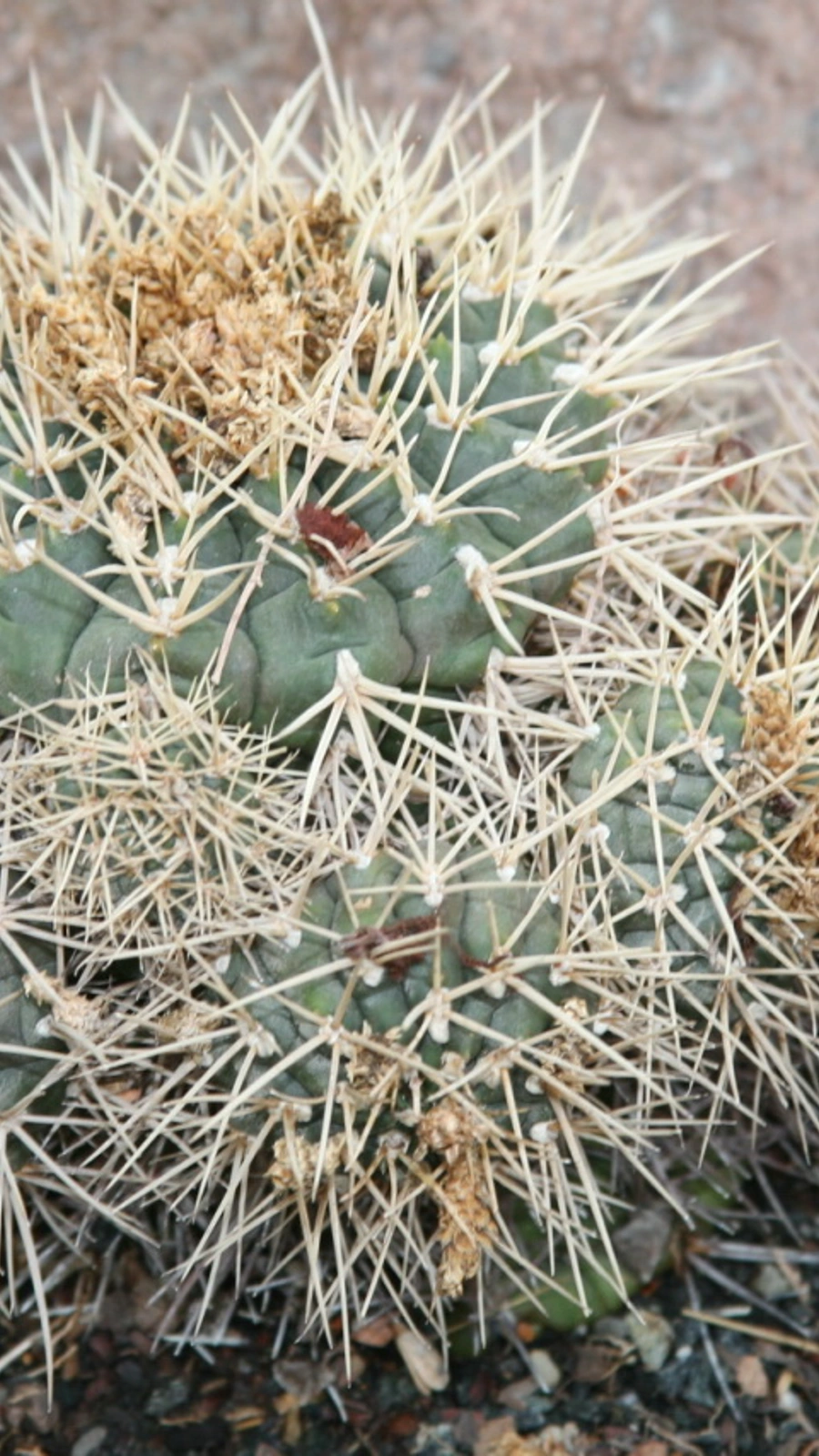 Reference image
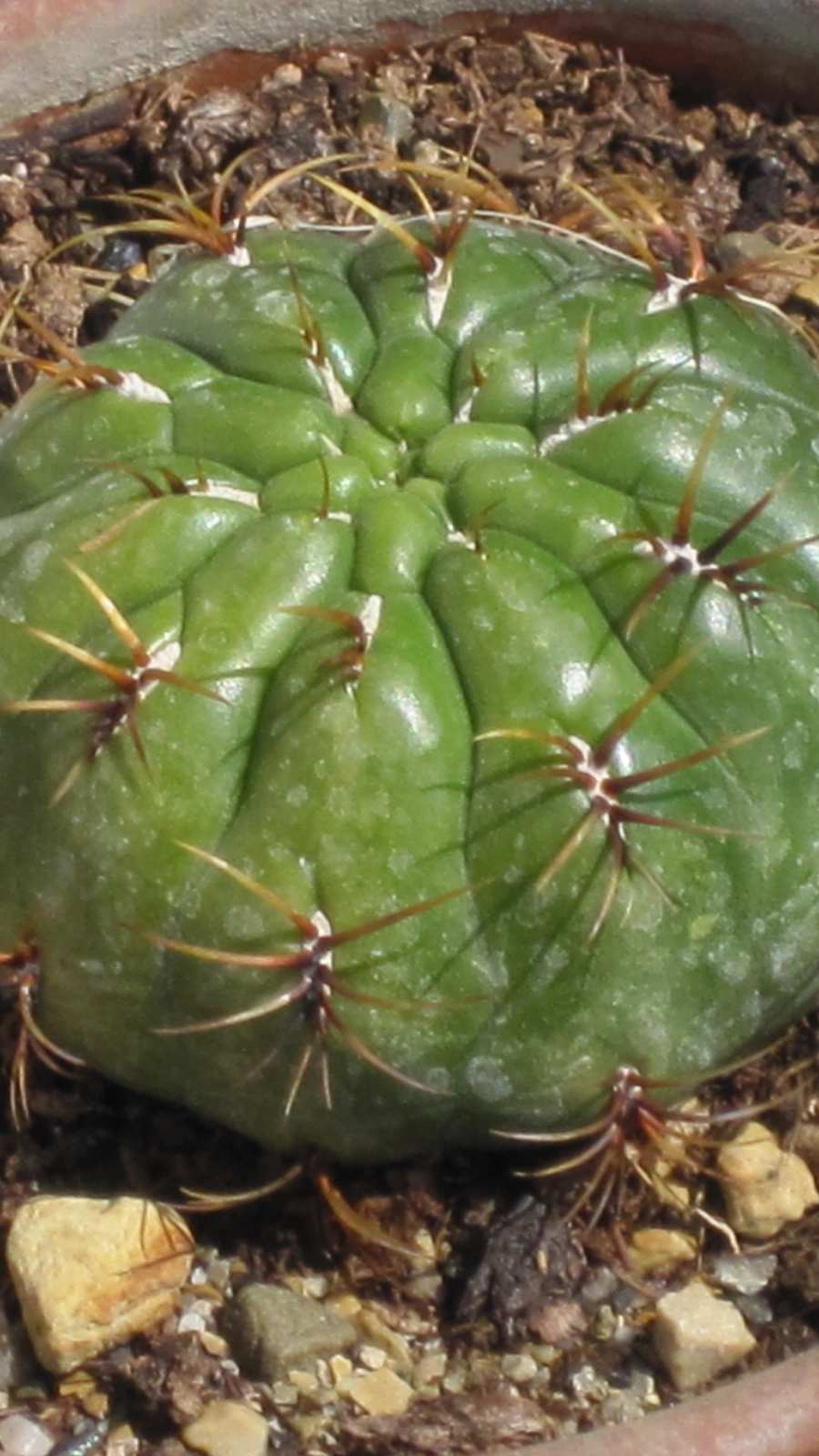 Reference image
Broad-Ribbed Chin Cactus
Gymnocalycium eurypleurum is a highly prized, solitary globose cactus species from the family Cactaceae. Known for its aesthetic symmetry, flat-topped ribs, and robust nature, it is an outstanding addition to any succulent collection and adapts beautifully to indoor pot culture 1.
Classified under the genus Gymnocalycium, its specific epithet "eurypleurum" originates from the Greek eurys (meaning broad) and pleura (meaning rib/side), accurately describing the distinctive broad, low-profile ribs characteristic of the species 1.
This species is native to the dry Chaco forests spanning Paraguay and Bolivia 2. It grows in sandy-loamy soils and is typically found sheltered beneath low shrubs, which protect it from the intense tropical sun. It is classified as Least Concern (LC) on the IUCN Red List.
The body is solitary, olive-green to brownish-green, growing up to 15 cm in diameter. It has 7 to 12 very broad, low ribs with minimal transverse chin-like swellings. Spine clusters carry stiff, slightly curved needle-like spines. Flowers are bell-shaped, white to pale pink, emerging from the crown 1.
Gymnocalycium eurypleurum thrives in bright, filtered light or partial shade. Direct, harsh midday sun can scorch its epidermis. It requires an open, highly porous mineral substrate. Water thoroughly during spring and summer once the soil has dried out completely, and keep dry in winter 2.
Overwatering and poorly-drained soil are the primary causes of root rot. Lack of light can cause unnatural elongation (etiolation), while sudden exposure to direct, unfiltered midday sun causes permanent scarring.
Prefers bright, indirect sunlight or filtered light. Protect from intense afternoon sun.
Water thoroughly only when the soil is completely dry. Keep dry in winter.
Requires excellent drainage. Use a mix heavy in pumice, perlite, and coarse sand.
Non-toxic, but sharp spines require cautious handling and placement away from pets.
Very easy to maintain, making it ideal for beginners and low-maintenance collections.
Naturally occurs in the arid, subtropical Gran Chaco region, where it grows sheltered under deciduous scrub on sandy or stony flats.
