
Light
Filtered Sun
Enjoys bright, filtered sunlight; protect from intense mid-day direct summer sun.
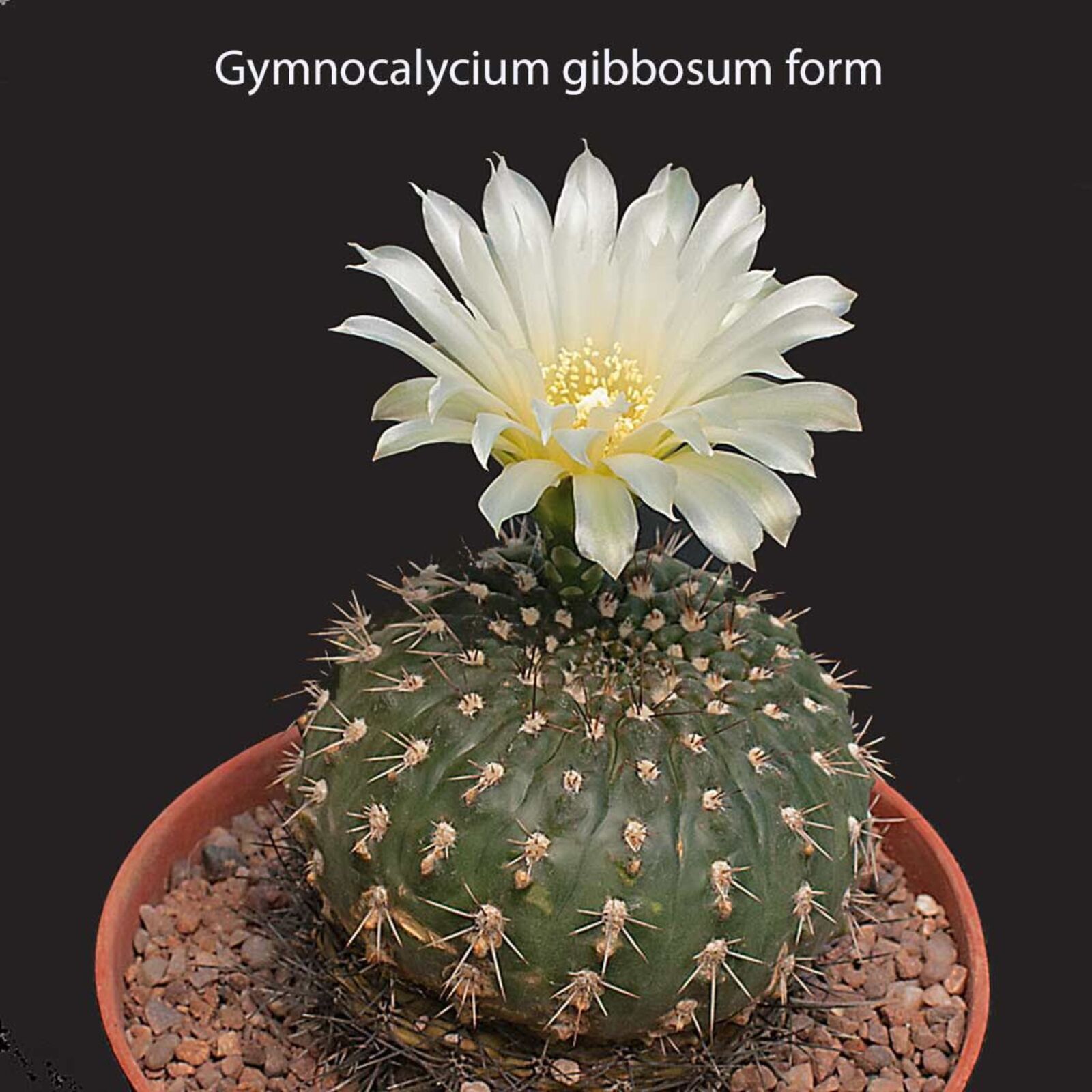 Reference image
Black Chin Cactus
Gymnocalycium gibbosum, commonly known as the Black Chin Cactus, is a robust and highly variable globose cactus species from the family Cactaceae 1. It is highly appreciated by collectors for its attractive spine pattern and ease of cultivation.
Originally described by Adrian Hardy Haworth, the species belongs to the genus Gymnocalycium. The generic name translates from Greek as "naked calyx," pointing to the spineless flower buds, while the specific epithet gibbosum means "humped" or "gibbous," referring to the prominent chin-like tubercles 2.
It is native to southern South America, specifically Argentina, extending deep into Patagonia. This wide distribution makes it one of the southernmost occurring cacti on Earth 1. It grows in arid, stony soils, often sheltered under low shrubs or grass clumps.
The stem is dull dark green to bluish-black, eventually becoming shortly cylindrical with age. Its ribs are divided into pronounced tubercles topped with sturdy, straight or slightly curved radial spines. Large, elegant white to pale pink flowers emerge from the crown in summer.
This species requires a very porous, mineral-based soil mix. Watering should be thorough but infrequent during spring and summer, allowing the soil to dry completely 2. In winter, keeping the plant totally dry and cool is essential to prevent rot and induce flowering.
Excessive watering during the winter dormancy period is the leading cause of plant loss. Additionally, cultivating the plant in low-light conditions causes etiolation, stretching the attractive spherical body.
Enjoys bright, filtered sunlight; protect from intense mid-day direct summer sun.
Water only when the substrate is completely dry. Keep dry in winter.
Use a fast-draining, mineral-dominant succulent soil containing pumice and grit.
Non-toxic, but features sharp, stiff spines. Keep out of reach of children and pets.
Very easy to care for, tolerant of cold temperatures and dry conditions.
Native to the dry, cold, and windswept shrublands of Argentina, stretching down to northern Patagonia. It is well-adapted to surviving frosty winters in dry soils.
