
Light
Bright Indirect Light
Bright, indirect light or partial sun is best to prevent sunburn and maintain its blue-green skin.
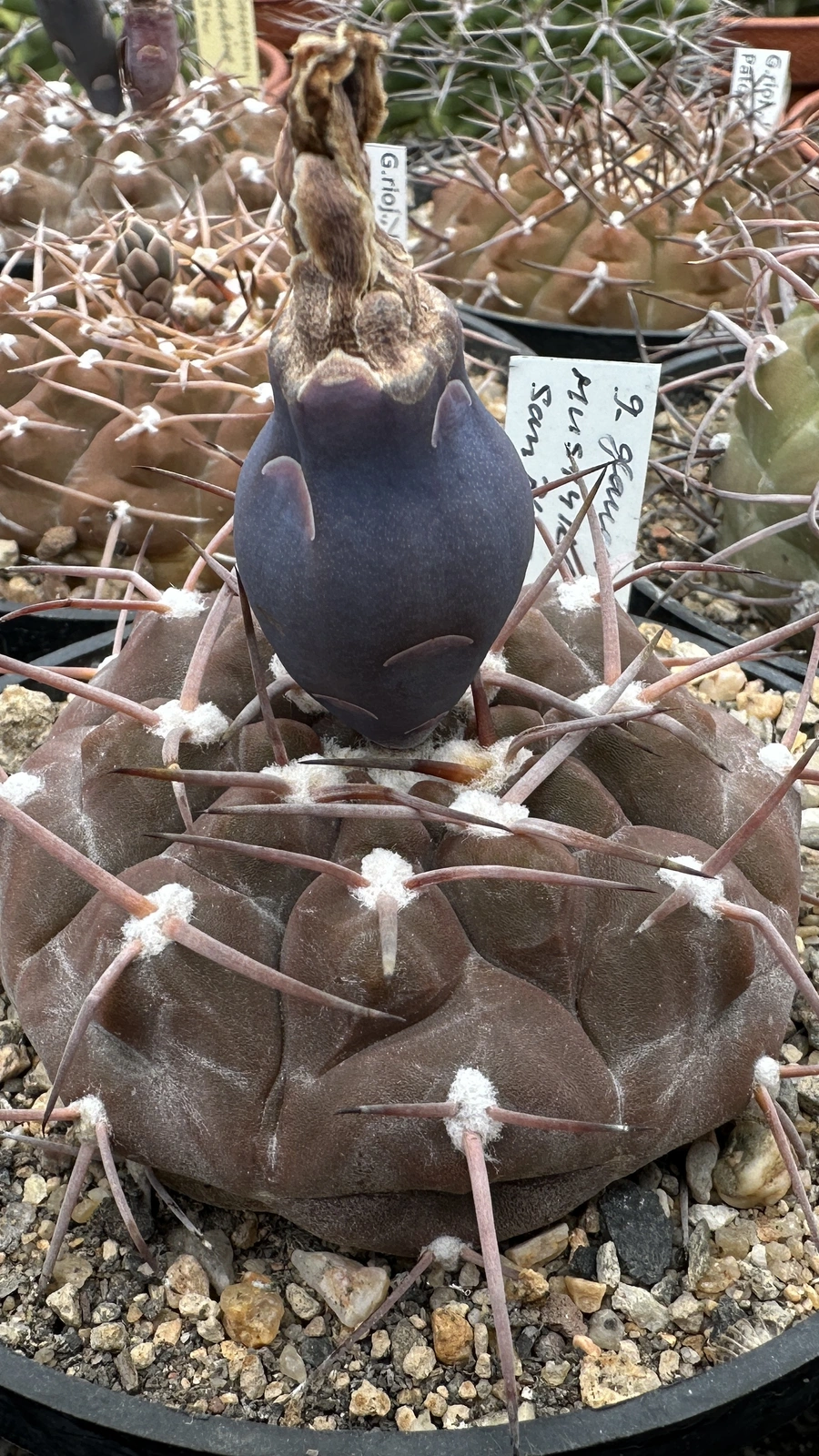 Reference image
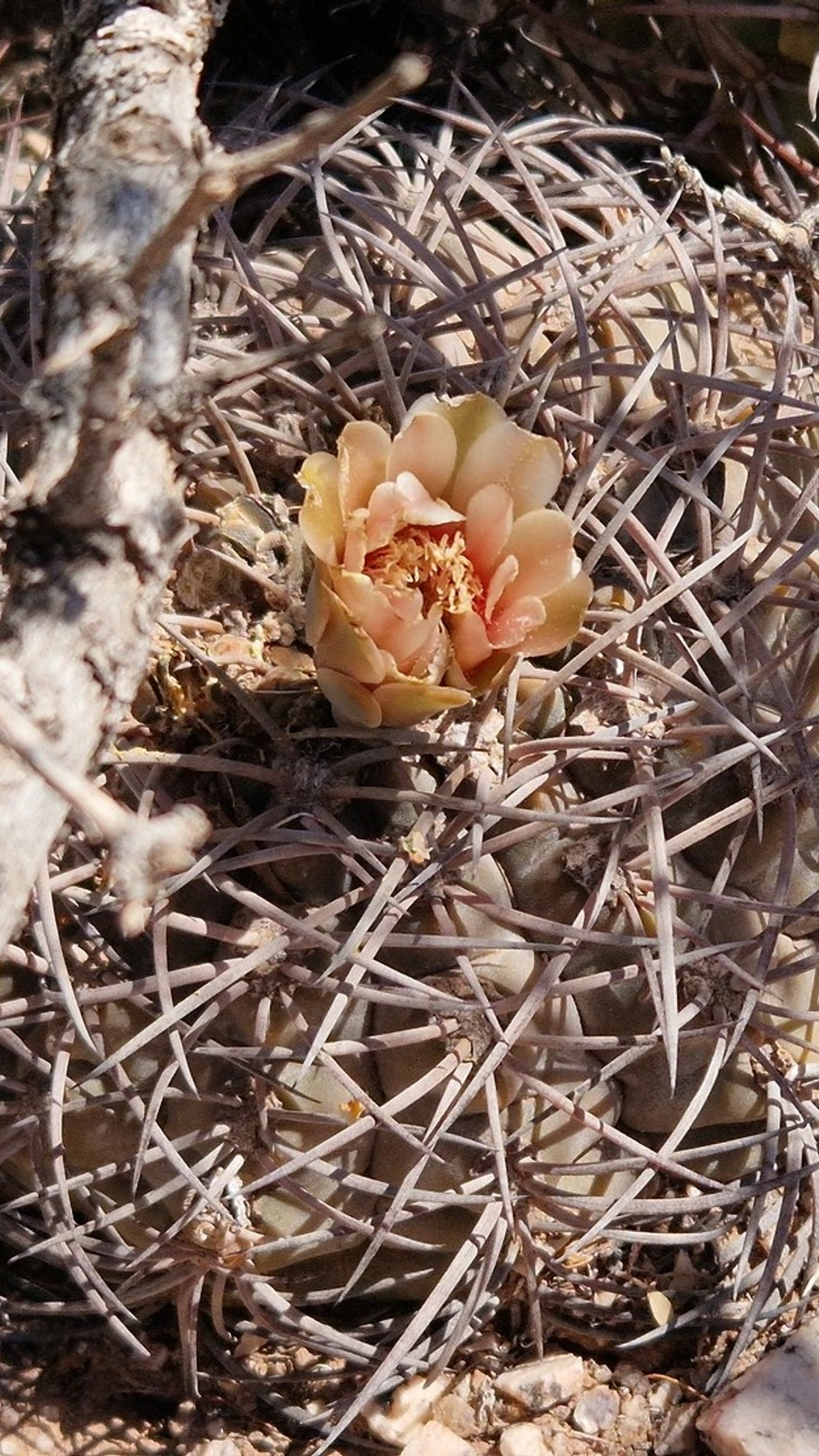 Reference image
Glaucous Chin Cactus
Gymnocalycium glaucum is a highly sought-after, solitary globose cactus in the family Cactaceae. It is distinguished by its stunning matte blue-green (glaucous) epidermis and structured spine arrangement, making it a favorite among succulent collectors 1.
The genus name Gymnocalycium is derived from the Greek for 'naked calyx', referring to the spineless flower buds. The specific epithet glaucum describes the pale, glaucous, waxy coating of the stem, which acts as a natural sun protection 2.
This species is native to western Argentina, particularly within the arid zones of Catamarca and La Rioja provinces. It thrives on rocky, gravelly slopes, often growing tucked under low shrubs or grass clumps that provide partial relief from the intense sun 1.
The stem is solitary, flattened-globose, and can reach up to 10-12 cm in diameter. Ribs are well-defined, bearing strong, dark, slightly curved radial spines. In late spring and summer, it produces large, elegant, funnel-shaped flowers ranging from pale pink to creamy white from the plant's apex 2.
In cultivation, Gymnocalycium glaucum requires an extremely porous, mineral-rich potting medium. It prefers bright, indirect light or filtered sunlight. During the active growth period, water thoroughly but allow the soil to dry out completely between waterings. It has moderate cold tolerance if kept bone dry 1.
Overwatering is the primary cause of failure, quickly leading to root and stem rot. Using organic-heavy potting mixes that retain moisture is highly detrimental. Additionally, sudden exposure to direct summer sun can cause irreversible scorch marks on its glaucous skin 2.
Bright, indirect light or partial sun is best to prevent sunburn and maintain its blue-green skin.
Allow the potting medium to dry out completely before watering again; keep dry in winter.
Use a porous, mineral-rich substrate containing pumice, lava rock, and coarse sand.
Spines are sharp; handle with care and keep out of reach of children and curious pets.
Very easy to care for, provided you do not overwater or let it sit in soggy soil.
Native to the dry, stony hillsides and shrublands of Catamarca and La Rioja in western Argentina, where it benefits from seasonal rainfall and gritty soils.
