
Gymnocalycium hyptiacanthum

Green Chin Cactus

Overview

Gymnocalycium hyptiacanthum is a perennial succulent subshrub belonging to the family Cactaceae. Known for its flattened-globose shape and resilience, it is highly valued among collectors for its easy-care nature 1.

Taxonomy and Naming

The species was formally classified within the genus Gymnocalycium, derived from the Greek words 'gymnos' (naked) and 'kalyx' (bud), referring to the hairless and spineless flower buds 2. It is accepted as Gymnocalycium hyptiacanthum (Lem.) Britton & Rose.

Distribution and Habitat

This species is native to Southern South America, predominantly found in Uruguay and several Argentine provinces including Buenos Aires and Entre Ríos 1. It thrives in subtropical biomes, typically growing on rocky outcrops, sandy grasslands, and shallow soils.

Appearance

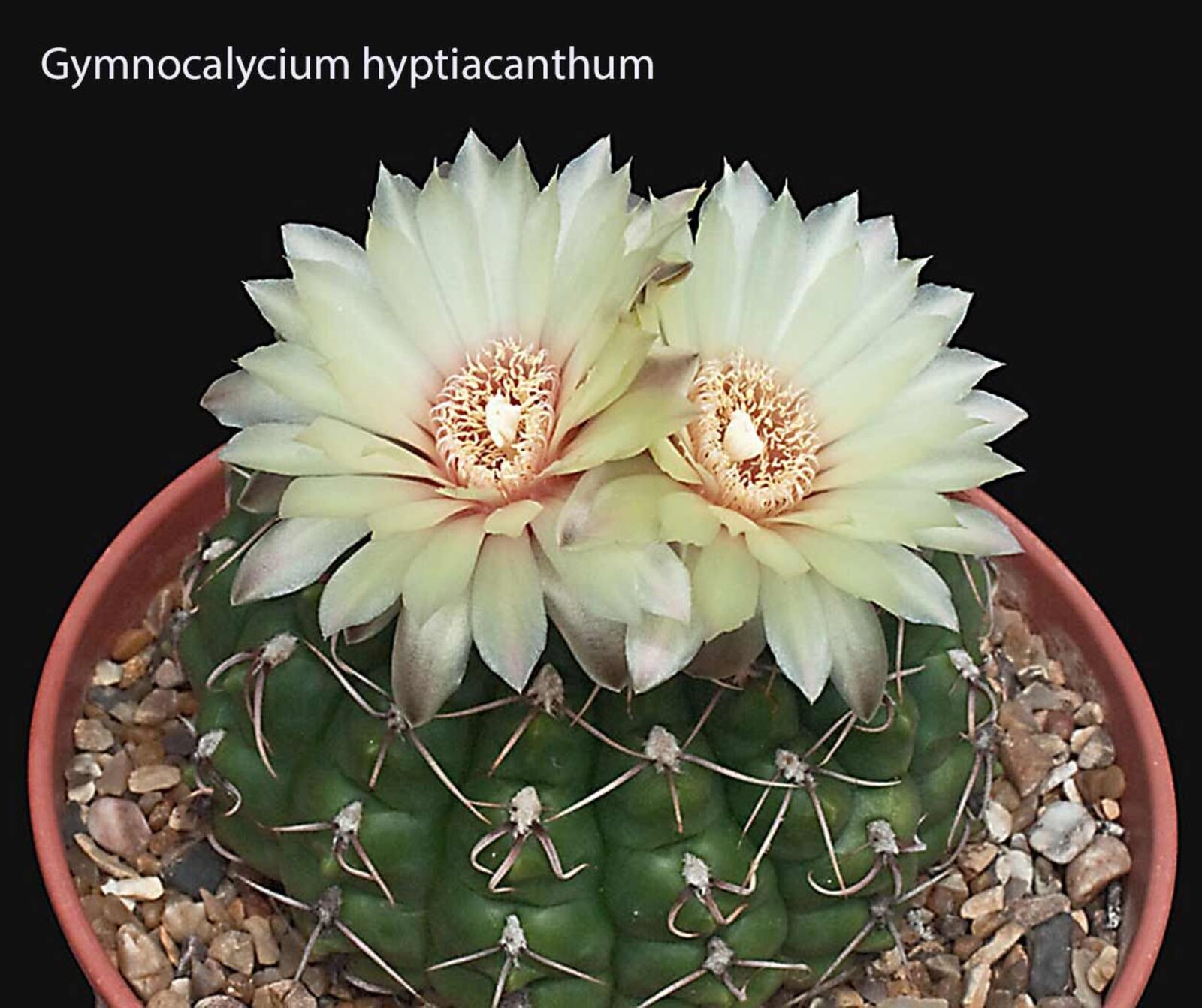
The stem is solitary, dark green to grayish-green, with distinct chinned tubercles. Spines are typically yellowish to brownish, slightly recurved or flattened against the stem. Flowers arise from the apex and are cream-colored, pale yellow, or ivory-white 2.

Culture and Cultivation

It prefers mineral-rich, well-draining soil mixes. During the active growing season (spring and summer), moderate watering is beneficial, while winter requires dry, cool conditions to induce dormancy and future blooming.

Common Cultivation Mistakes

Overwatering and poor soil drainage are the most common causes of root rot. Inadequate light may cause etiolation, stretching the natural compact shape of the cactus.

Bibliography

References

  1. Plants of the World Online (POWO), Royal Botanic Gardens, Kew.
  2. Anderson, E.F. (2001). The Cactus Family. Timber Press, Portland.
Light

Bright Indirect Light

Prefers bright, filtered sunlight or partial shade; avoid direct mid-day sun.
Watering

10-30 Days

Water only after the substrate is dry. Keep completely dry in winter.

Soil

Well-draining cactus mix with pumice and coarse sand

Requires highly porous, inorganic-rich cactus substrate with pumice.

Safety

Pet Friendly

Non-toxic to pets and humans, but handle with care due to sharp spines.

Difficulty

Easy

An easy-care and forgiving species suitable for beginner gardeners.

Native Habitat

Uruguay, Argentina

Native to the rocky grasslands and dry subtropical regions of Uruguay and northeastern Argentina.

Frequently Asked Questions

Is Gymnocalycium hyptiacanthum toxic to pets?
No, this cactus is **non-toxic**. However, its sharp spines can cause physical injury to curious pets, so it is best kept out of their reach.
How often should this cactus be watered?
In summer, water approximately **every 10 days** only when the soil is completely dry. In winter, withhold water almost entirely.
What type of pot and soil should be used?
Clay or plastic pots with ample drainage holes are preferred. Use a **specialized cactus soil mix** containing pumice, perlite, and coarse sand.
When does Gymnocalycium hyptiacanthum bloom?
Mature and healthy plants produce beautiful cream or pale yellow flowers from the apex of the stem in **late spring and summer**.
Where should I keep my cactus during winter?
Keep the cactus in a cool, dry, and frost-free room at **5-10°C (41-50°F)** to induce dormancy and promote future blooming.
Does it tolerate direct midday sun?
No, intense midday sun can cause sunburn. A location with **filtered bright light** or morning sun is optimal.
What does a softening stem mean?
A soft stem is usually a sign of **root rot caused by overwatering**. Stop watering immediately and repot the plant into dry, fresh soil.
How large does Gymnocalycium hyptiacanthum grow?
It is a slow-growing species, typically maintaining a flattened globose form of **7-12 cm (2.7-4.7 inches) in diameter** in pot culture.
How often should I repot this cactus?
Since it grows slowly, repotting **every 2-3 years** in early spring into a slightly larger pot is sufficient.
Should I fertilize this cactus?
During spring and summer, you can apply a diluted, **low-nitrogen cactus fertilizer** once a month. Do not fertilize in autumn and winter.