
Light
Bright Indirect Light
Bright indirect light or filtered sun is best. Avoid harsh, direct afternoon sunlight.
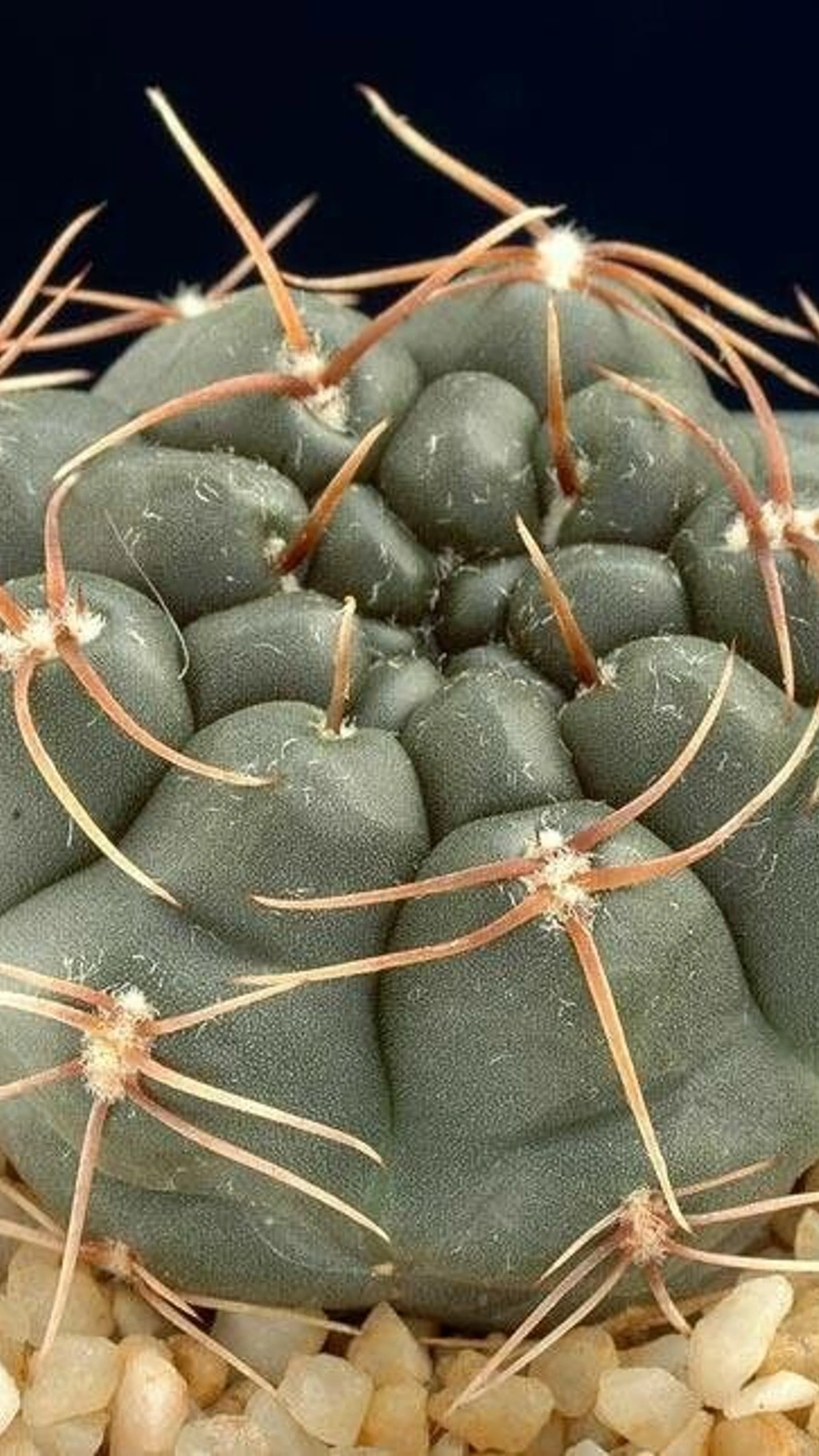 Reference image
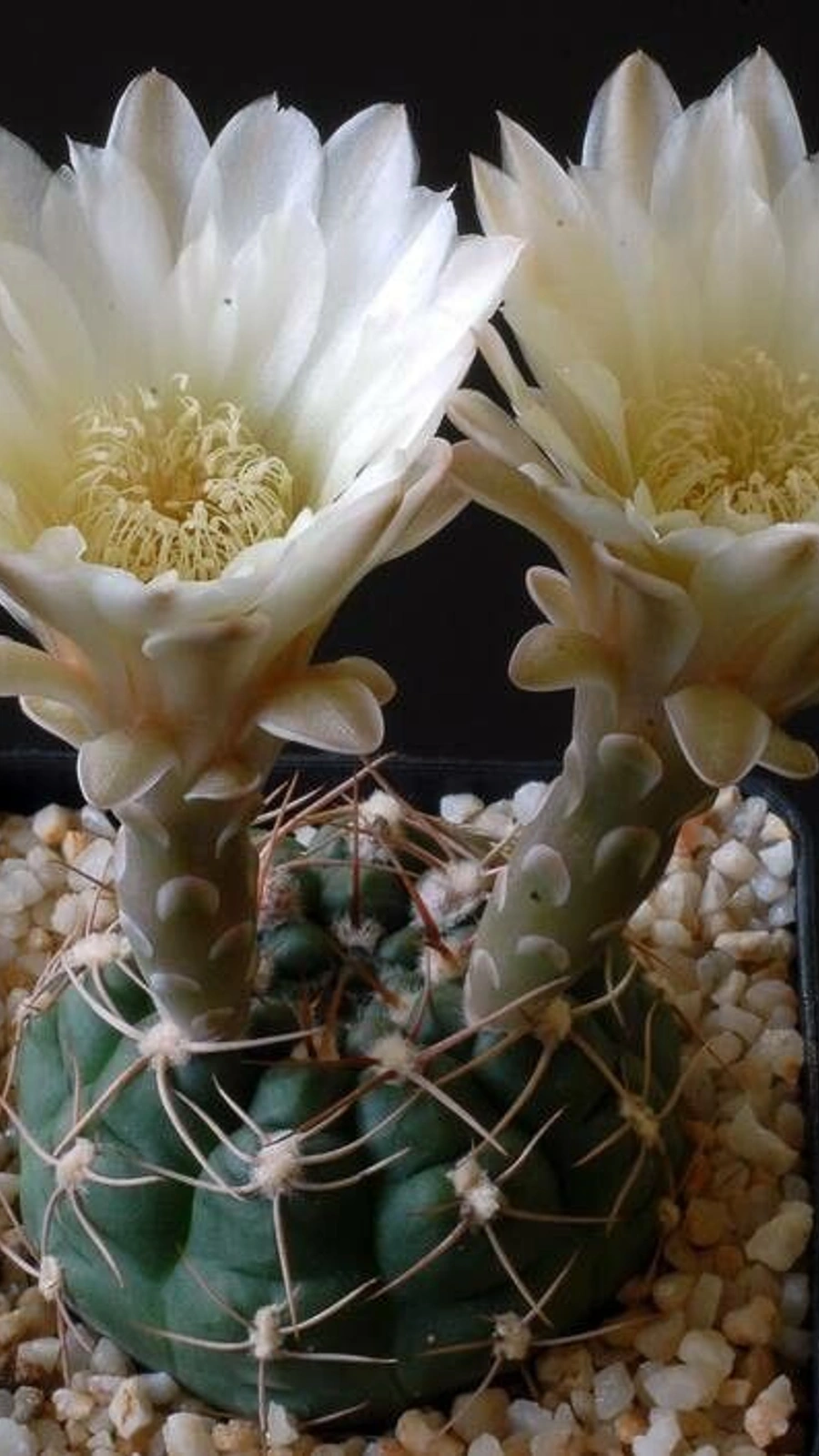 Reference image
Kroenlein's Chin Cactus
Gymnocalycium kroenleinii is a small, globose, and highly decorative succulent subshrub belonging to the Cactaceae family 1. It is highly appreciated among collectors for its compact growth and attractive spine formation.
This species was formally described by Argentine botanist Roberto Kiesling. The genus name Gymnocalycium is derived from the Greek words for "naked calyx" (referring to the spineless flower buds) 2, while the specific epithet kroenleinii honors the notable botanist and succulent expert Marcel Kroenlein.
It is native to Southern South America, specifically the western and central provinces of Argentina such as San Luis, San Juan, and Mendoza 1. It thrives in subtropical climates, growing in gravelly soils, rocky slopes, and under the light shade of sparse shrubs.
The plant has a solitary, globose to flattened-globose stem that features a dull grayish-green or olive-green epidermis. The areoles carry slightly curved, appressed spines that range from cream to pale brown. During summer, it produces beautiful white to pale pink, bell-shaped flowers at the crown.
It prefers bright, filtered sunlight and absolute protection from burning midday sun. During the active growing season, water only when the gritty substrate is completely dry. In winter, maintain cool conditions and keep the soil almost bone dry.
The most frequent mistakes in cultivation are overwatering during the winter dormancy period and utilizing organic-rich, heavy clay soils, both of which inevitably cause root rot 2.
Bright indirect light or filtered sun is best. Avoid harsh, direct afternoon sunlight.
Allow the soil to dry out 100% between waterings. Keep dry in winter.
Use a mineral-heavy mix with plenty of pumice, gravel, and minimal organic matter.
Non-toxic, but handle with care due to sharp, protective spines.
Very easy to care for, provided it is not overwatered and is kept dry during winter.
Native to the rocky subtropical slopes, gravelly terrains, and dry grasslands of western and central Argentina.
