
Light
Bright Indirect Light
Bright indirect light or filtered morning sun is ideal to avoid sunburn.
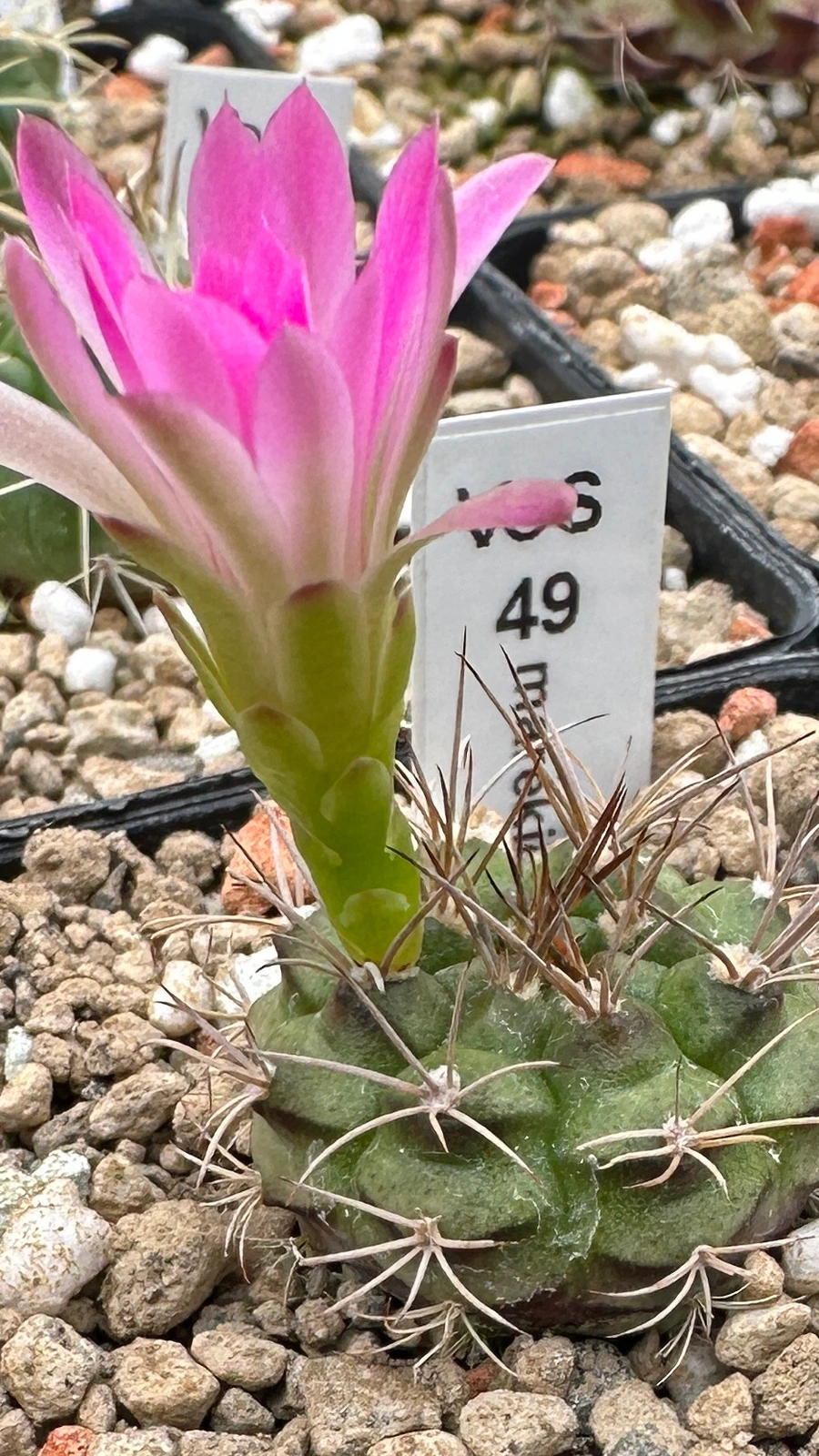 Reference image
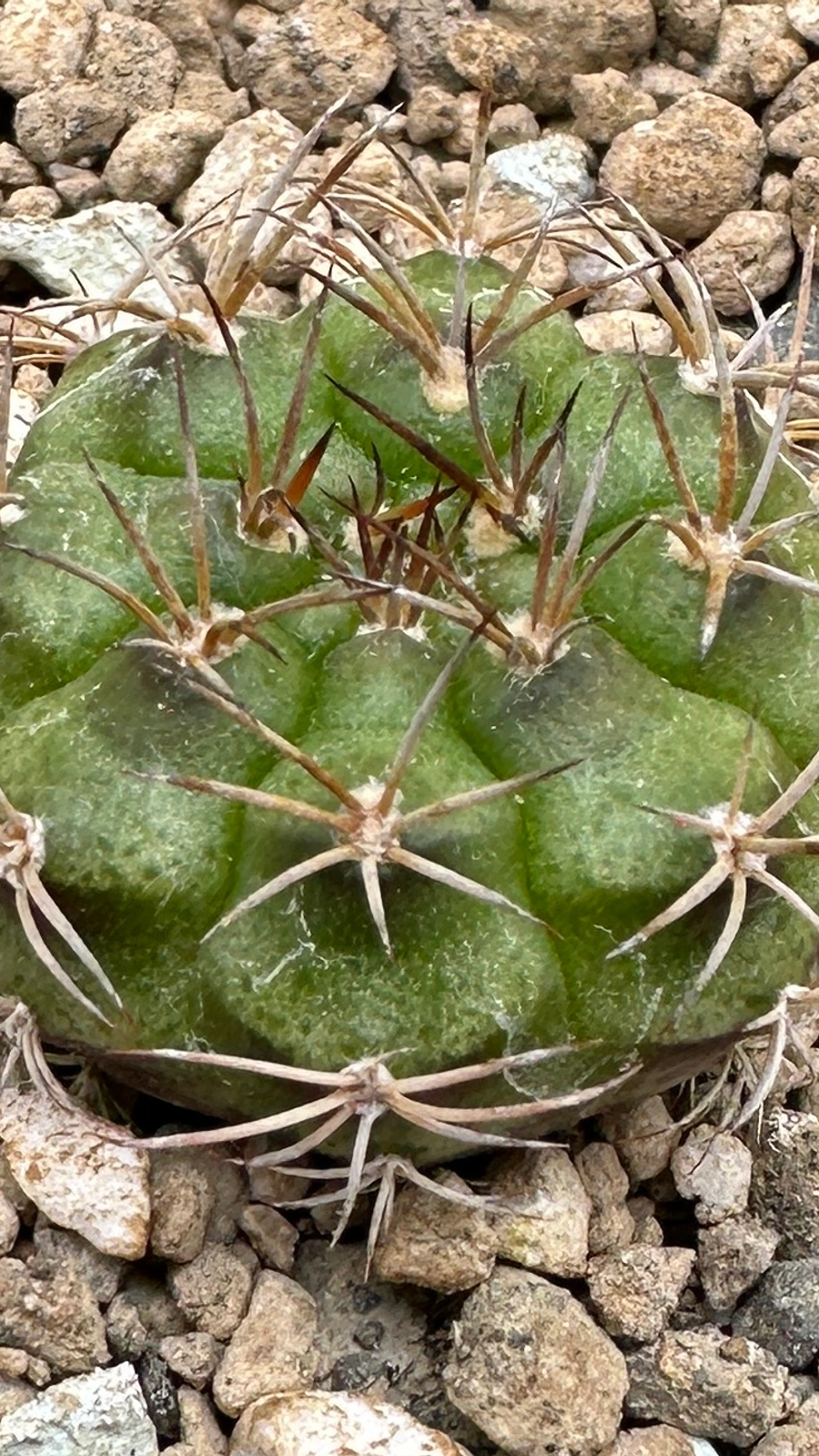 Reference image
Marek's Chin Cactus
Gymnocalycium marekiorum is a miniature, highly sought-after succulent subshrub belonging to the Cactaceae family, prized by collectors for its flattened body shape and neat spination.
Classified within the genus Gymnocalycium, the species name 'marekiorum' honors the Marek family or discoverer who contributed to its recognition 1. It is commonly referred to as 'Marek's Chin Cactus' due to the distinctive chin-like protrusions below its areoles.
This species is native to Western South America, particularly restricted to dry tropical biomes in Bolivia (BOL) 2. It thrives on rocky outcrops and grassy slopes where it can partially retract into the soil during dry spells.
Typically growing solitary, it has a globose, flattened, grayish-green stem with low ribs and prominent chin-like tubercles. The spines are short and lie flat against the stem. The flowers are funnel-shaped, carrying elegant shades of white, cream, or soft pink.
In cultivation, it requires bright, filtered light during the active growing season. Well-aerated mineral soil is vital. Watering should follow a 'soak and dry' method, allowing the medium to dry out completely. Cold winter dormancy is recommended for flowering.
Excessive watering is the primary cause of root and stem rot. Insufficient lighting causes unnatural elongation (etiolation), while harsh, direct midday summer sun can lead to irreversible epidermis scarring.
Bright indirect light or filtered morning sun is ideal to avoid sunburn.
Allow the substrate to dry out entirely between thorough waterings.
Highly porous mineral mix with pumice, grit, and minimal organic matter.
Spines can cause minor physical injury; non-toxic to dogs and cats.
Very easy to care for, provided you avoid overwatering and heavy clay soils.
Found in Bolivia, growing in seasonally dry tropical regions among rocky hillsides and sparse grasslands.
