
Light
Bright Indirect Light
Requires bright, indirect sunlight or light shade; sensitive to intense direct midday sun.
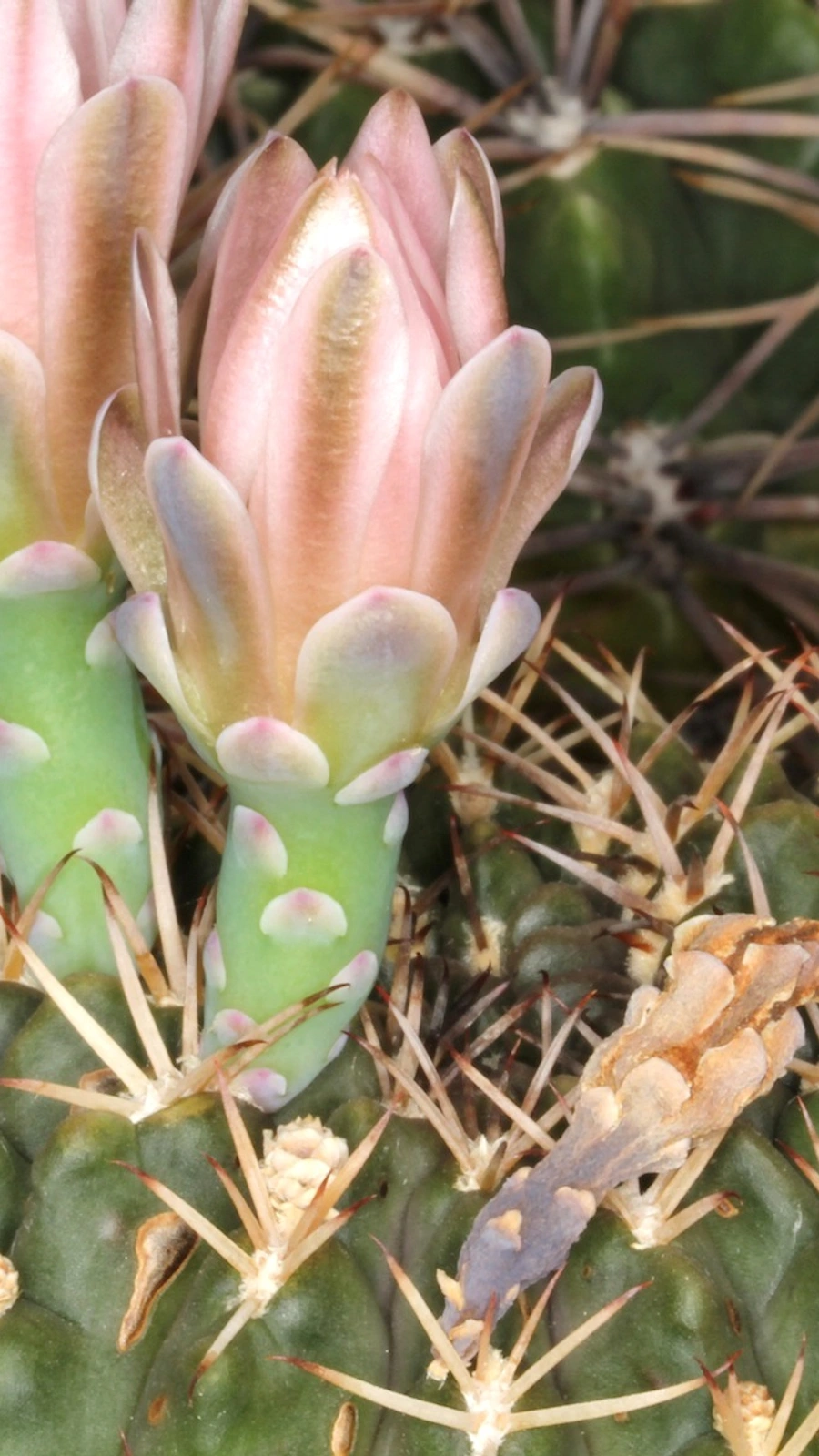 Reference image
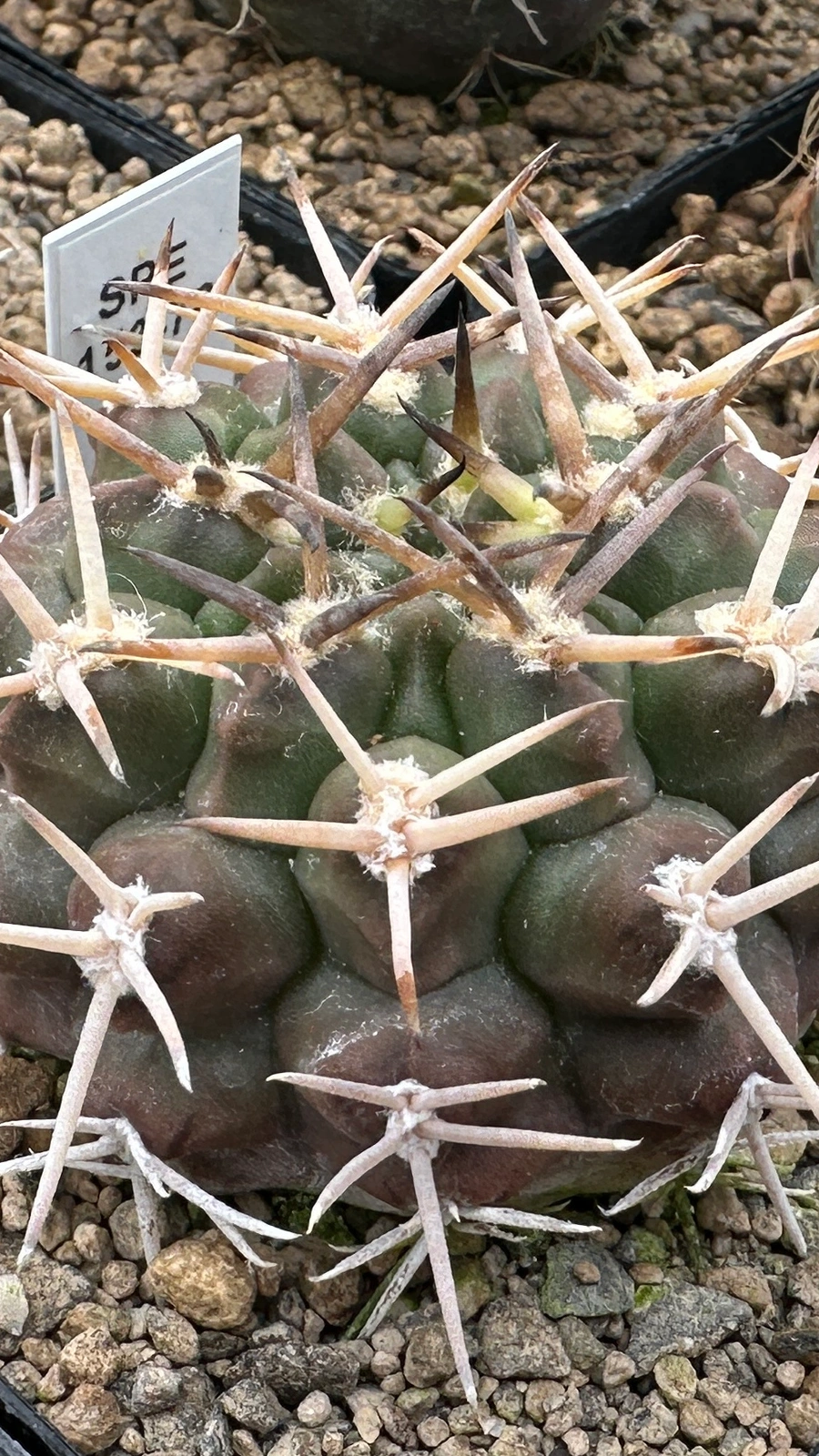 Reference image
Marsoner's Chin Cactus
Gymnocalycium marsoneri is a slow-growing, solitary, perennial succulent subshrub belonging to the Cactaceae family 1. Highly appreciated by succulent collectors, it is known for its flattened globose stem and low-maintenance profile.
The species was named in honor of Oreste Marsoner, a prominent botanical collector active in South America 2. The genus name Gymnocalycium derives from the Greek words 'gymnos' (naked) and 'kalyx' (bud), referring to the hairless, scale-free flower buds that characterize the genus.
This cactus is native to southern South America, specifically the northwestern regions of Argentina (including Jujuy, Salta, and Tucumán), parts of Bolivia, and Brazil 1. It thrives in subtropical climates, typically growing under the light shade of shrubs in sandy, gravelly, and well-draining soils.
The body is a dull grayish-green to bronze-tinted globose stem, reaching up to 14 cm in diameter. It features broad, low ribs adorned with short, slightly curved radials. In late spring or summer, it produces beautiful, funnel-shaped flowers in shades of cream, ivory, or pale yellow from the plant's apex 2.
In cultivation, Gymnocalycium marsoneri requires bright, indirect sunlight to protect its epidermis from scorching. A highly porous mineral substrate is essential to mimic its natural habitat. Watering should be thorough but infrequent, allowing the substrate to dry completely between applications.
The most prevalent issue is root rot triggered by overwatering or poor drainage 3. Insufficient light can also lead to etiolation, causing the naturally flat-topped stem to stretch unnaturally toward the light source.
Requires bright, indirect sunlight or light shade; sensitive to intense direct midday sun.
Water thoroughly only when the soil is completely dry. Keep dry in winter.
Needs a mineral-rich, highly porous soil mix containing pumice, gravel, and sand.
Non-toxic to pets, but the spines can cause physical injury; handle with care.
Very easy to care for, provided it is not overwatered and is protected from hard frost.
Naturally distributed in the dry subtropical woodlands and rocky slopes of northwestern Argentina, southern Bolivia, and parts of Brazil, growing under sparse vegetation.
