
Light
Bright Indirect Light
Bright indirect light or filtered morning sun is perfect.
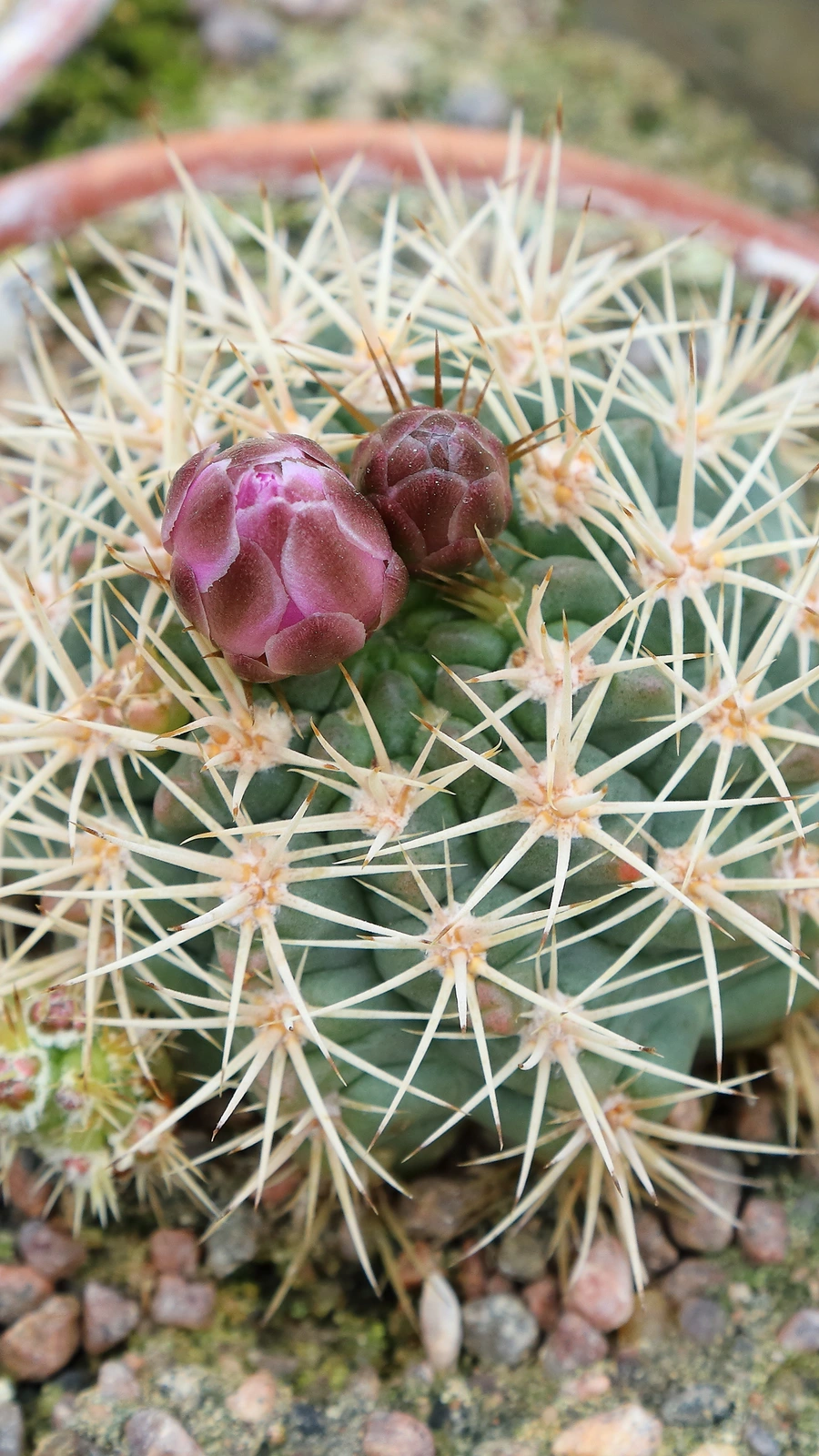 Reference image
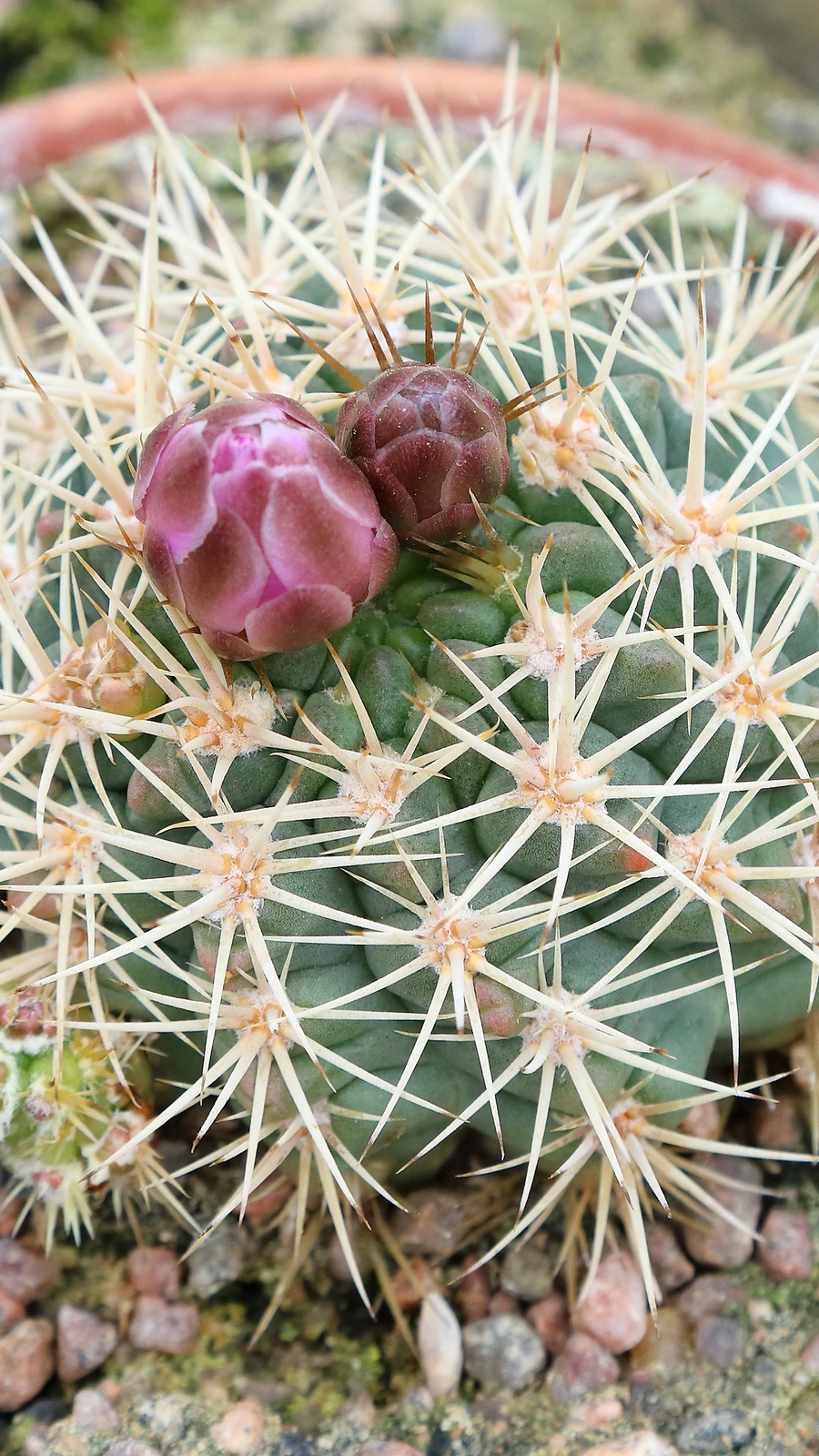 Reference image
Neuhuber's Chin Cactus
Gymnocalycium neuhuberi is a highly sought-after, solitary globose cactus in the family Cactaceae. Due to its restricted natural distribution and habitat degradation, this species is considered critically endangered in the wild.
The genus name Gymnocalycium originates from the Greek 'gymnos' (naked) and 'kalyx' (bud), referring to the flower buds which lack hair or spines 1. The specific epithet neuhuberi honors the Austrian cactus expert and specialist Gert Neuhuber, who made significant contributions to the genus study 2.
This species is endemic to San Luis Province in Argentina. It naturally thrives at elevations between 1,000 and 1,500 meters above sea level, primarily growing in rocky, granitic crevices and steep slopes amongst sparse grasses.
This cactus features a solitary, flattened-globose stem of pale blue-green to grayish-green coloration. It has distinct ribbed structures decorated with strong, needle-like spines that curve slightly backward. During late spring, it produces beautiful, fragrant, funnel-shaped flowers in shades of lilac, pinkish-violet, or pale purple.
In cultivation, Gymnocalycium neuhuberi is straightforward to grow. It prefers bright, filtered light and requires excellent drainage. Watering should be deep but infrequent, allowing the substrate to dry completely between applications 2.
The most frequent issue is root rot caused by poorly draining soil or overwatering. Keeping the plant in humid, unventilated indoor spaces can promote fungal attacks. Skipping the cold winter rest will also inhibit blooming.
Bright indirect light or filtered morning sun is perfect.
Water thoroughly only when the soil is dry. Keep dry in winter.
Requires highly porous, mineral-based cactus mix with pumice.
Non-toxic, but sharp spines require careful handling.
Easy; very resilient if not overwatered and given winter rest.
Endemic to high-altitude rocky slopes and granitic crevices in San Luis Province, Argentina.
