
Light
Bright Indirect Light
Prefers bright, indirect sunlight; protect from intense, direct midday summer sun.
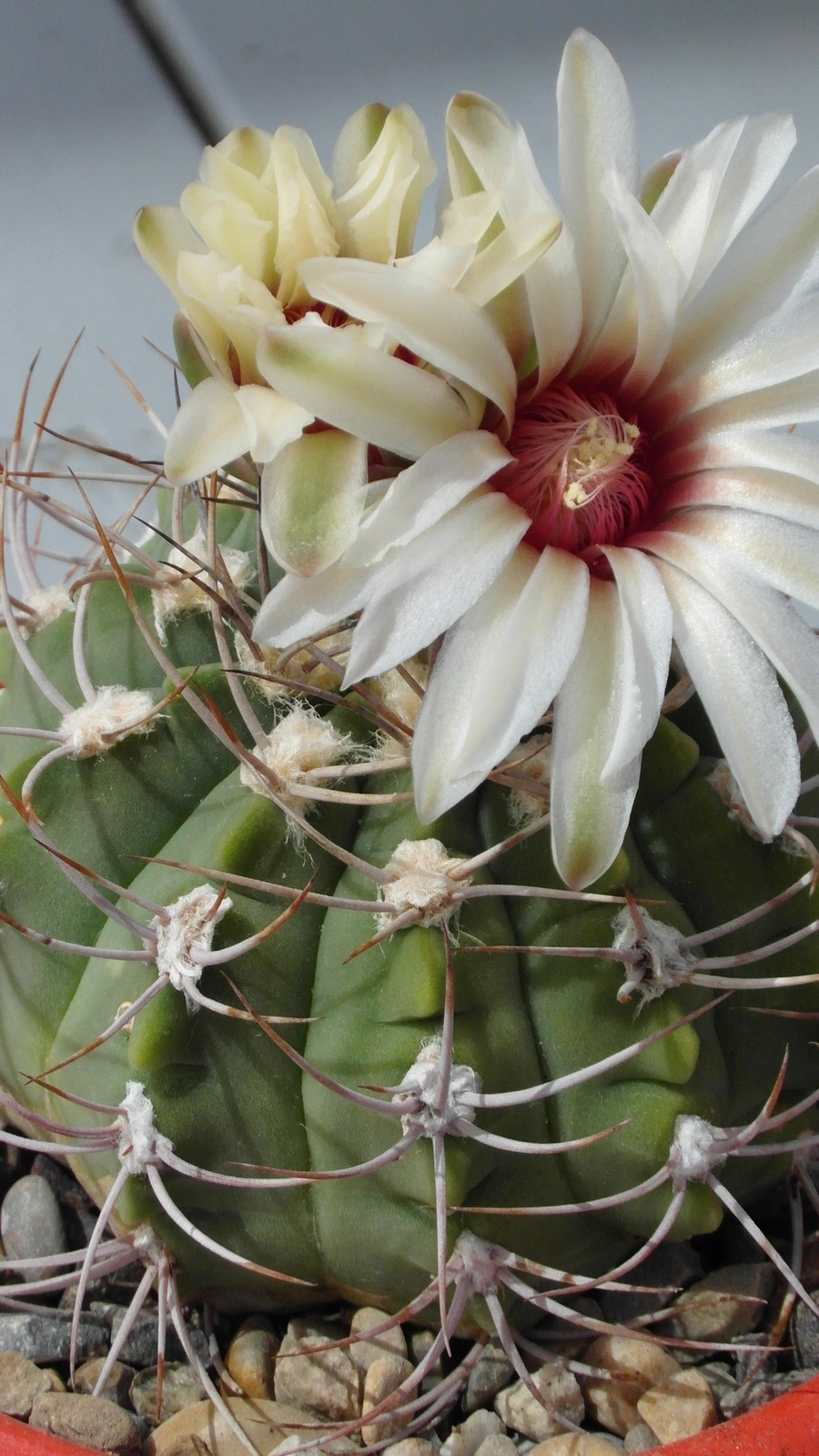 Reference image
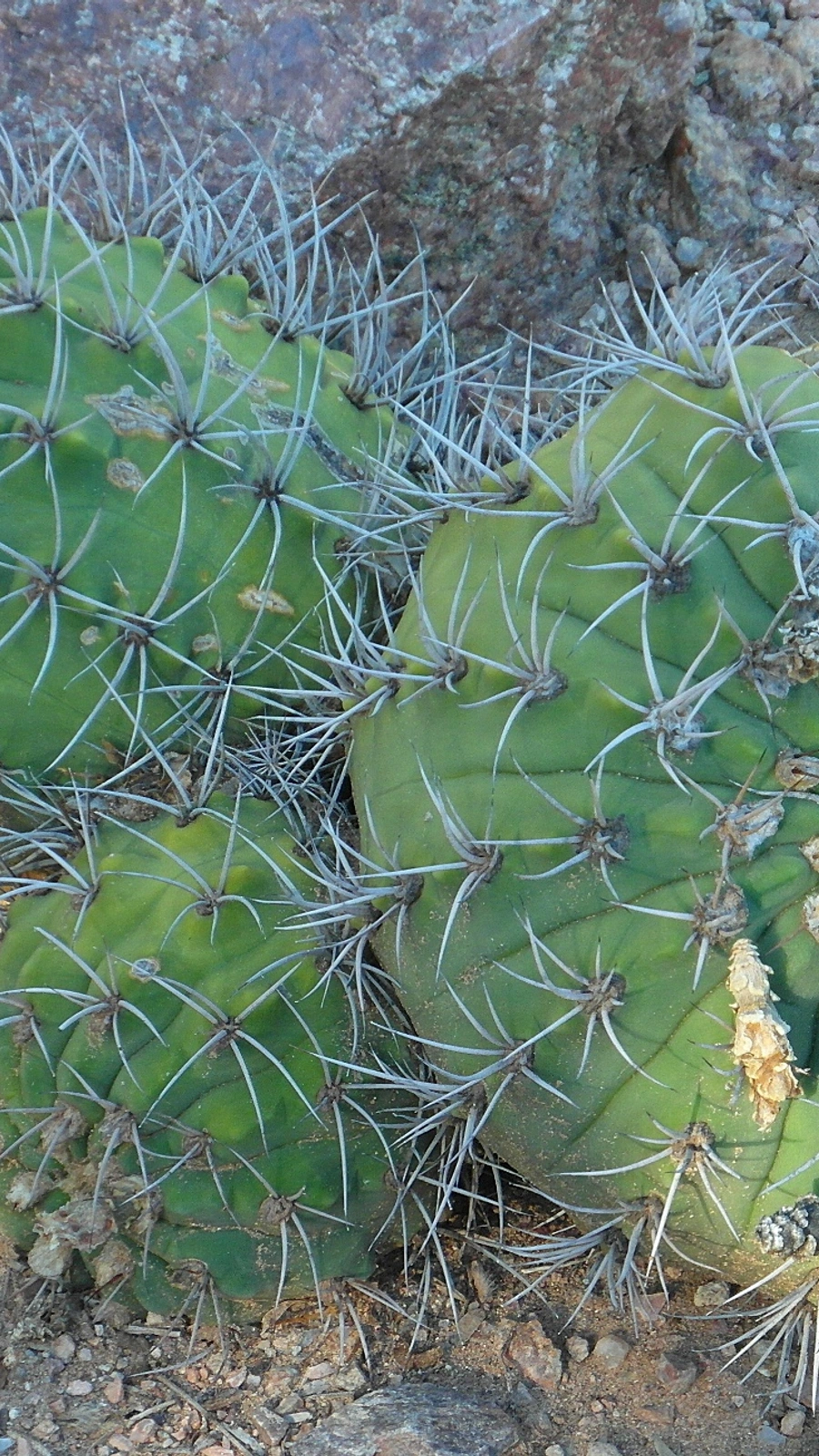 Reference image
Black-Areole Chin Cactus
Gymnocalycium nigriareolatum is a distinctive species within the family Cactaceae, highly regarded by succulent collectors for its striking dark felted areoles and large, funnel-shaped white flowers. Its compact size and robust nature make it an excellent specimen for indoor cultivation and rock gardens 1.
The species was formally described by the German botanist Curt Backeberg. The genus name Gymnocalycium is derived from the Greek for 'naked calyx', referring to the hairless flower buds. The specific epithet nigriareolatum highlights the prominent black to dark-brown felt found on its young areoles 2.
Native to southern South America, Gymnocalycium nigriareolatum is predominantly found in the Catamarca and La Rioja provinces of Argentina. It thrives in subtropical, arid environments, typically growing on rocky outcrops, stony slopes, and under the protective shade of scrub vegetation 1.
This cactus usually grows solitary, exhibiting a globose to flattened-globose stem that ranges from pale grayish-green to dark olive green. The central characteristic is the prominent areoles covered in dense blackish felt. Radial spines are slightly curved, sharp, and vary from yellow to gray. It produces beautiful white to pale-pink flowers from the apex during warm months.
It prefers bright, indirect sunlight and must be planted in a highly porous, gritty soil mix. Watering should follow the 'soak and dry' method. During the cold winter dormancy, keeping the soil completely dry is crucial to prevent root damage 2.
Overwatering during the winter rest period is the most frequent cause of plant loss. Insufficient lighting will cause the cactus to stretch and lose its compact, attractive shape.
Prefers bright, indirect sunlight; protect from intense, direct midday summer sun.
Apply 'soak and dry' method; keep dry in winter to prevent root rot.
Requires an inorganic, highly draining mix rich in pumice, gravel, and sand.
Non-toxic to pets, but has sharp spines that can cause physical injury.
Very easy to grow for beginners if watering is carefully managed.
Grows natively in the arid subtropical regions of Argentina, sheltered by grasses and rocks in coarse, well-draining mineral soils.
