
Light
Bright Indirect Light
Enjoys bright, filtered light; shield from extreme, direct midday summer sun.
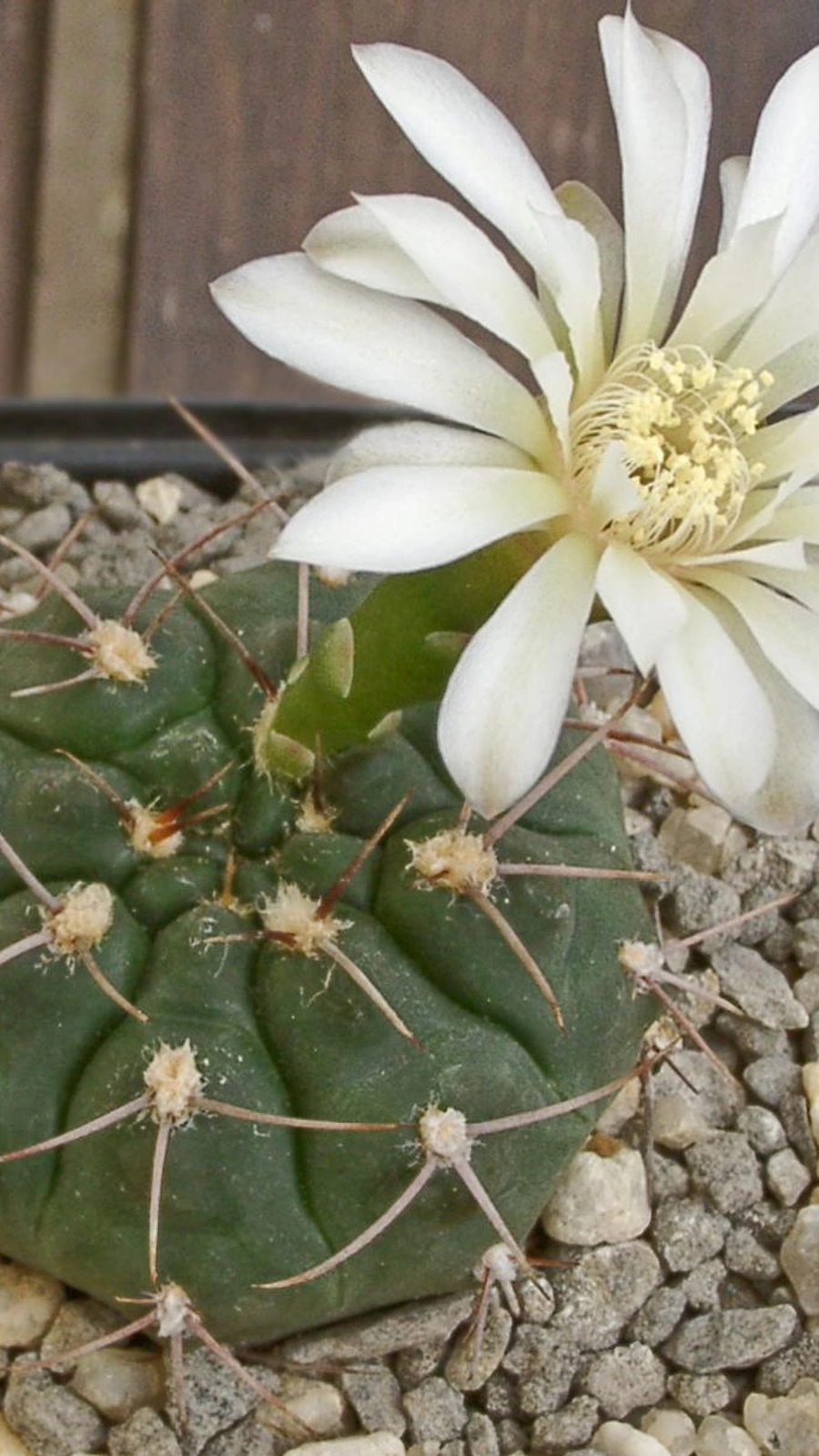 Reference image
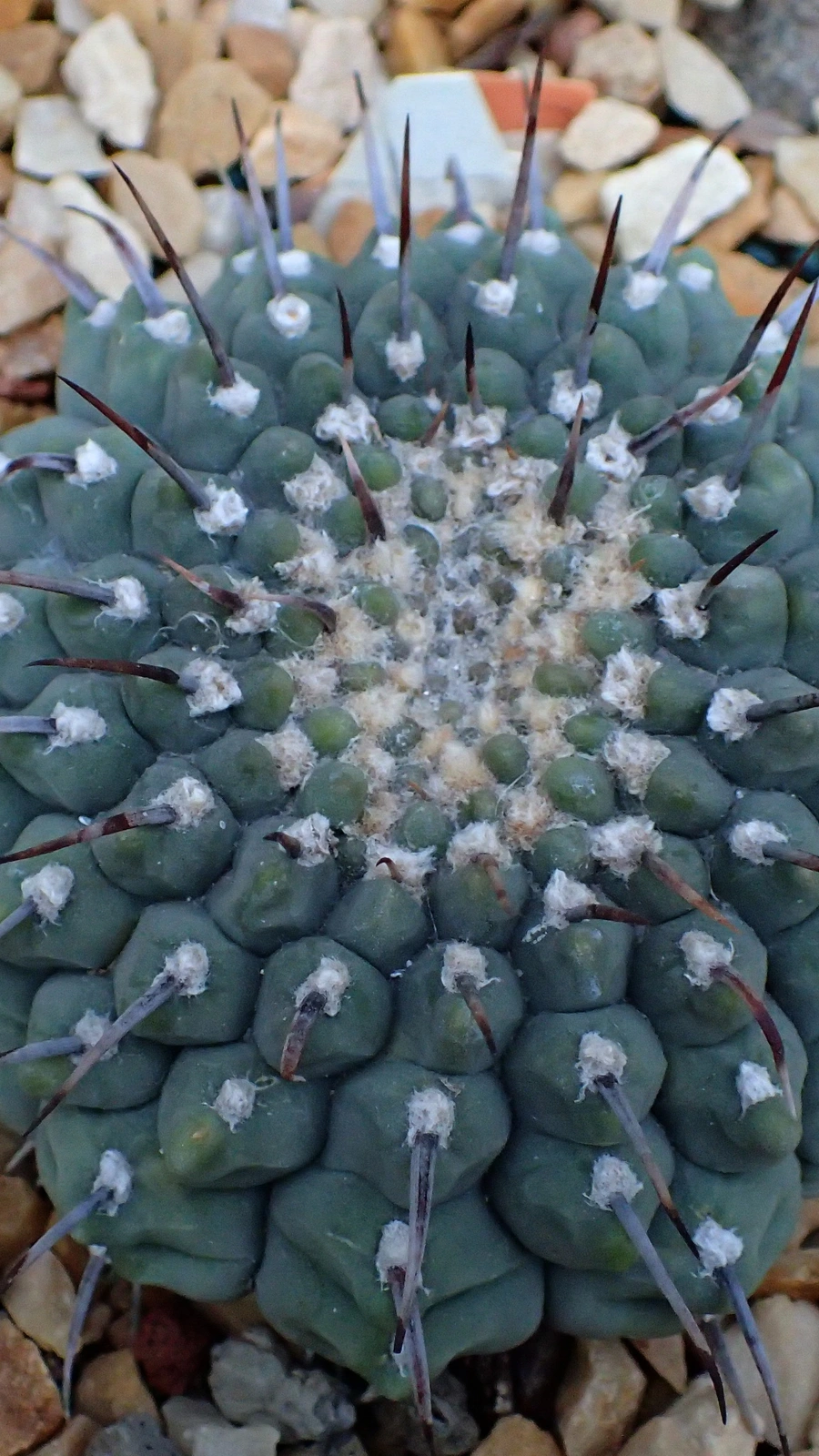 Reference image
Ochoterena's Chin Cactus
Gymnocalycium ochoterenae is a highly ornamental, flattened-globose cactus species belonging to the Cactaceae family. Known for growing almost flush with the soil level in its natural habitat, this succulent subshrub is prized by collectors for its unique comb-like spine arrangement and delicate pastel flowers 1. It is remarkably easy to cultivate in indoor settings.
Belonging to the genus Gymnocalycium, this species was named in honor of the Mexican botanist Isaac Ochoterena. The generic name Gymnocalycium is derived from Greek, meaning 'naked calyx', referencing the characteristic scale-less flower buds of the genus 2.
Gymnocalycium ochoterenae is endemic to Argentina, particularly found in the central-western provinces of San Luis and Córdoba. It thrives in subtropical dry shrublands and rocky slopes, typically sheltered under larger desert shrubs or nestled in rocky crevices 3.
This cactus is usually solitary, featuring a low, dome-shaped stem of greyish-green to brownish-green coloration. The stem exhibits 9 to 16 low ribs with prominent chin-like tubercles beneath the areoles. Its spines are mostly radial, curved back toward the plant body, and present a pale grey-yellow tone. Bell-shaped flowers of white, cream, or light pink hues bloom from the apex.
G. ochoterenae prefers bright, filtered sunlight over harsh, direct afternoon sun. Watering should be thorough but infrequent, allowing the substrate to dry out entirely between sessions. During winter, watering must be halted almost completely. A mineral-rich, highly porous soil mix ensures root health and prevents rot 2.
Overwatering is the single most common cause of failure, quickly leading to root and stem rot. Placing the cactus in dark corners causes etiolation, wherein the spherical stem stretches unnaturally and loses its compact shape.
Enjoys bright, filtered light; shield from extreme, direct midday summer sun.
Allow soil to dry out completely before watering; keep dry during winter.
Highly porous, fast-draining mineral-based cactus mix containing pumice.
Non-toxic, but features sharp spines that require careful handling.
Very easy to grow, ideal for beginners who can avoid the urge to overwater.
Endemic to the central and western regions of Argentina, inhabiting rocky hillsides and subtropical semi-arid grasslands of San Luis, Córdoba, and La Rioja.
