
Light
Bright Indirect Light
Thrives in bright, indirect or filtered sunlight. Avoid scorching afternoon sun.
 Reference image
 Reference image
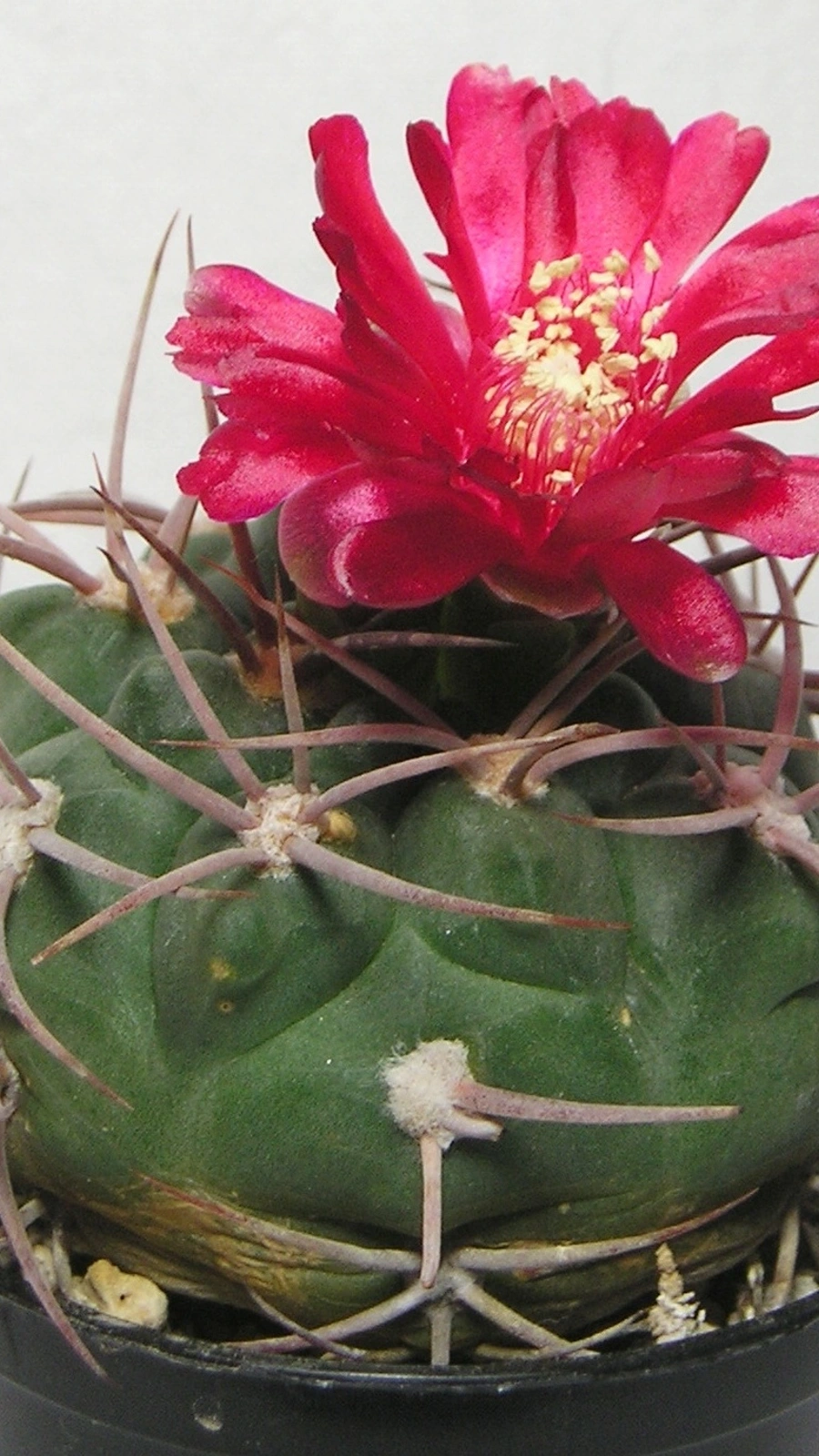
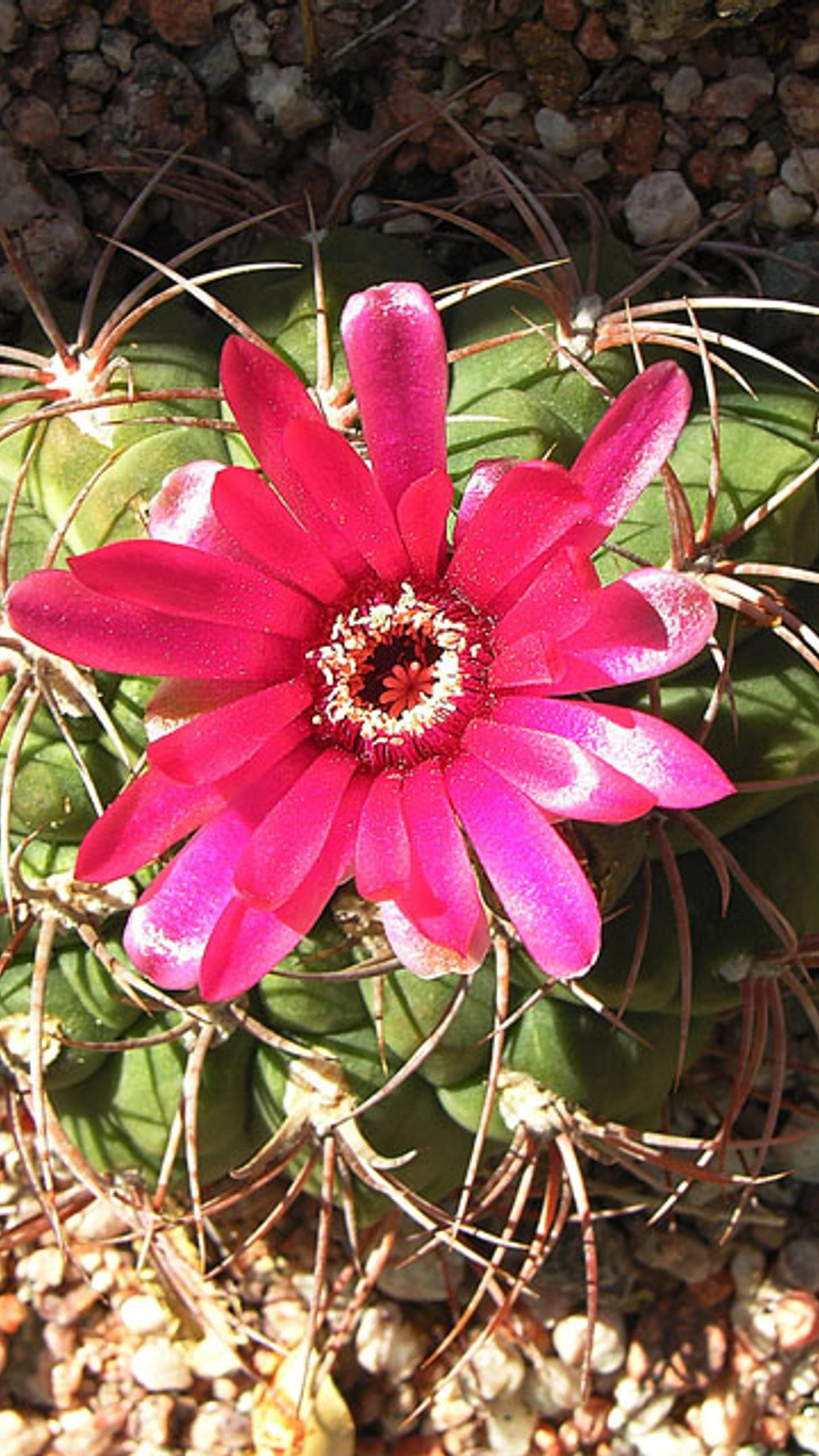
Wine-flowered Chin Cactus
Gymnocalycium oenanthemum is a highly sought-after globular cactus within the Cactaceae family, prized for its distinctive wine-red blossoms and robust, spiny appearance 1. It is well-regarded for its slow, predictable growth and easy adaptation to indoor culture.
The species epithet "oenanthemum" derives from the Greek oinos (wine) and anthemon (flower), directly describing its rich dark red petals 2. The genus name Gymnocalycium refers to the naked flower buds, lacking hairs or spines.
Native to the western provinces of Argentina, including Mendoza and San Juan, this subtropical succulent subshrub grows primarily in rocky crevices and gravelly slopes 1. It thrives in environments with dry winters and warm, wet summers.
The stem is solitary, globose to slightly flattened, presenting a matte dark green to greyish-green hue. It features sharp, slightly curved grey-brown spines clustered on distinct tubercles. Showy wine-red flowers emerge from the crown during late spring or summer.
It prefers a mineral-rich, highly porous soil mix. Water thoroughly during the growing season only when the substrate has dried out completely 2. It demands bright filtered light rather than harsh, direct mid-day sun.
Overwatering in low-temperature periods is the primary cause of root rot. Lack of sufficient light leads to stem stretching and loss of its compact shape.
Thrives in bright, indirect or filtered sunlight. Avoid scorching afternoon sun.
Allow the soil to dry out completely between waterings. Keep dry in winter.
Requires excellent drainage. Use a specialized cactus mix rich in pumice.
The sharp spines can cause physical injury, though the plant is non-toxic to pets.
Very easy to care for, making it ideal for beginners and low-maintenance collections.
Grows naturally in the western mountainous regions of Argentina, nestled among rocks and dry, gravelly slopes under subtropical climate conditions.
