
Light
Bright Indirect Light
Thrives in bright, indirect or filtered sunlight. Avoid harsh, direct afternoon sun.
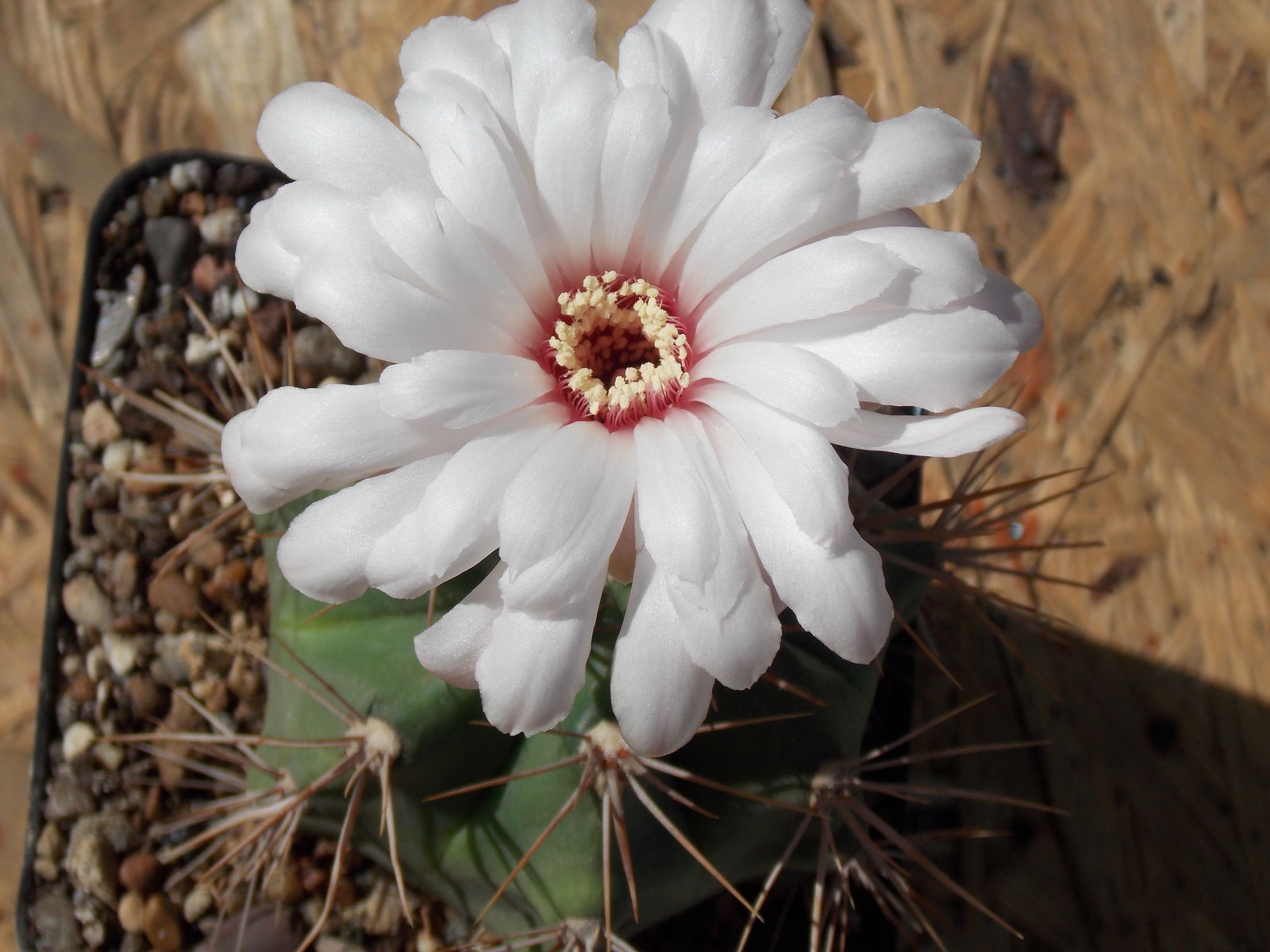 Reference image
Flat-chinned Cactus
Gymnocalycium paediophylum is a slow-growing, perennial succulent cactus species within the family Cactaceae. Highly prized by collectors, it is appreciated for its symmetrical, globular stem and prominent, neat spine arrangement. Over time, the solitary stems may produce offsets or become slightly columnar with age.
Belonging to the genus Gymnocalycium, this species is defined by its hairless flower buds, a feature from which the genus name is derived (from the Greek words for 'naked' and 'bud') 1. The specific epithet paediophylum references the flat, open landscapes and plains of its natural habitat.
This species is native to Paraguay, situated within Southern South America 2. It grows primarily in subtropical, arid biomes, colonizing rocky outcrops, gravelly soils, and slopes where it often finds partial shade under sparse desert shrubs.
The stem is dull green to grey-green, featuring prominent, rounded ribs with distinctive chin-like tubercles beneath each areole. Strong, slightly curved radial spines hug the body. In late spring or summer, it produces beautiful, funnel-shaped, pale pink or cream-white flowers from the crown of the stem.
In cultivation, it thrives in bright, indirect sunlight with excellent air circulation. Harsh, direct midday sun can cause permanent scorching to the epidermis. Soil must be highly porous, containing at least 50% grit, pumice, or perlite to facilitate rapid drainage.
Overwatering during the winter dormancy period is the most common cause of plant loss, leading to root rot. Additionally, placing the cactus in dark, unventilated corners results in weak, elongated growth (etiolation) and a loss of its characteristic compact form.
Thrives in bright, indirect or filtered sunlight. Avoid harsh, direct afternoon sun.
Allow the substrate to dry out entirely between waterings. Suspend watering in winter.
Requires extremely well-draining soil mixed with pumice, grit, and coarse sand.
Non-toxic, but sharp spines require cautious handling away from pets and children.
Easy; very low-maintenance if not overwatered and kept in a porous soil mix.
Native to the subtropical plains of Paraguay, where it is found thriving in gravel-rich soils, often sheltered under low shrubs from extreme direct heat.
