
Light
Bright Indirect Light
Requires abundant bright, indirect light. Protect from harsh, direct midday summer sun.
 Reference image
 Reference image
Dwarf Chin Cactus
Gymnocalycium parvulum is a charming, miniature succulent subshrub belonging to the Cactaceae family. Highly appreciated by succulent collectors worldwide, its specific epithet parvulum translates to "very small" or "puny", accurately describing the diminutive size and compact growth habit of this species 1.
Originally described by the botanist Carlos Luis Spegazzini, this species is nested within the genus Gymnocalycium, commonly known as "chin cacti". The genus name is derived from the Greek words "gymnos" (naked) and "kalyx" (bud), referring to the flower buds that are completely free of hair, bristles, or spines, a key diagnostic feature of this group 2.
This species is native to Southern South America, specifically endemic to the subtropical arid regions of Argentina (such as San Luis and Córdoba provinces) 1. It typically grows on rocky slopes, dry hillsides, and gravelly soils, often sheltered under low shrubs or grasses from the intense sun.
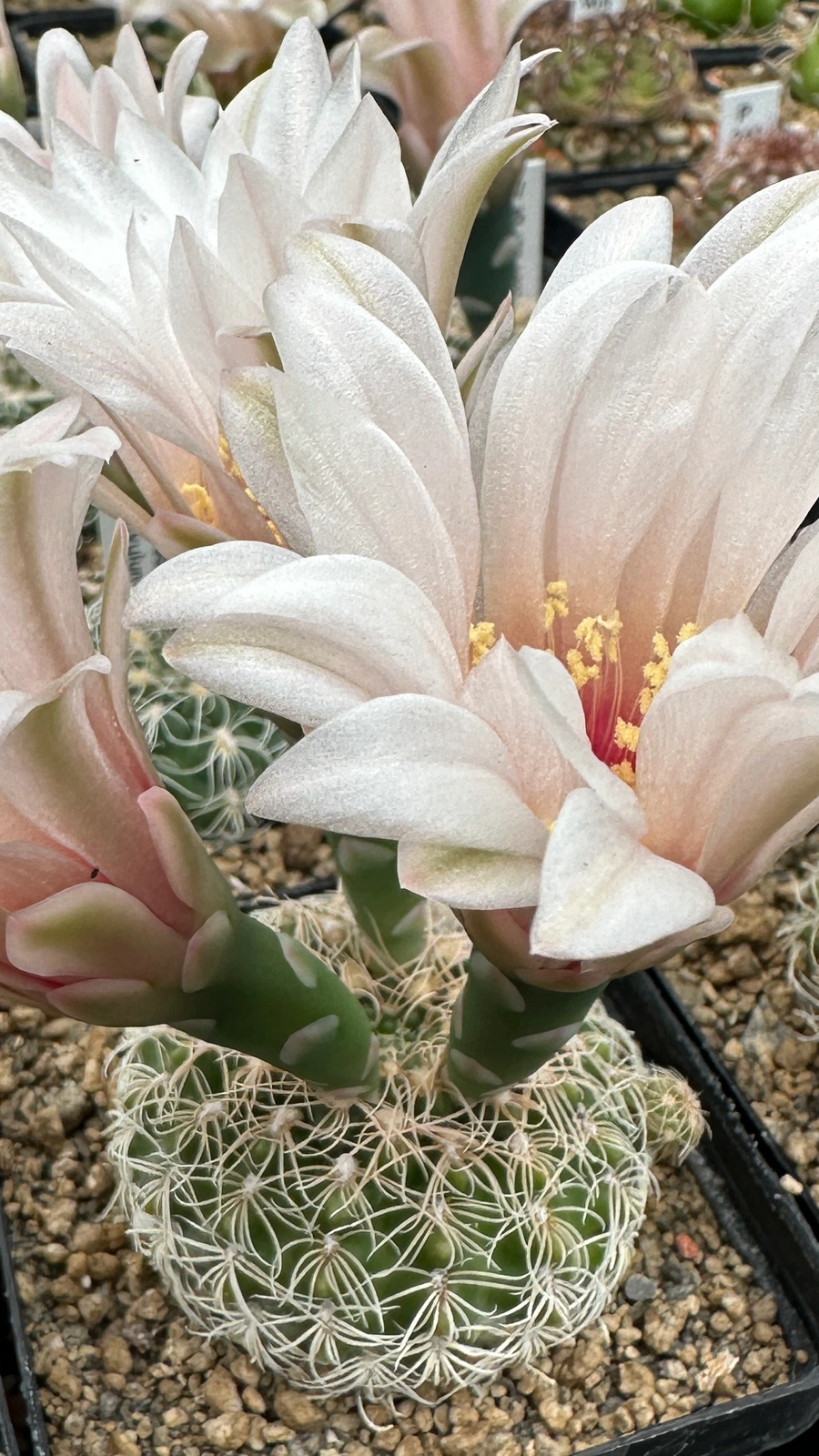
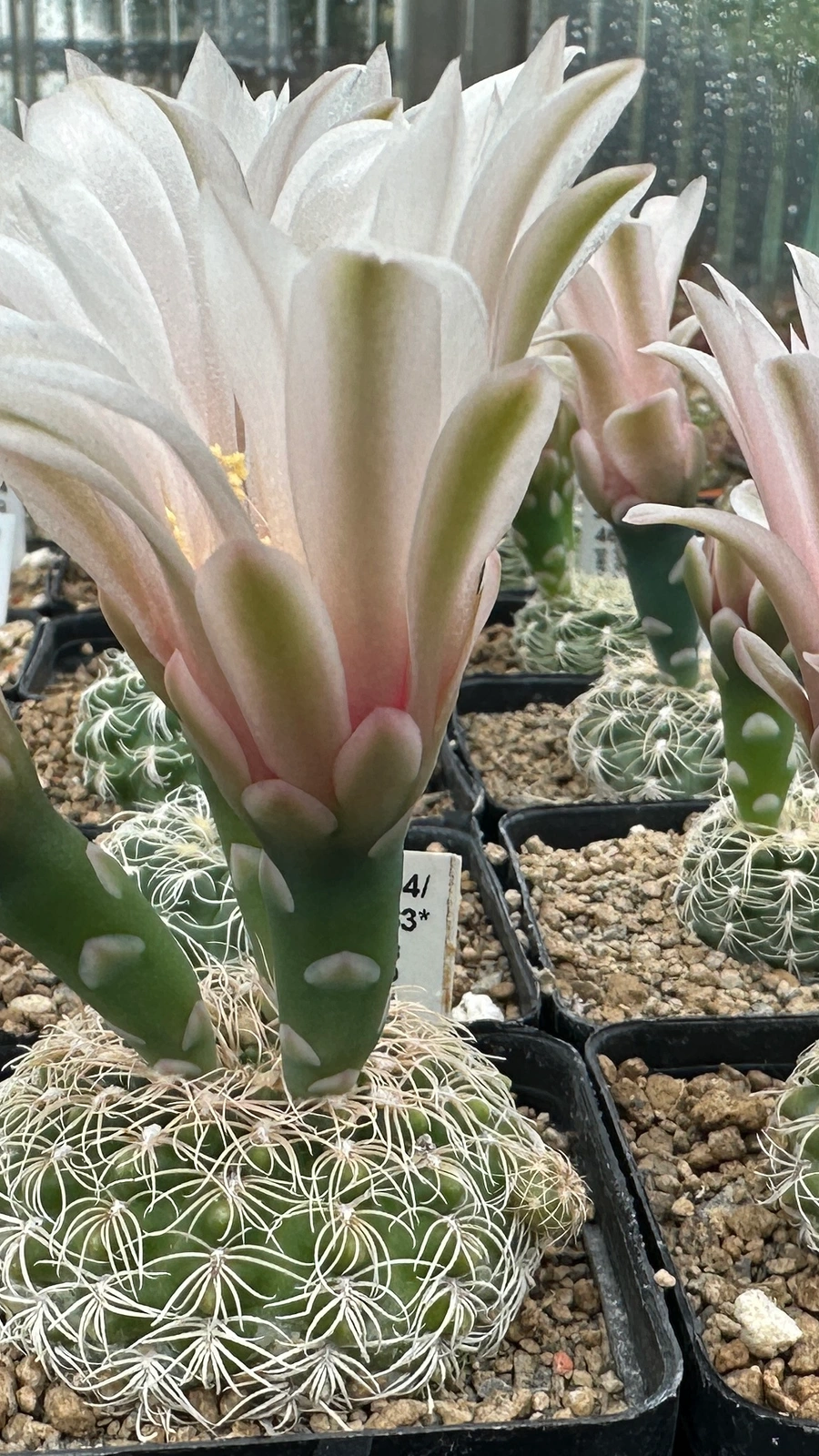
The stem of Gymnocalycium parvulum is globose to slightly flattened-globose, usually reaching only 3 to 5 cm in diameter. Its skin ranges from grayish-green to dark bronze-green, turning purplish under strong light. It features low, rounded ribs divided into distinct tubercles. The spines are short, radial, and flattened against the stem. The funnel-shaped flowers emerge from the top during late spring, showcasing white to pale pink petals.
In cultivation, it is a resilient and low-maintenance houseplant. It thrives in bright, indirect light or filtered sunlight. Water should be applied thoroughly only when the substrate is completely dry, and kept to a bare minimum during the winter months.
The most frequent mistake is overwatering or using heavy, clay-rich soil, which inevitably leads to root rot 2. Insufficient winter chilling can also prevent the cactus from producing its characteristic flowers the following season.
Requires abundant bright, indirect light. Protect from harsh, direct midday summer sun.
Allow the potting mix to dry out fully before watering. Keep almost completely dry in winter.
Use a highly porous, fast-draining potting mix containing plenty of pumice, perlite, and coarse sand.
The small spines are relatively soft but handle with care. Non-toxic to cats and dogs.
Very easy to maintain, making it ideal for beginners who can resist the urge to overwater.
Native to the subtropical rocky slopes, gravelly terrains, and dry hillsides of central and western Argentina.
