
Light
Bright Indirect Light
Bright indirect or filtered sunlight. Avoid scorching afternoon sun.
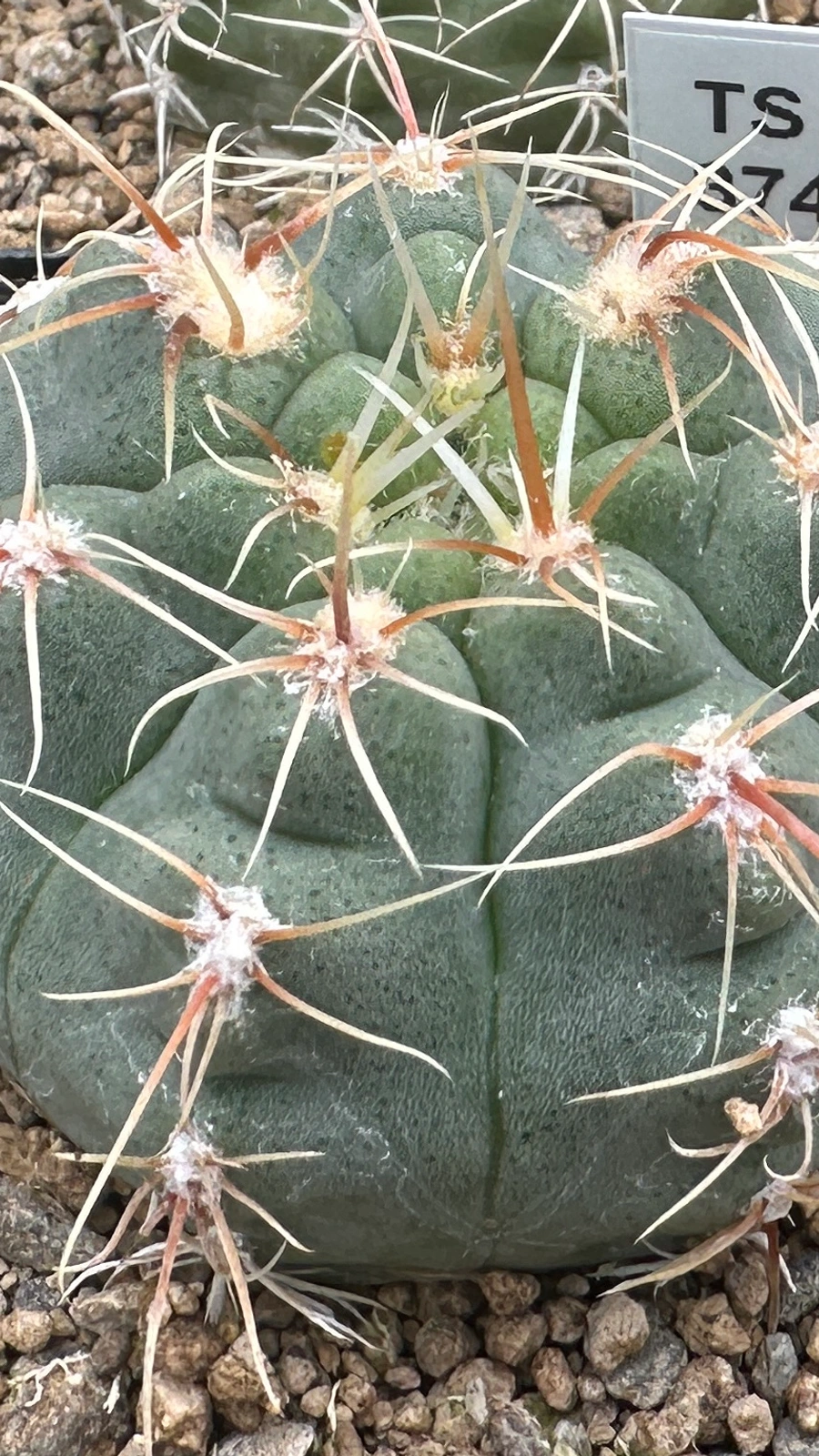 Reference image
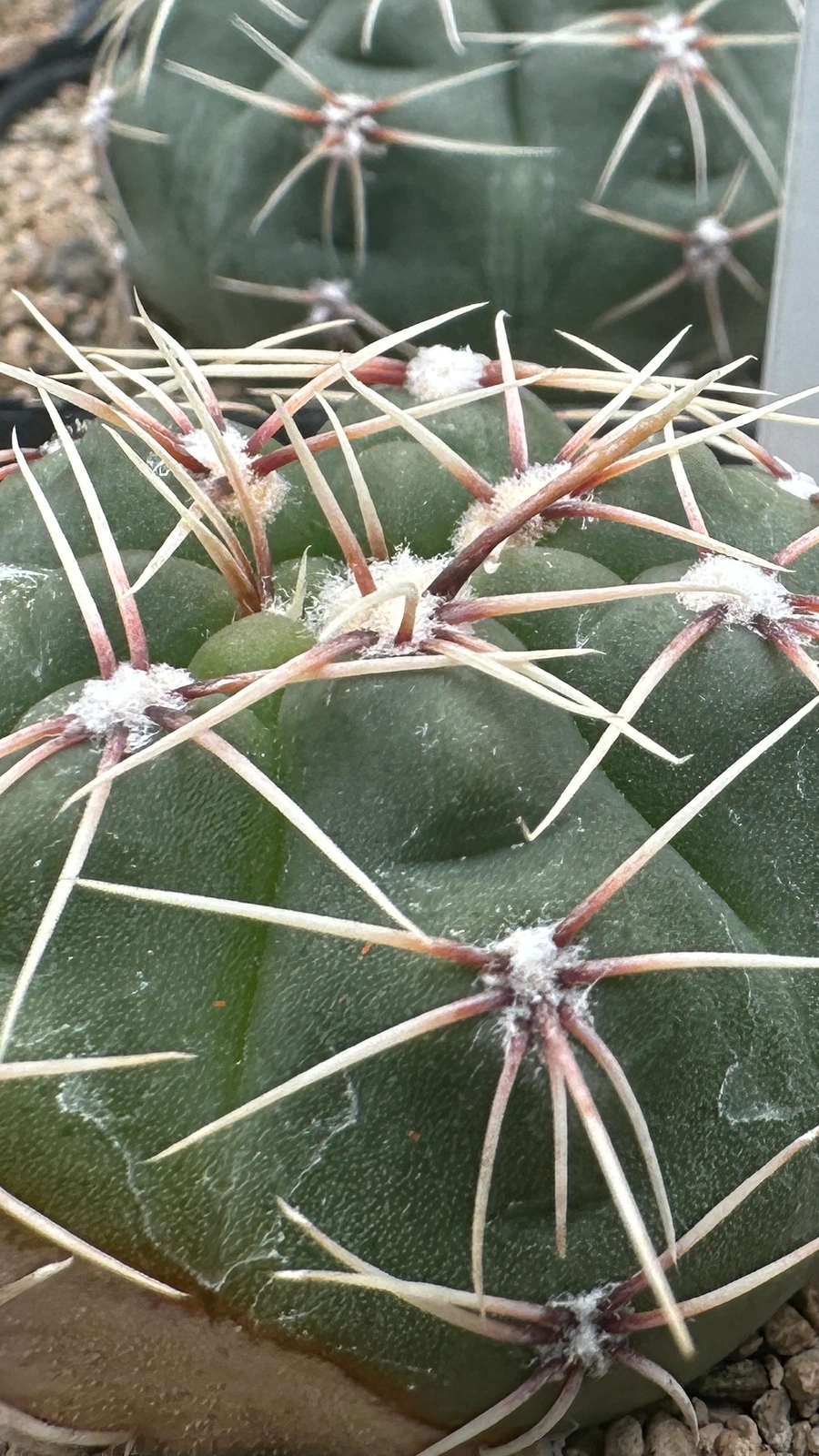 Reference image
Pinal Chin Cactus
Gymnocalycium pinalii is a distinctive, globose member of the Cactaceae family, highly prized by succulent collectors for its solitary growth habit, exquisite rib structure, and delicate blossoms.
The genus Gymnocalycium derives its name from the Greek words 'gymnos' (naked) and 'kalyx' (bud), referring to the flower buds being free of hair or spines 1. The specific epithet refers to its localized distribution near El Pinal.
Native to northern and central parts of Argentina, this species thrives in subtropical, semi-arid environments. It is typically found growing in gravelly, well-draining soil pockets on rocky outcrops, often sheltered by larger shrubs 2.
The stem is solitary, flattened-globose, dark green to grayish-green, with distinct rounded ribs. Radial spines are slightly curved and pressed against the stem body. The funnel-shaped flowers are white or light pink, emerging from the crown.
This cactus prefers bright, filtered sunlight and must be protected from intense, direct midday sun. Water thoroughly during the active growing season, allowing the mineral soil substrate to dry out completely between waterings. Keep dry in winter.
Overwatering and poor soil drainage are the primary causes of failure, quickly leading to root rot. Keeping the plant in warm, unventilated indoor spaces during winter prevents it from entering natural dormancy, which reduces spring flowering.
Bright indirect or filtered sunlight. Avoid scorching afternoon sun.
Drench thoroughly only when the soil is 100% dry. Keep dry in winter.
Highly porous, inorganic grit-based mix with excellent drainage.
Spiny texture requires careful handling, but it is non-toxic to cats and dogs.
Easy to moderate; highly resilient if kept dry during winter.
Naturally distributed across the subtropical and arid zones of Argentina, where it thrives in rocky, well-aerated substrates sheltered from extreme direct heat by surrounding scrub vegetation.
