
Light
Filtered Sun
Requires bright filtered light or morning sun. Avoid harsh, direct afternoon sunlight.
 Reference image
 Reference image
Ponomareva Chin Cactus
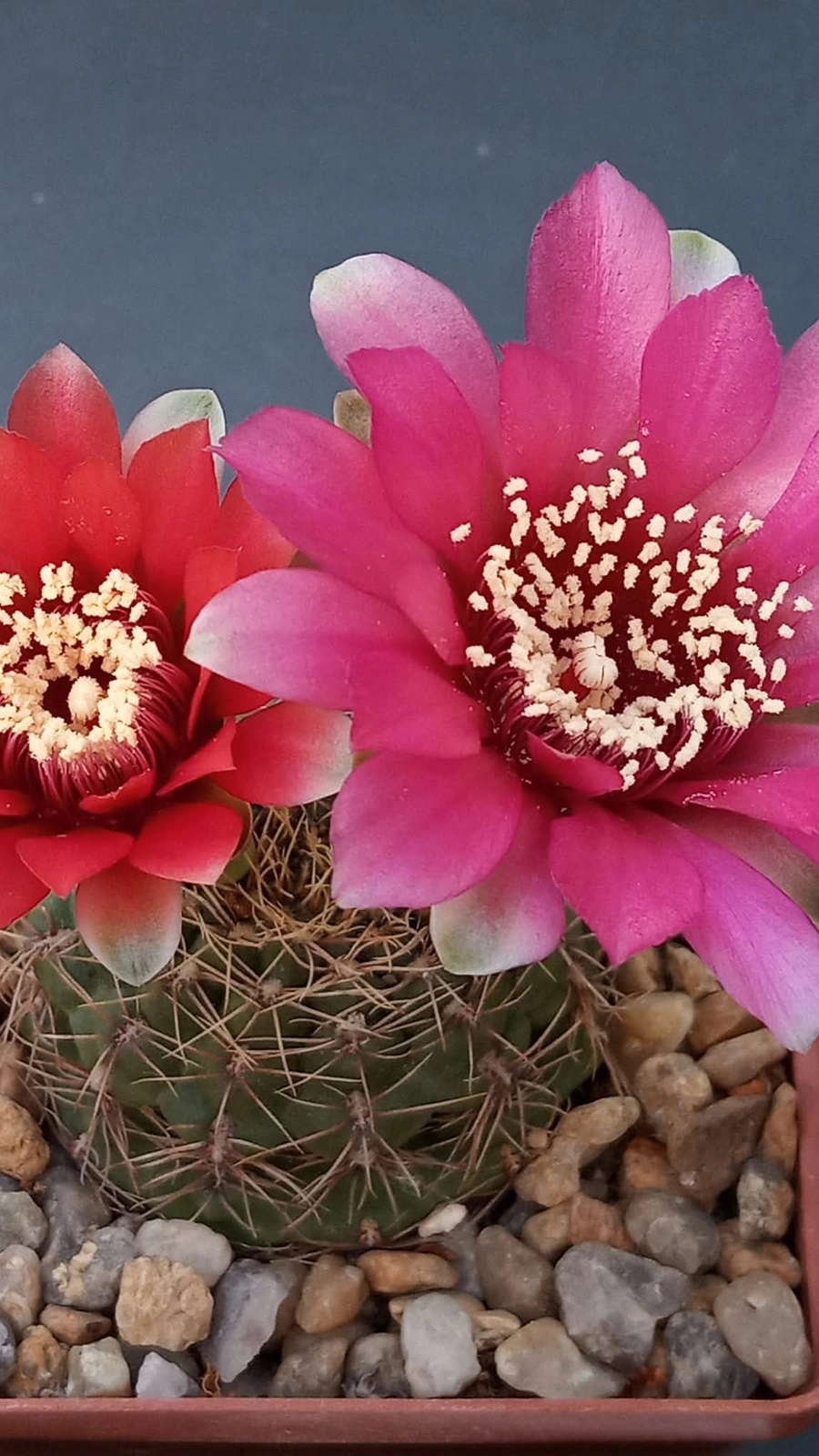
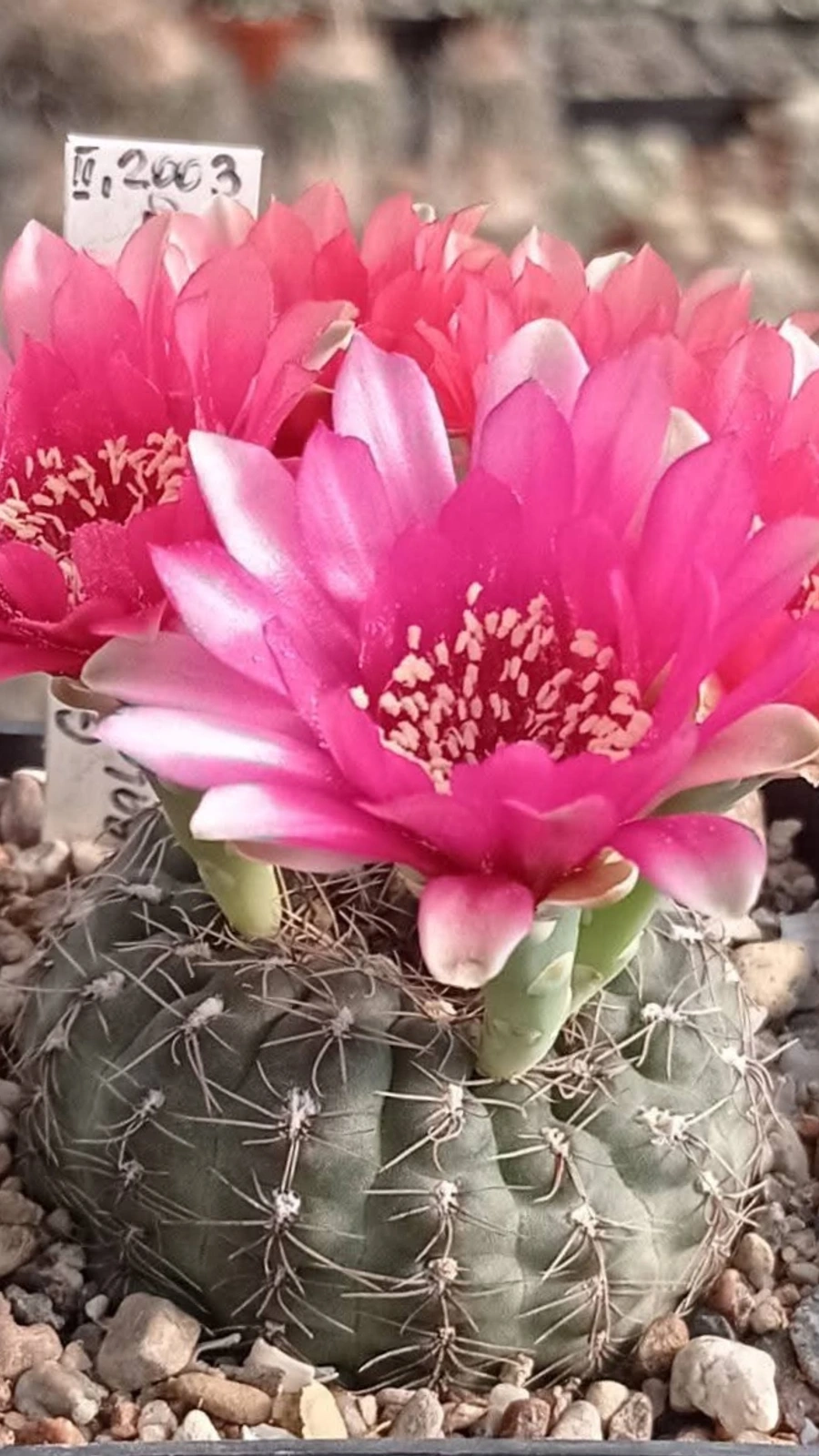
Gymnocalycium ponomarevae is a highly attractive, globose cactus species belonging to the family Cactaceae. Known for its compact growth and geometric appearance, it is a prized specimen among succulent collectors and fits perfectly on sunny windowsills.
Classified under the genus Gymnocalycium, this species is commonly referred to as a "chin cactus" due to the chin-like protrusions below the areoles. The genus name is derived from the Greek words for 'naked calyx', referring to the spineless flower buds 1.
This species is native to Southern South America, predominantly found in the northwestern provinces of Argentina. It thrives in desert or dry shrubland biomes, growing in rocky crevices and slopes where it receives dappled sunlight under sparse vegetation 2.
The stem is flattened-globose, olive-green to greyish-green, with well-defined ribs. Areoles bear slightly curved, stiff radial spines that hug the stem. The funnel-shaped flowers are usually white to pale pink and emerge from the crown during late spring.
In cultivation, it requires very little maintenance. It demands an open, highly porous mineral substrate to prevent root rot. Watering should be deep but infrequent during the growing season and entirely withheld in winter.
The most prevalent issue is overwatering, which quickly leads to root and stem rot. Placing the plant in deep shade causes etiolation, wherein the cactus stretches unnaturally towards the light source, losing its characteristic flat shape 2.
Requires bright filtered light or morning sun. Avoid harsh, direct afternoon sunlight.
Water only when the substrate is 100% dry. Keep dry in winter.
Requires extremely well-draining mineral soil with high pumice or grit content.
Non-toxic to pets, but has sharp spines; handle with care and keep away from children.
Very easy to grow as long as the soil drainage is excellent and watering is controlled.
Native to the rocky terrains and dry shrublands of Northwestern Argentina, where it grows tucked between rocks and low bushes to escape the harshest sun.
