
Light
Bright Indirect Light
Requires bright, indirect or filtered sunlight. Direct afternoon sun in summer can scorch the stem.
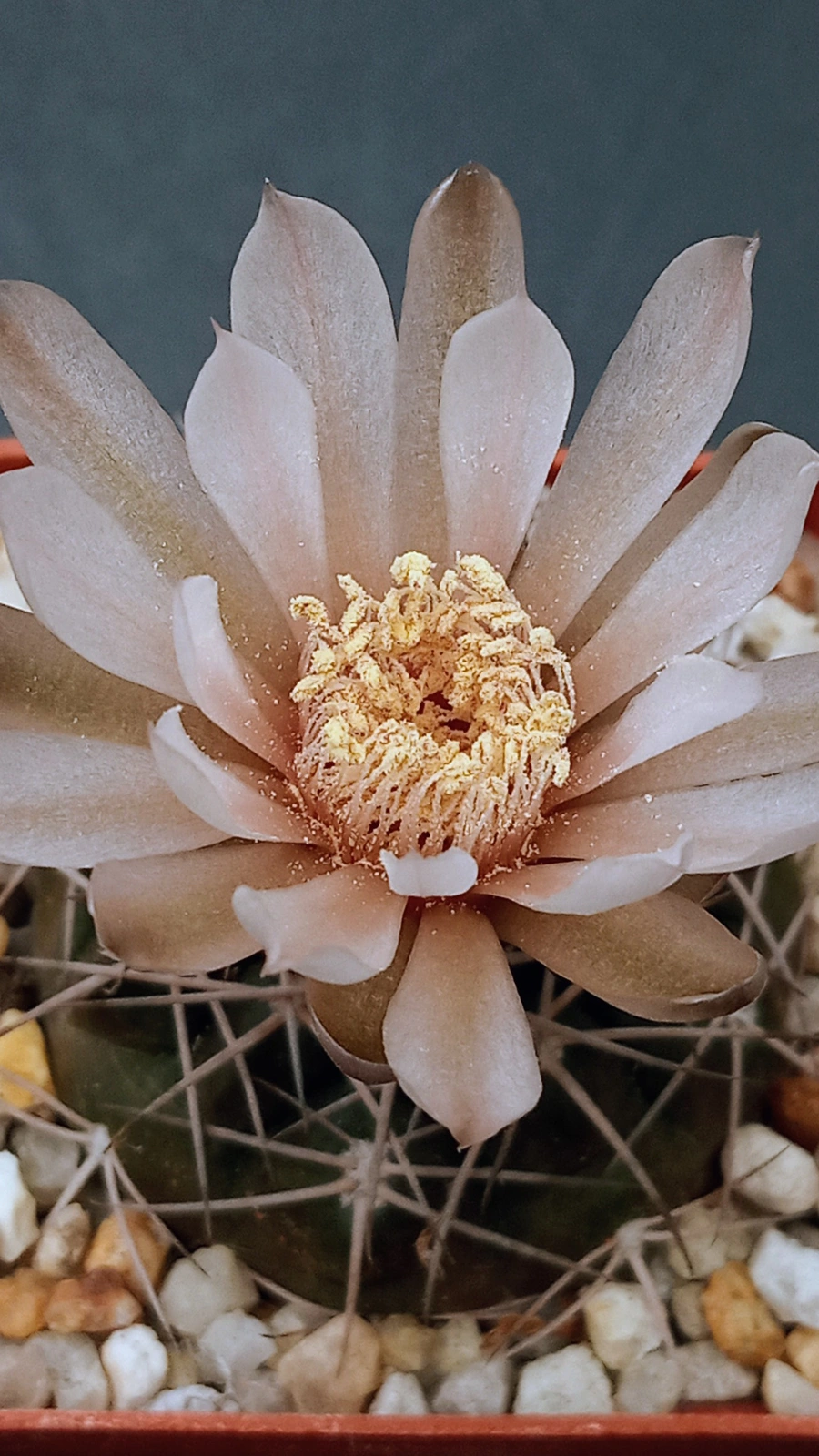 Reference image
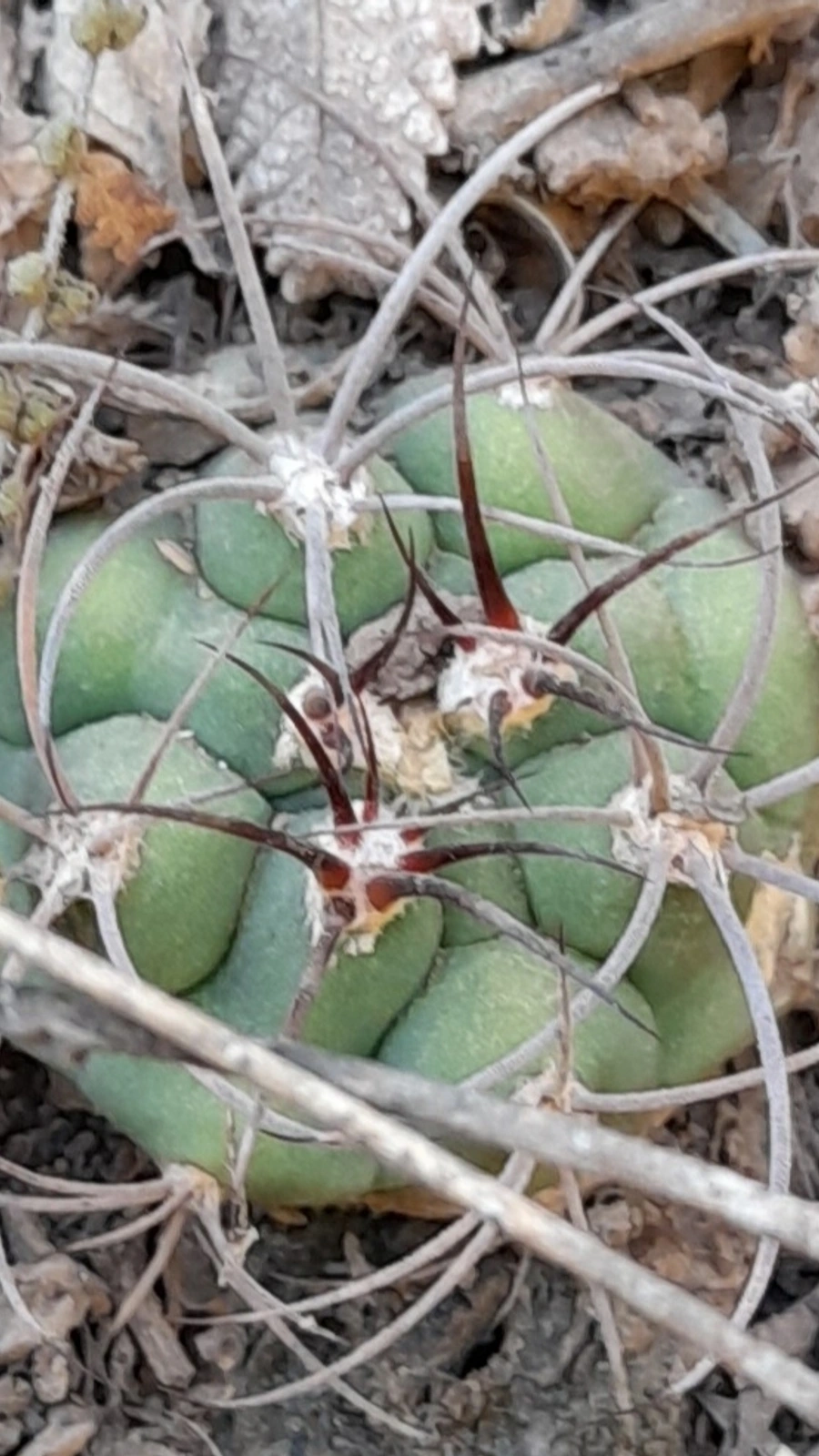 Reference image
Rose-Flowered Chin Cactus
Gymnocalycium rhodantherum is a globose, succulent subshrub cactus species native to Argentina, belonging to the Cactaceae family 1. Celebrated by collectors for its beautiful rose-tinted flowers and geometric stem structure, this species represents the hardiness and structural elegance typical of the Gymnocalycium genus.
The genus name Gymnocalycium is derived from the Greek words "gymnos" (naked) and "calyx" (bud), referring to the hairless and spineless flower buds 2. The specific epithet "rhodantherum" is derived from Greek, referring to the characteristic rose or reddish color of its pollen-bearing anthers 1.
This species is endemic to western and northwestern Argentina, covering regions such as La Rioja, San Juan, Mendoza, San Luis, and Catamarca 3. It thrives in subtropical, arid environments, typically growing on rocky slopes, alluvial fans, and in the semi-shaded microhabitats beneath sparse desert shrubs.
The stem is solitary, globose to short-cylindrical, displaying a pale grayish-green or glaucous blue-green hue. It features well-defined ribs divided into chin-like tubercles. Areoles bear stout, curved, grayish-brown spines. In late spring and summer, it produces large, elegant flowers that vary from pale cream to deep rose-pink, featuring a silky luster.
Gymnocalycium rhodantherum is highly adaptable to container culture. It prefers bright, indirect sunlight, as harsh direct midday rays can cause scorching 2. Watering should follow the soak-and-dry method during the active growth period, while winter requires a strictly dry resting period in cool conditions 3.
The most critical error is overwatering, especially during winter dormancy, which quickly leads to root rot. Insufficient light results in etiolation, causing the stems to stretch abnormally and lose their attractive compact shape.
Requires bright, indirect or filtered sunlight. Direct afternoon sun in summer can scorch the stem.
Water thoroughly only when the soil is 100% dry. Keep dry in winter.
Requires excellent drainage. Use a mix heavy in pumice, grit, and coarse sand.
Spines are sharp and can cause physical injury. Non-toxic to pets, but keep out of reach due to sharp spines.
Very easy to grow, making it perfect for beginners and succulent enthusiasts.
Found widely across the arid, rocky foothills and shrubby biomes of western and northwestern Argentina, particularly in La Rioja and neighboring provinces.
