
Light
Bright Indirect Light
Prefers bright, indirect sunlight; protect from harsh afternoon sun.
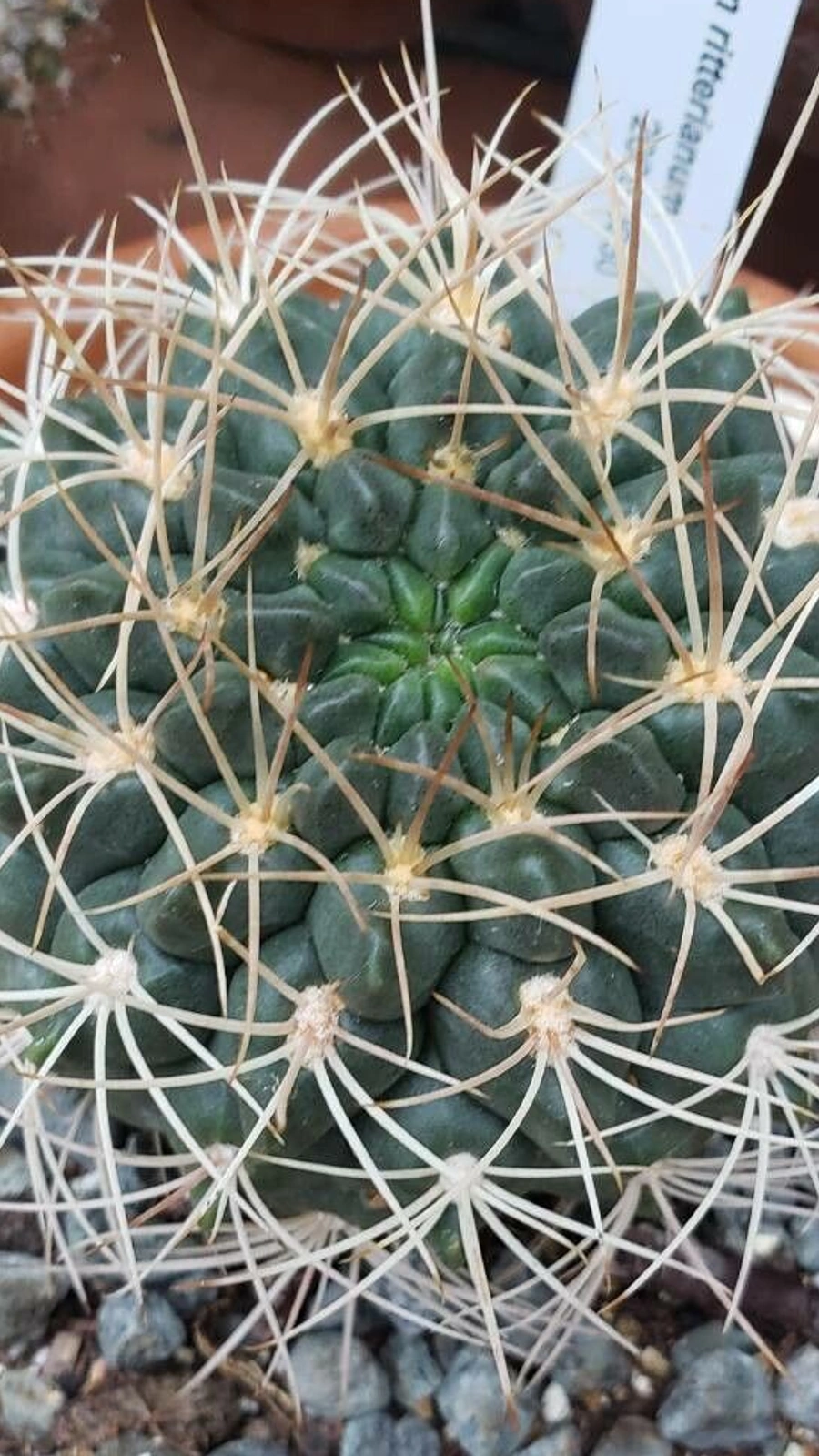 Reference image
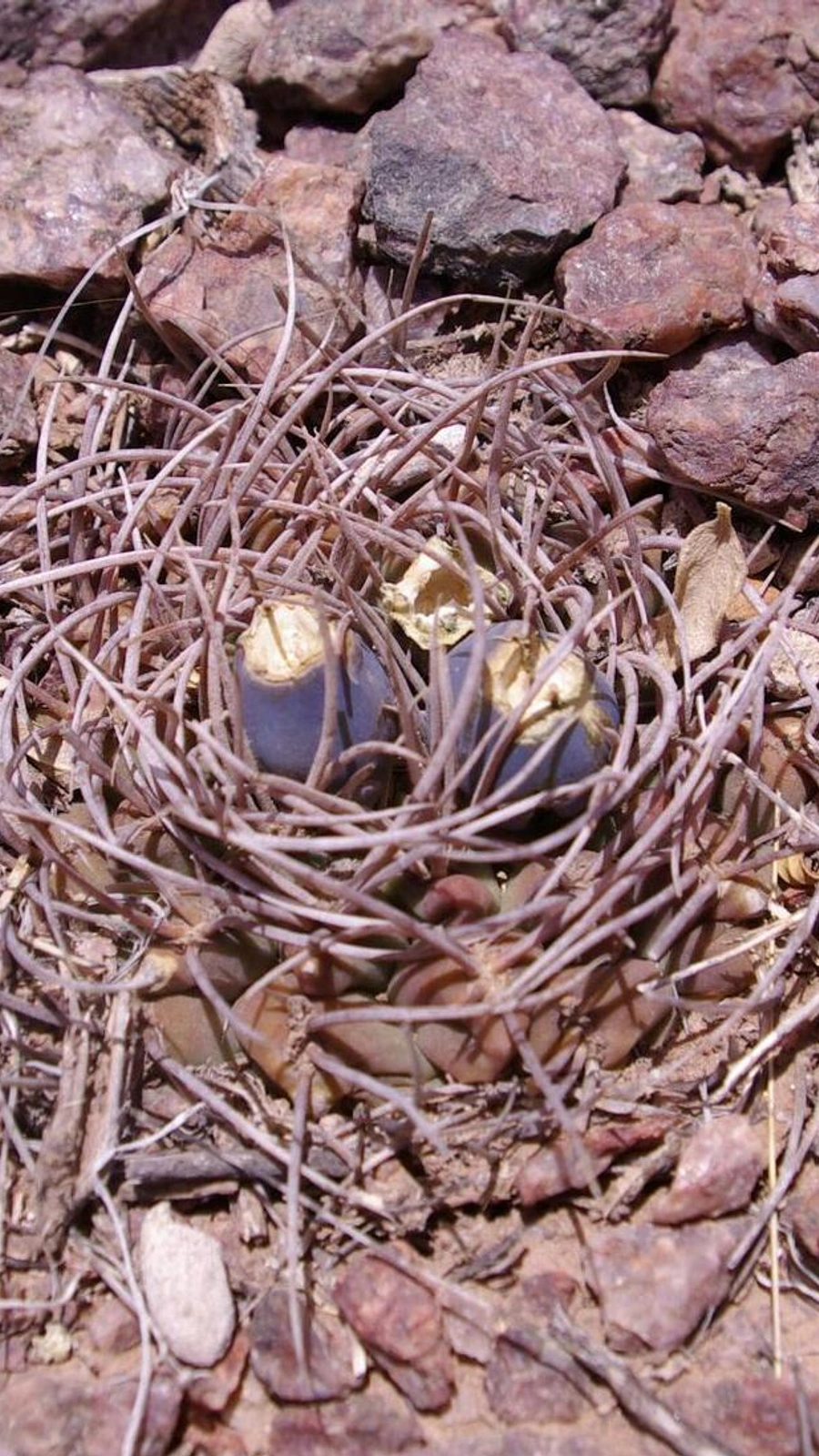 Reference image
Ritter's Chin Cactus
Gymnocalycium ritterianum is a highly sought-after, solitary, globose cactus species belonging to the family Cactaceae. It is appreciated by succulent enthusiasts for its beautifully segmented ribs and pale pink blossoms.
The genus name Gymnocalycium originates from the Greek words gymnos (naked) and kalyx (bud), referring to the flower buds being free of hair or spines 1. The specific epithet ritterianum honors the renowned German botanist and cactus specialist Friedrich Ritter.
Native to Southern South America, this species is endemic to northwestern Argentina, particularly found in the provinces of La Rioja and San Juan 2. It thrives in subtropical rocky soils and grassy hillsides, often growing under the protective shade of nurse plants.
The stem is solitary, flattened-globose, reaching up to 10-12 cm in diameter, with a greyish-green to dull olive-green epidermis. It typically possesses around 10 to 12 broad ribs divided into chin-like tubercles. Spines are radial, slightly curved back against the stem, and vary from pinkish-grey to brown. The funnel-shaped flowers are pale pink or white with a darker throat, appearing in late spring.
In cultivation, it requires bright, indirect sunlight and extremely well-draining soil. It is moderately drought-tolerant and benefits from a dry, cool winter dormancy to promote abundant flowering in the subsequent spring.
The most frequent mistake is overwatering, which leads to root rot due to waterlogged soil. Lack of a cool winter rest often results in a failure to produce flowers during the warm season.
Prefers bright, indirect sunlight; protect from harsh afternoon sun.
Allow soil to dry out fully between waterings; keep almost dry in winter.
Requires highly porous gritty mix with excellent drainage.
Non-toxic to pets, but has sharp spines that require careful handling.
Very easy to care for if overwatering is strictly avoided.
Naturally distributed across the arid, rocky foothills and shrublands of northwestern Argentina, where it grows tucked among rocks and grasses in subtropical conditions.
