
Light
Filtered Sun
Prefers ample bright, filtered light; protect from scorching afternoon sun.
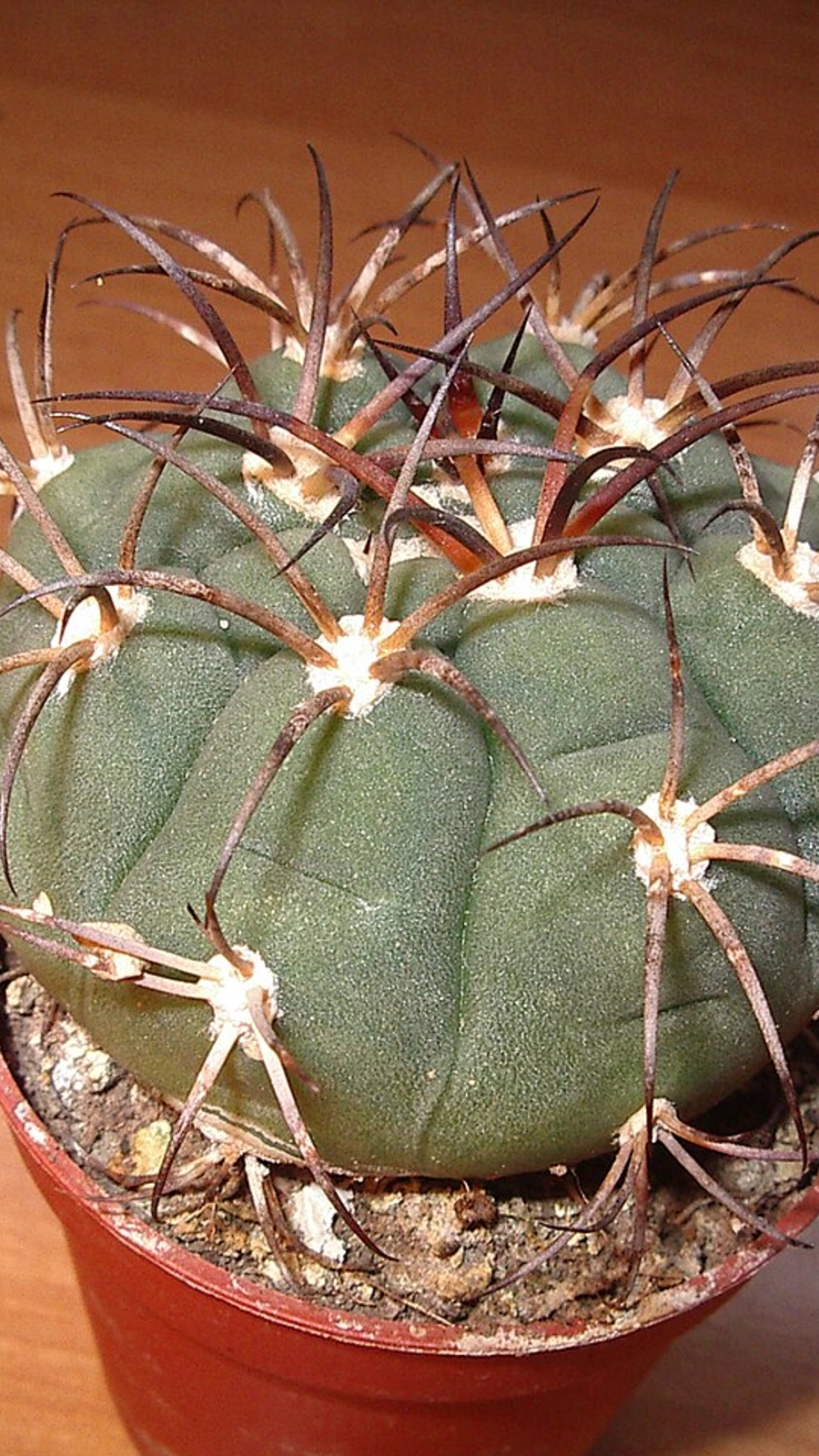
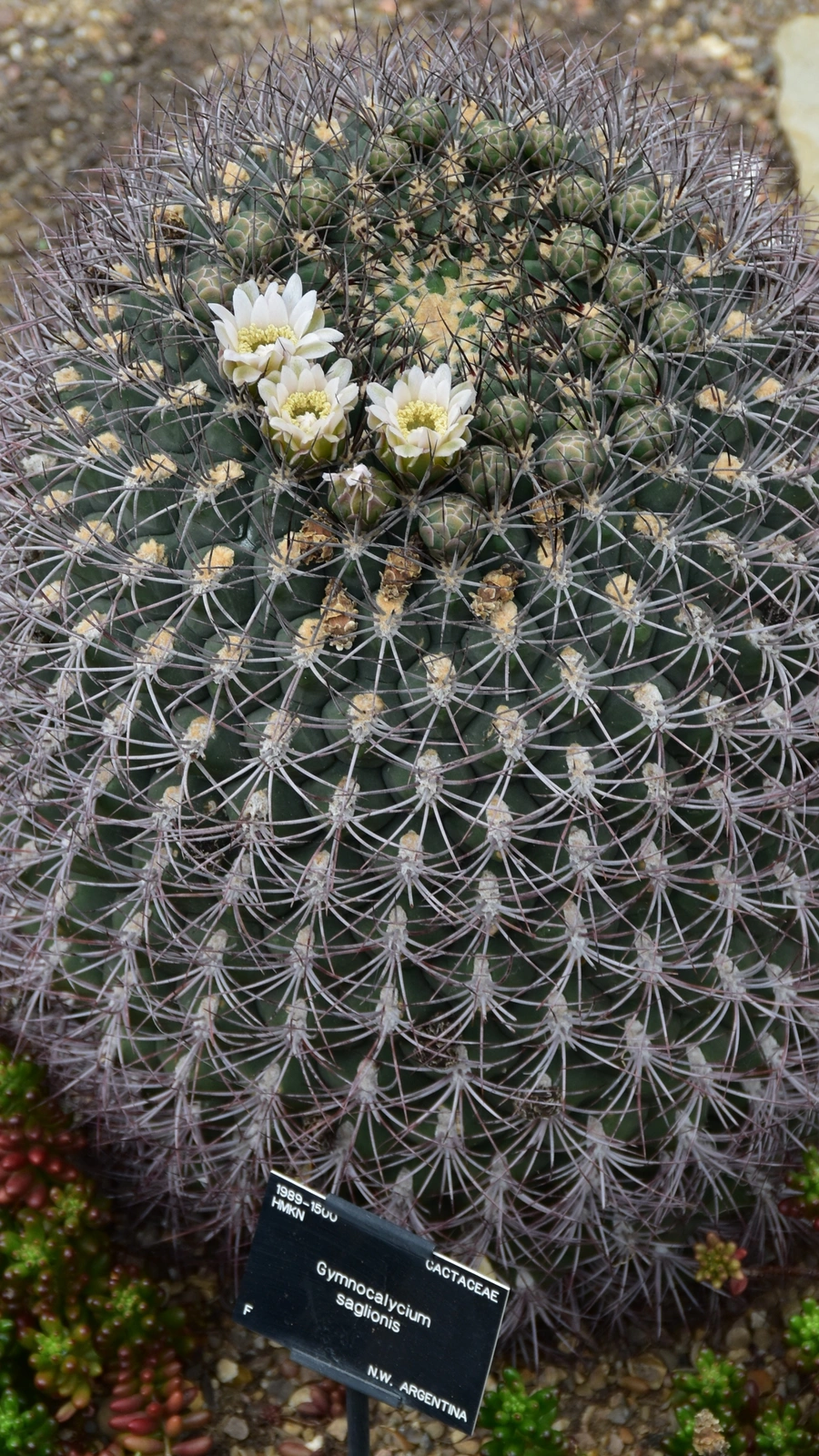
Giant Chin Cactus
Gymnocalycium saglionis, commonly known as the Giant Chin Cactus, is a prominent, slow-growing globular cactus species celebrated for its impressive size and robust, curved spine formation 1.
Described in the mid-19th century, the specific epithet honors Joseph Saglio, a notable French plant enthusiast. The genus name Gymnocalycium derives from the Greek for "naked calyx," referring to the smooth, spineless flower buds characteristic of this group 2.
This species is native to northwestern Argentina, thriving in provinces like Salta, Jujuy, and Catamarca. It grows on rocky slopes and dry shrublands at elevations between 500 and 2000 meters, often sheltered by nurse plants 1.
The body is solitary, semi-globose, turning cylindrical with age, reaching up to 30-40 cm in diameter. Its dull green stem features low, broad tubercles reminiscent of "chins." The areoles bear thick, recurved, dark brown to blackish spines that turn reddish-pink when wet. Pale pink to white flowers bloom from the crown 2.
It requires bright, filtered sunlight and excellent air circulation. The potting medium must dry out completely between waterings. During winter dormancy, keeping the plant totally dry allows it to tolerate brief sub-zero temperatures 1.
Overwatering during winter or placing the plant in poorly lit indoor spaces are the primary causes of root rot and etiolation, leading to loss of its characteristic globose form.
Prefers ample bright, filtered light; protect from scorching afternoon sun.
Allow the potting mix to dry completely before watering. Cease watering in winter.
Requires an extremely porous mineral mix containing pumice, gravel, and sand.
Non-toxic to pets, but the stiff, sharp spines pose a physical hazard.
Very easy and resilient, making it a perfect specimen for beginner cactus growers.
Found naturally in the arid, gravelly habitats and mountain slopes of northwestern Argentina, where it typically grows under the light shade of desert shrubs.
