
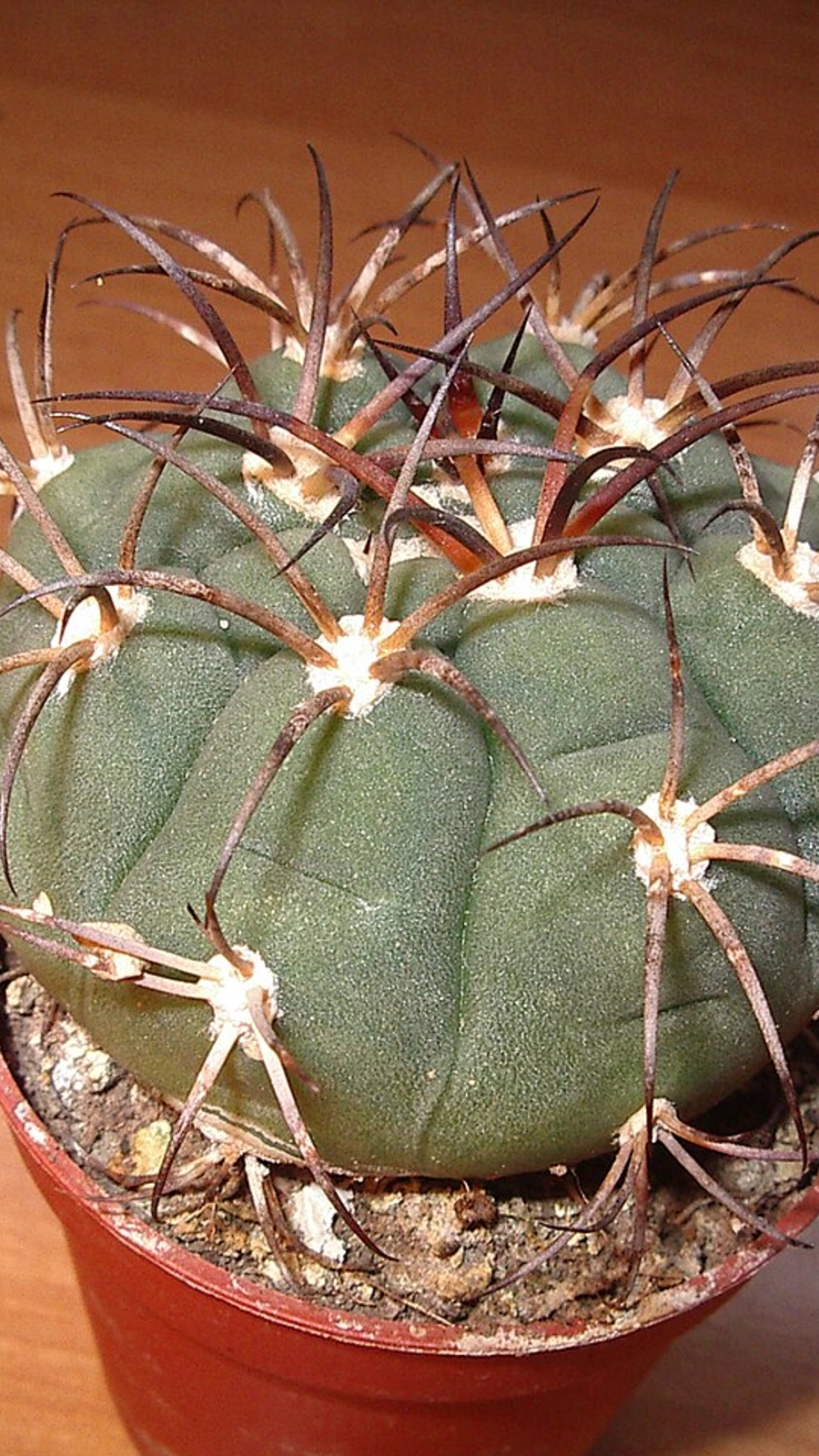
 Reference image
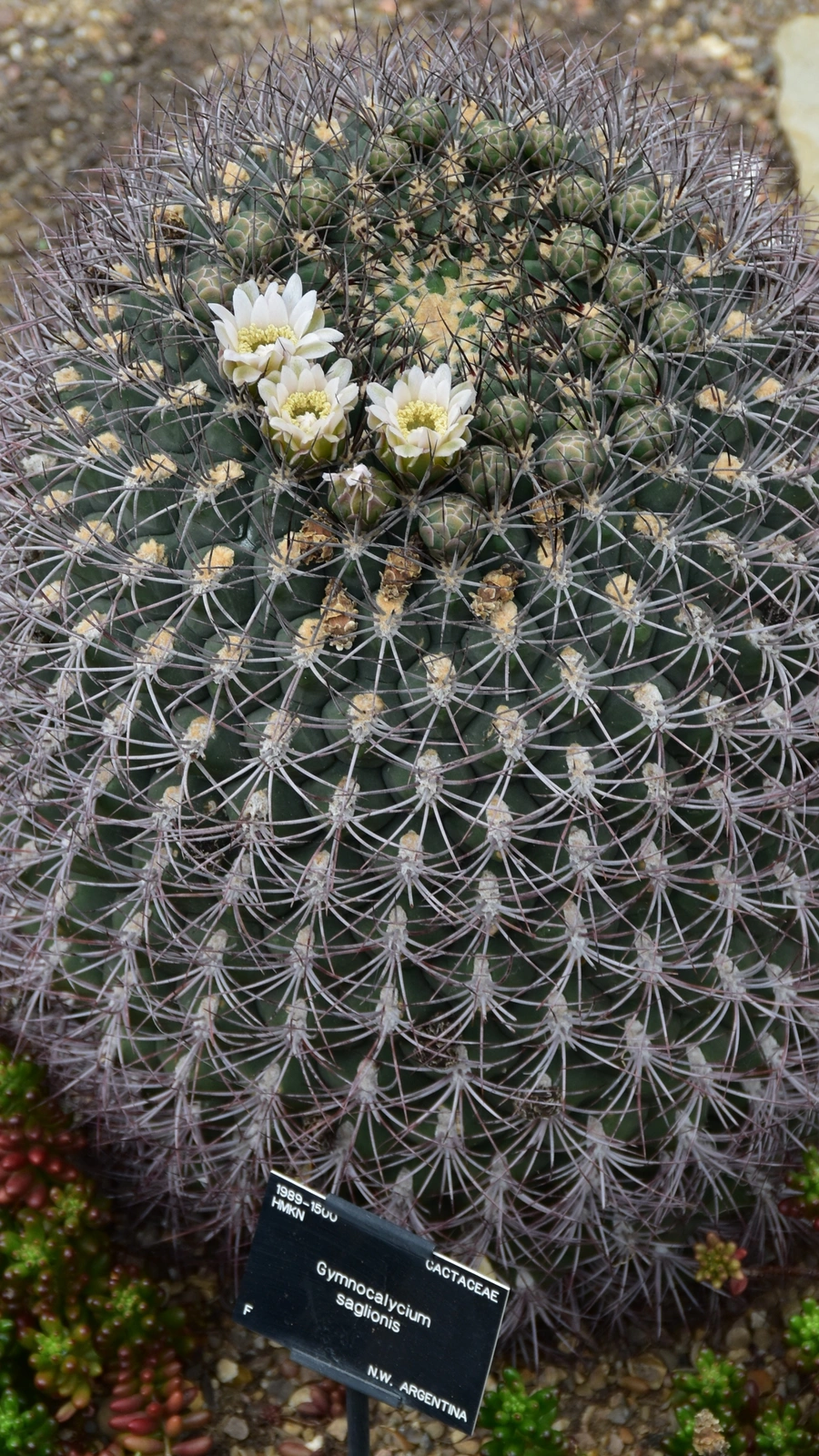 Reference image
Gymnocalycium saglionis
Giant Chin Cactus
Gymnocalycium saglionis, commonly known as the Giant Chin Cactus, is an impressive species native to South America. It stands out with its large, spherical body and distinctive 'chin-shaped' tubercles. Its color, initially bright green when young, can mature into a bluish-green. The strong, prominent spines give this cactus a majestic appearance.
- Collector's Item: An indispensable species for cactus collectors. It grows into a true specimen plant over time.
- Visual Spectacle: Its white, pink, or cream-colored flowers, blooming in spring, create an elegant contrast that softens its rugged look.
- Easy Care: With moderate care requirements, it's a suitable choice for both experienced and novice cactus enthusiasts. It thrives in direct sunlight and prefers well-draining soil.
For those looking to create a strong focal point in their garden or indoor space, Gymnocalycium saglionis is an ideal choice with its sturdy presence and aesthetic beauty.
Optimal: 24 °C
Prefers ample bright, filtered light; protect from scorching afternoon sun.
Requires an extremely porous mineral mix containing pumice, gravel, and sand.
Allow the potting mix to dry completely before watering. Cease watering in winter.
Very easy and resilient, making it a perfect specimen for beginner cactus growers.
Frequently Asked Questions
How large does the Giant Chin Cactus grow?
How often should I water it?
Is it toxic to pets?
How do I get it to bloom?
Should it receive direct sunlight?
What type of soil should I use?
When should I repot it?
Can it stay on the balcony during winter?
How fast does it grow?
Why do its spines change color?
Reviews
There are no reviews for this product yet.
Recently Viewed
Care reminder list
Get seasonal care reminders for this product at your preferred frequency. You can change the email address below and unsubscribe from any reminder email.
