
Light
Bright Indirect Light
Bright, indirect sunlight or morning sun is best; shield from intense midday rays.
 Reference image
 Reference image
Schroeder's Chin Cactus
Gymnocalycium schroederianum is a species of cactus in the family Cactaceae, recognized for its flattened-globose stem and elegant, long-lasting flowers 1. Highly adapted to indoor culture, this slow-growing succulent is a prized addition to any cactus collection.
The genus name Gymnocalycium derives from the Greek words gymnos (naked) and calyx (bud), referencing the hairless and spineless flower buds characteristic of the genus 2. The specific epithet honors the botanical contributions of Schroeder.
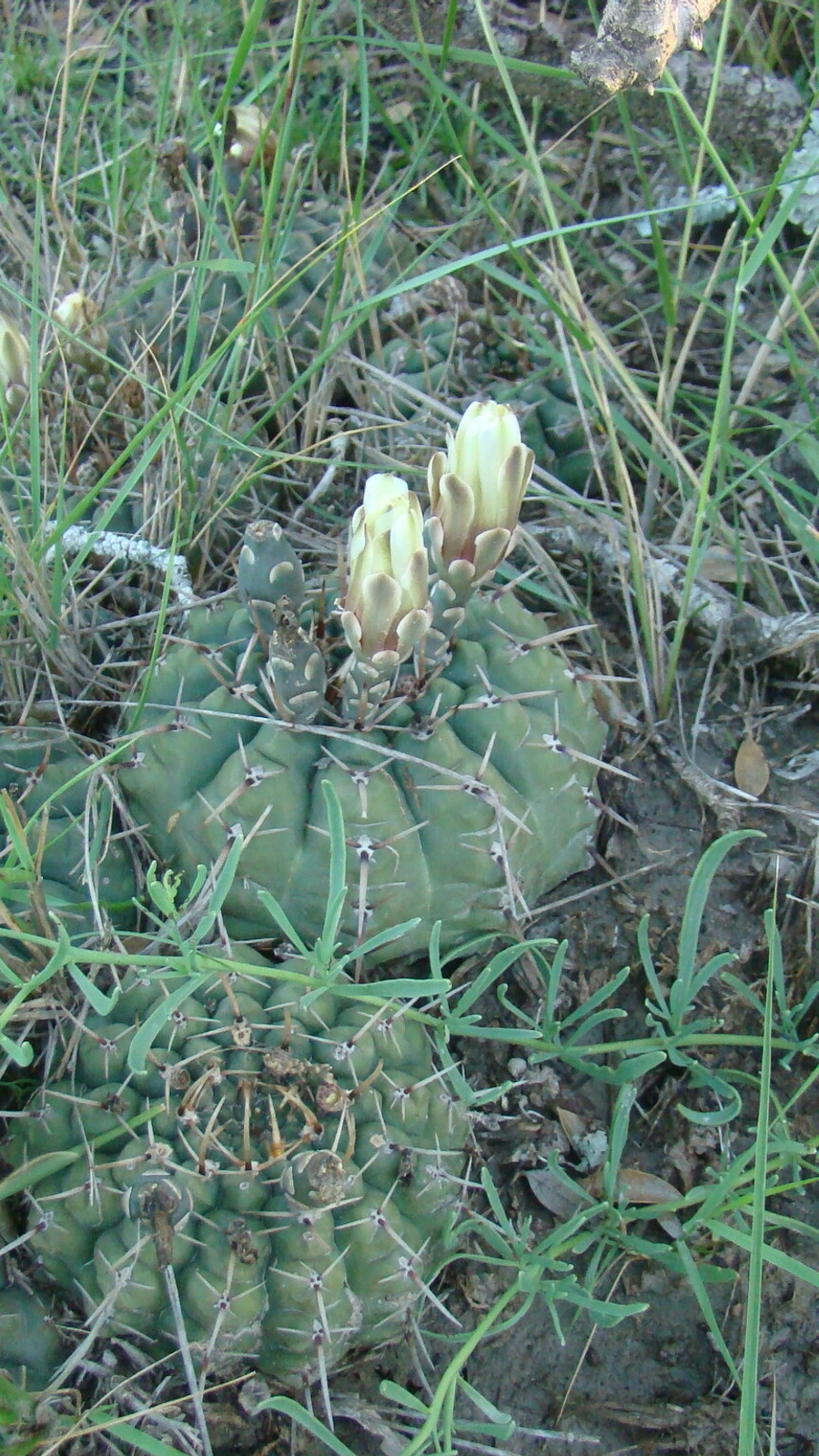
Native to southern South America, specifically Argentina (across provinces including Buenos Aires, Entre Ríos, Santa Fe, Corrientes, and La Pampa) and Uruguay 1. It thrives in subtropical climates, inhabiting grasslands, rocky hillsides, and the light shade of sparse shrubs where it grows in mineral-rich soils 2.
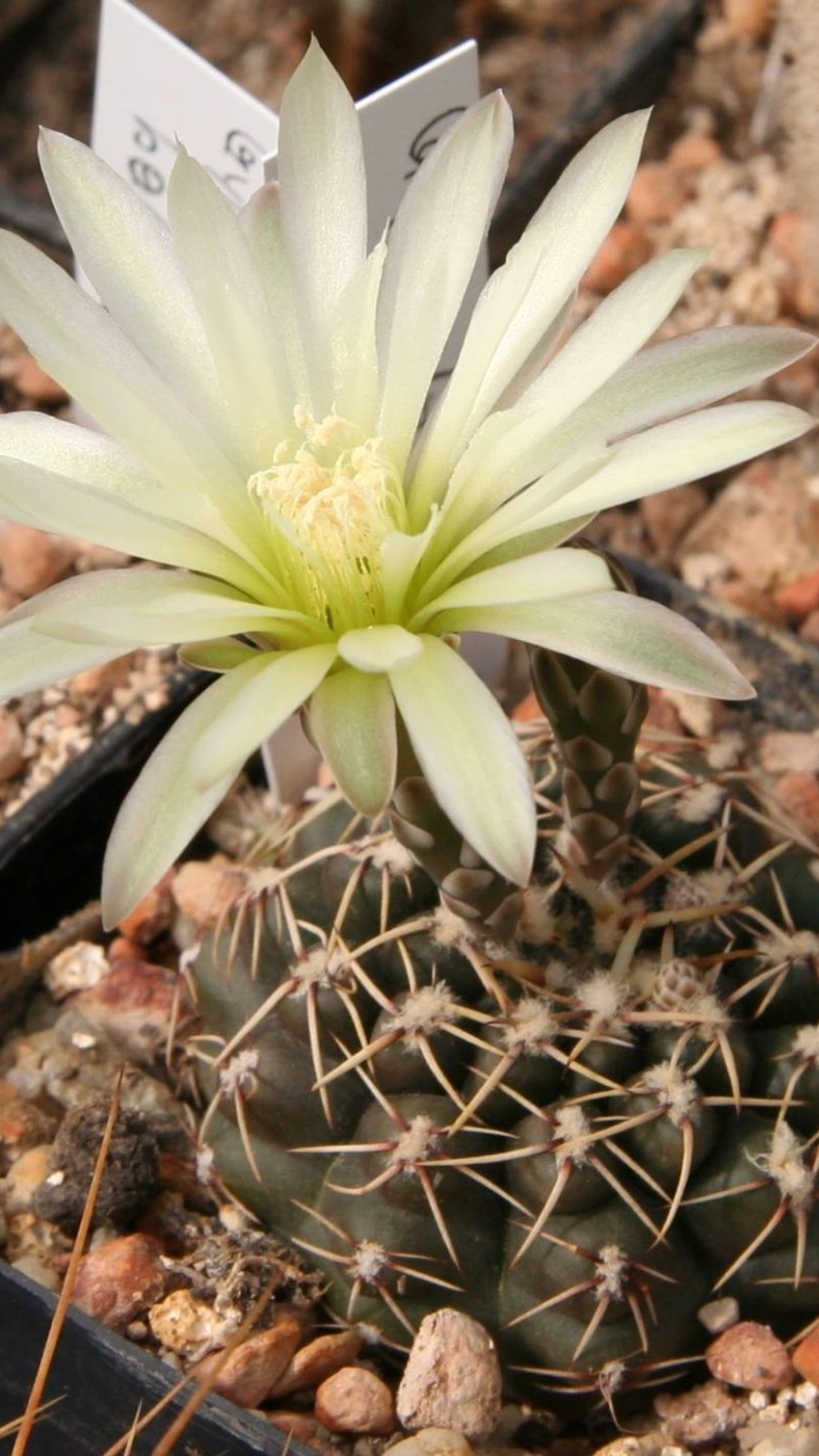
The stem is solitary, flattened-globose, and ranges in color from dull grayish-green to brownish-green. It features distinct ribs with neat aeroles bearing radial, flattened spines. During the warmer months, it produces large, striking ivory-white or cream-colored flowers from the apical meristem.
This species prefers bright, filtered sunlight. During the active growth phases in spring and summer, watering should be thorough but infrequent, allowing the soil to dry completely 2. In winter, the plant enters dormancy and requires cool temperatures and dry conditions.
Overwatering is the primary cause of failure, quickly leading to root rot. Insufficient light exposure causes etiolation, leading to weak, elongated growth and a lack of blossoms.
Bright, indirect sunlight or morning sun is best; shield from intense midday rays.
Water only when the substrate is completely dry. Keep dry in winter.
Requires highly porous, gritty mineral mix with excellent drainage.
Non-toxic to humans and pets, but handle with care due to sharp spines.
Very easy to care for; perfect for beginners who can resist overwatering.
Found naturally in the subtropical grasslands, rocky terrains, and semi-shaded shrub zones across central and northeastern Argentina as well as parts of Uruguay.
