
Light
Filtered Sun
Bright filtered sunlight or light afternoon shade.
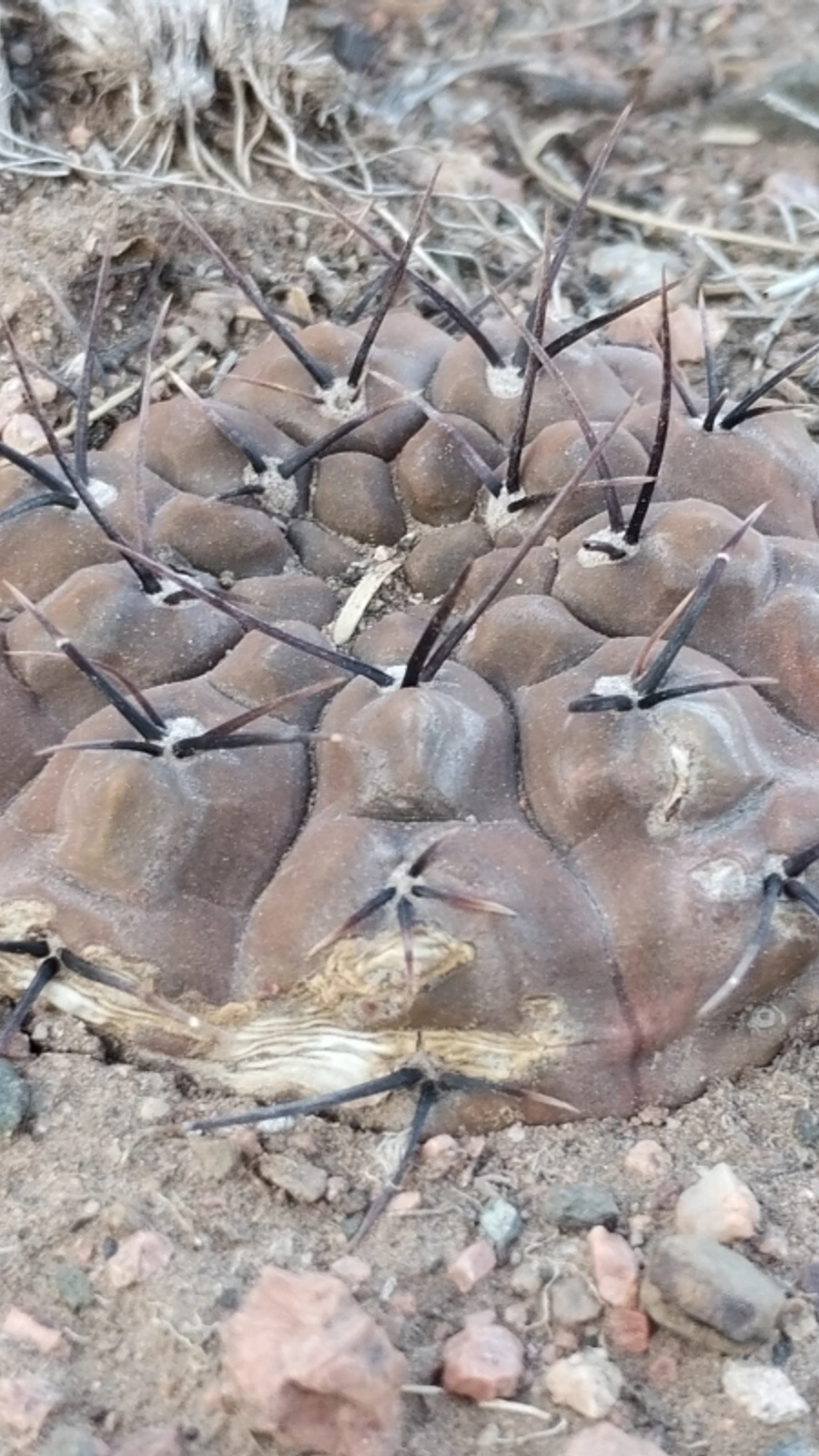 Reference image
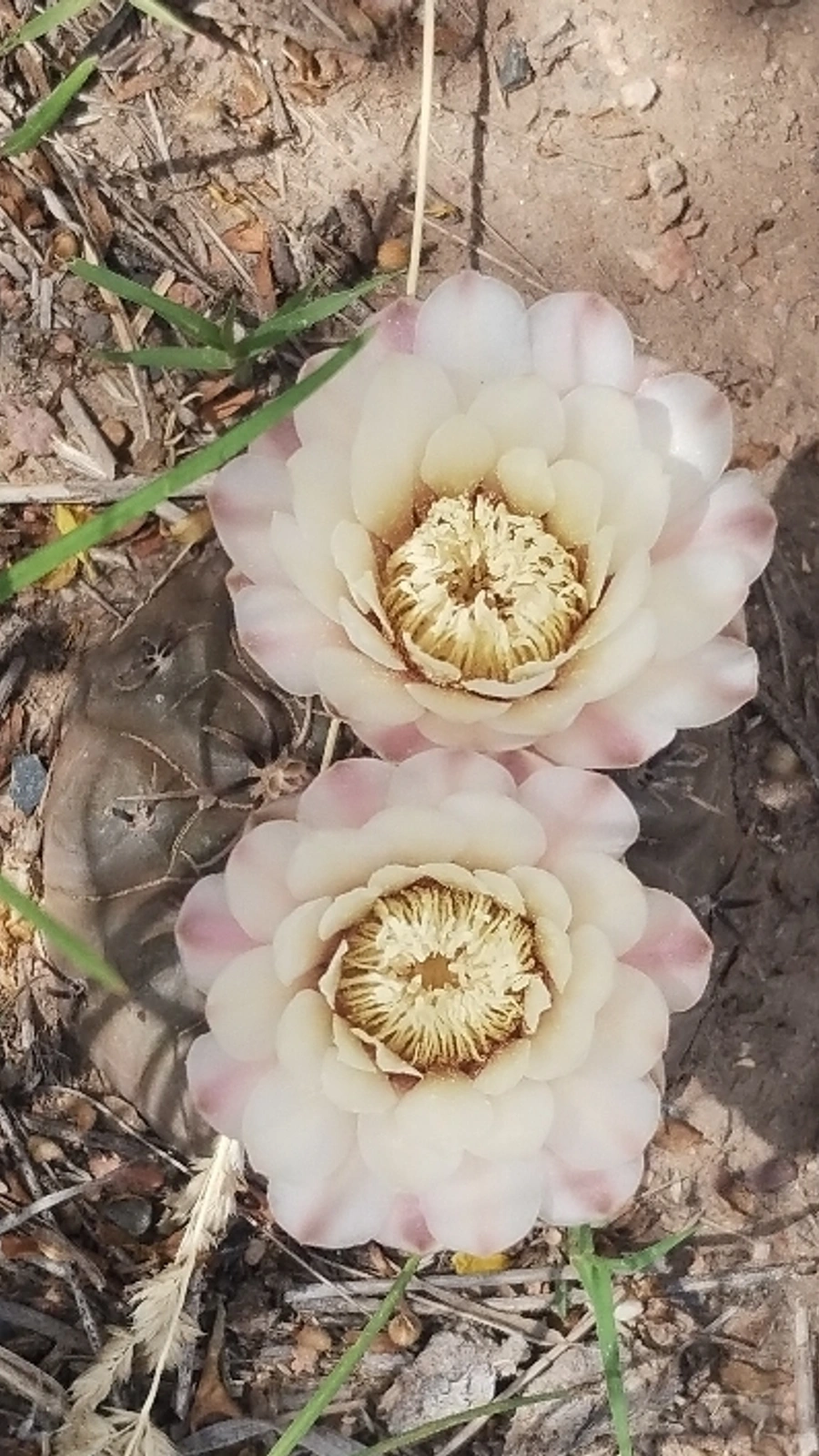 Reference image
Black-Spined Chin Cactus
Gymnocalycium striglianum is a distinctive, slow-growing globose cactus highly prized for its dark, dull-green to bronze-toned epidermis and contrasting dark brown to near-black curved spines. It is an ideal specimen for small pots and succulent collections.
The species belongs to the genus Gymnocalycium, derived from the Greek words for 'naked chalice' referring to the hairless, scaly flower buds. The specific epithet 'striglianum' honors Franz Strigl, an Austrian cactus expert and collector 1.
Native to southern South America, specifically the Mendoza and San Luis provinces of Argentina 2. It thrives in subtropical, arid shrublands, typically growing on rocky or gravelly soils, often sheltered under low bushes from extreme sunlight.
The stem is solitary, flattened-globose, reaching about 5-8 cm in diameter, with 8 to 12 low, tuberculate ribs. Areoles carry 3 to 5 strong, backward-curving radial spines that are dark brown to black when young, graying with age. The funnelform flowers arise from the plant's apex and are ivory-white to pale pinkish-cream, opening during warm summer days.
This species is easy to cultivate if provided with a very porous mineral substrate and excellent drainage. Unlike many other cacti, it prefers bright, filtered light or partial shade during the hottest hours of the day to prevent sun scorch and preserve its dark body color. Water thoroughly when the soil is completely dry, and maintain a dry winter rest.
Overwatering is the primary cause of failure, quickly leading to root rot 1. Placing the cactus in a poorly ventilated, low-light indoor setting will cause etiolation and make it susceptible to mealybugs.
Bright filtered sunlight or light afternoon shade.
Allow soil to dry out completely. Keep fully dry in winter.
Porous, mineral-based cactus mix rich in pumice and grit.
Features sharp, rigid spines. Non-toxic to pets, but handle with care.
Very easy to maintain if overwatering is avoided and winter dry rest is provided.
Endemic to the western provinces of Argentina, where it inhabits dry, rocky slopes and gravelly plains under the protection of larger shrubs in subtropical environments.
