
Light
Bright Indirect Light
Bright, indirect or filtered sunlight. Protect from intense afternoon sun.
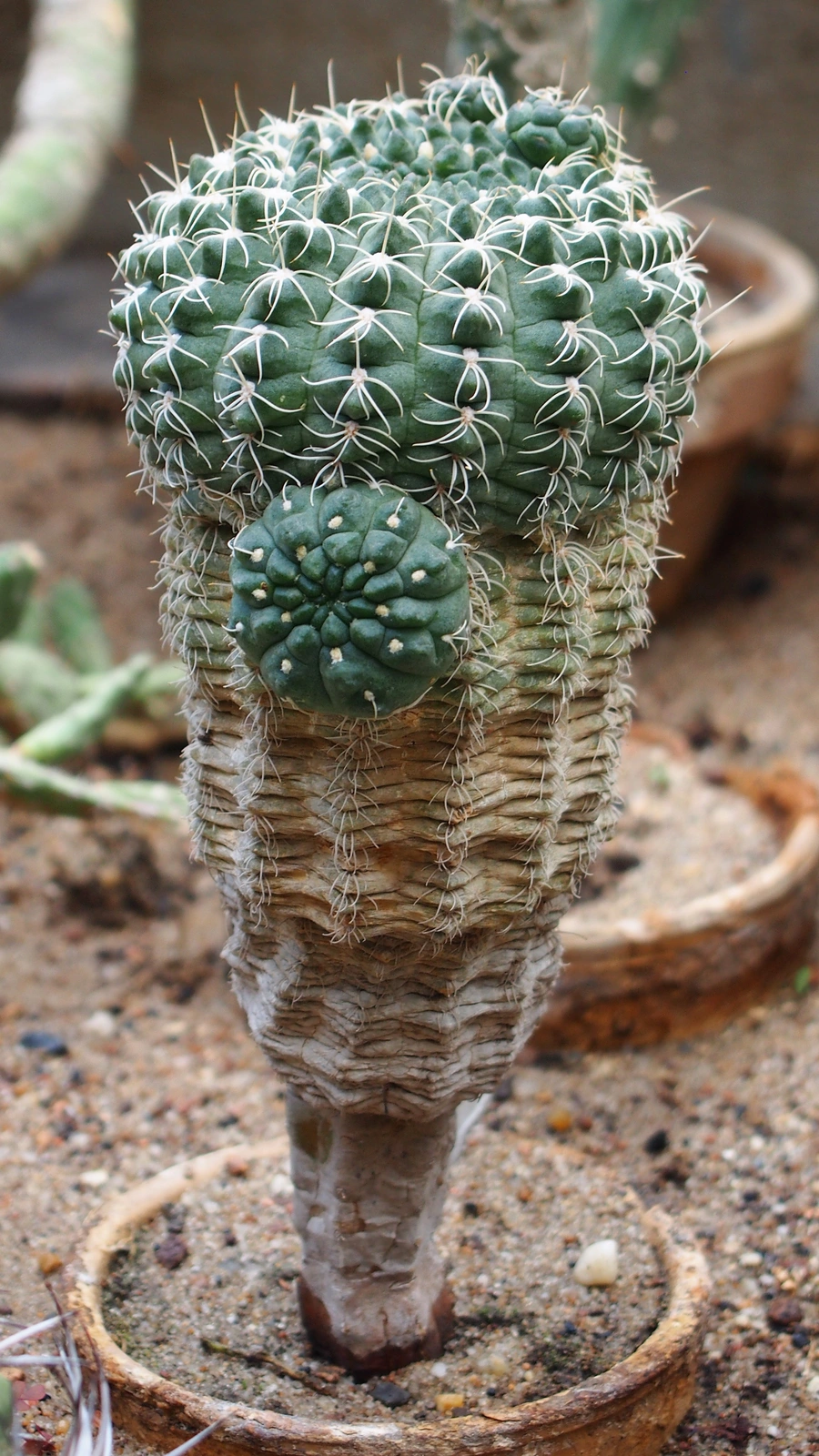 Reference image
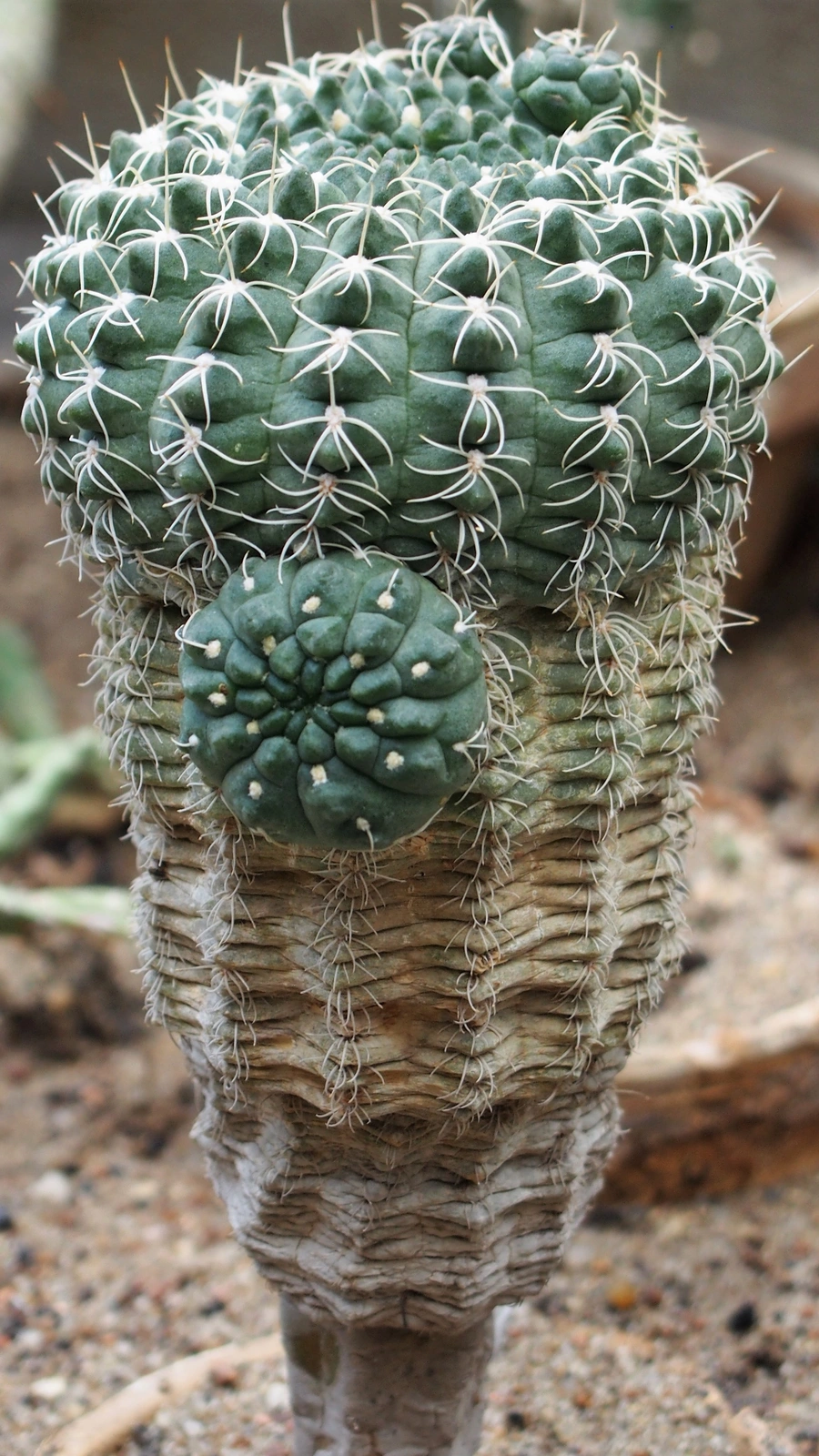 Reference image
Uebelmann's Chin Cactus
Gymnocalycium uebelmannianum is a highly sought-after, flattened globose cactus belonging to the Cactaceae family. Known for its appressed, spider-like spines and neat growth habit, it is an ideal specimen for container culture and indoor succulent collections 1.
The genus name Gymnocalycium originates from the Greek words 'gymnos' (naked) and 'kalyx' (bud), referring to the spineless, smooth flower buds typical of the genus. The specific epithet 'uebelmannianum' honors the Swiss cactus explorer and nurseryman Werner Uebelmann 2.
This species is endemic to northwestern Argentina, primarily occurring in the province of La Rioja. It thrives at elevations between 1000 and 2500 meters above sea level, typically growing in rocky cracks and skeletal soils amidst mountain grasses 1.
The stem is solitary, depressed-globose, up to 7 cm in diameter, and grey-green to dark green. It features small, whitish, curved spines that press flat against the ribs, resembling spiders. In late spring, it produces beautiful funnel-shaped, creamy white to ivory blossoms from the apex 2.
In cultivation, it requires bright, indirect sunlight to preserve its compact form without risking sunburn. It demands extremely well-draining, mineral-based soil mixes. Watering should be thorough but infrequent, allowing the growing medium to dry out completely between waterings 1.
The most frequent issue is root rot due to overwatering or poorly draining soil. Lack of adequate light will cause etiolation, turning the compact globose stem cylindrical and weak. High winter humidity combined with cold temperatures can lead to fungal spots 1.
Bright, indirect or filtered sunlight. Protect from intense afternoon sun.
Allow substrate to dry completely before watering. Keep bone dry in winter.
Highly porous mineral mix with pumice, grit, and very little peat.
Non-toxic to pets, but minor handling caution is advised due to its spines.
Easy; very resilient as long as it is not overwatered.
Found on high-altitude rocky slopes of northwestern Argentina, where it grows in mineral-rich, stony soils under the light shade of sparse mountain vegetation.
