
Light
Bright Indirect Light
Prefers bright, indirect light or filtered sun; avoid harsh midday direct sunlight.
 Reference image
Uruguay Chin Cactus
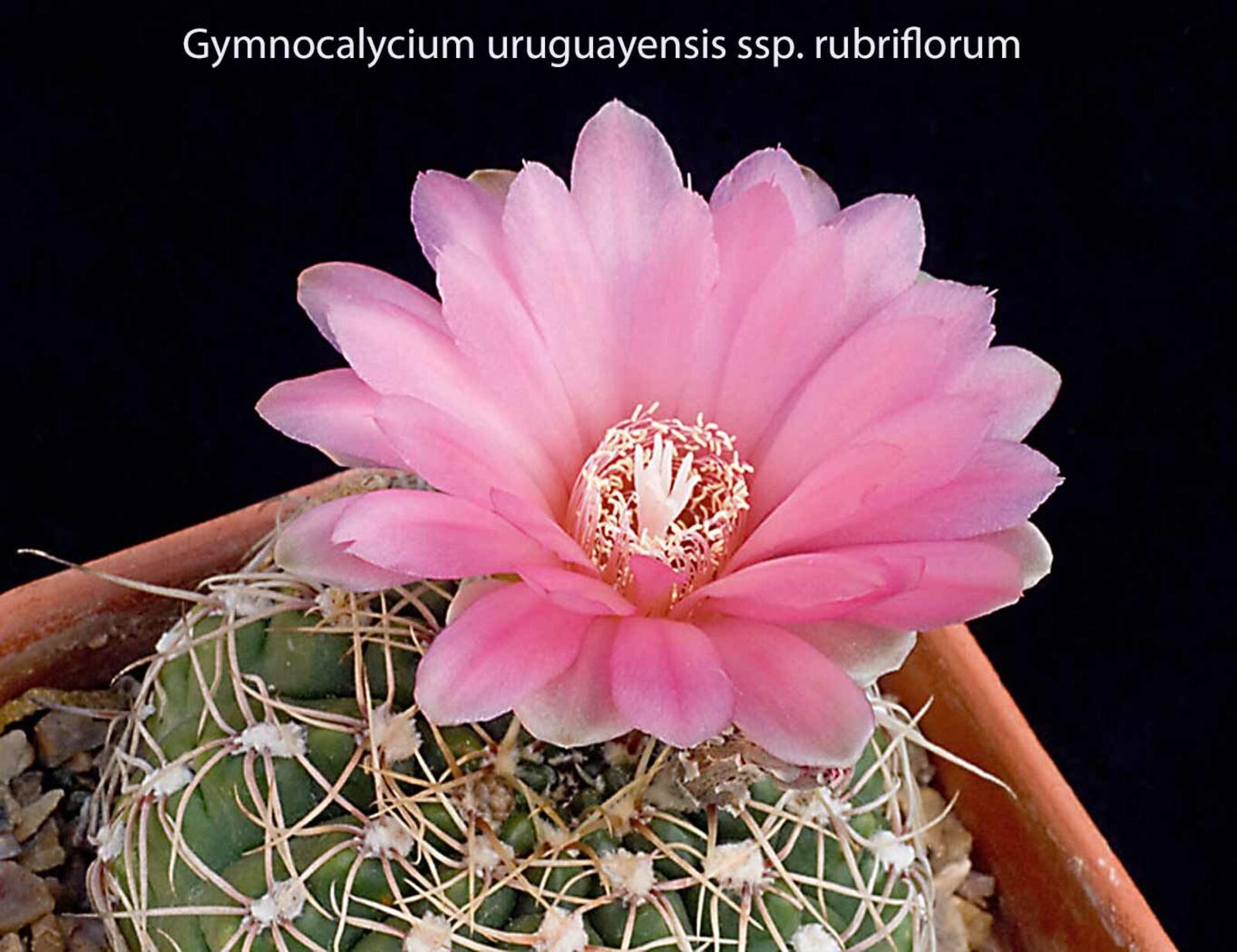
Gymnocalycium uruguayense is a flattened-globose, highly aesthetic, and resilient succulent subshrub belonging to the family Cactaceae. It is popular among collectors for its distinctive matte green-blue epidermis and large, cream-to-yellow blossoms 1.
Originally described in the 19th century, this species belongs to the genus Gymnocalycium, characterized by naked flower buds (from Greek gymnos meaning naked, and calyx meaning bud). Its synonyms include Echinocactus uruguayensis 2.
The native range of this species spans Uruguay and the southern states of Brazil (specifically Rio Grande do Sul) 1. It thrives in subtropical rocky grasslands and shallow soil pockets on stony hills. This harsh natural environment has adapted the plant to withstand seasonal droughts and light winter frosts.
The stem is solitary, flattened-globular, and can occasionally offset from the base as it matures. Spine clusters emerge from areoles, slightly recurved and pressed against the ribs. The showy, funnel-shaped flowers open at the apex, presenting shades of pale yellow, cream, or greenish-yellow 1.
In cultivation, it is highly rewarding and easy to grow. It prefers bright, indirect sunlight or filtered morning sun. Intense midday sun can cause sunburn. Watering should be deep but infrequent, allowing the potting medium to dry out completely between sessions 2.
The most prevalent issue is root rot, triggered by overwatering or heavy, water-retaining soils. Keeping the plant in warm, dark rooms during winter prevents dormant rest and suppresses subsequent spring flowering.
Prefers bright, indirect light or filtered sun; avoid harsh midday direct sunlight.
Allow the potting mix to dry completely before watering. Suspend watering during winter dormancy.
Highly porous substrate rich in inorganic materials like pumice, lava rock, and coarse sand.
Possesses sharp spines; handle with care. Non-toxic to pets, but physical contact should be prevented.
Extremely easy to care for as long as it is not overwatered. Excellent for beginner collectors.
Naturally occurs in the rocky grasslands of Uruguay and the subtropical hilly ranges of Rio Grande do Sul in southern Brazil, growing in crevices and shallow substrates.
