
Light
Full Sun
Requires full, direct sunlight throughout the year to maintain its shape and spine density.
 Reference image
Haageocereus acranthus is a columnar, woody cactus species belonging to the family Cactaceae, native to the arid coastal regions of Peru 1. Characterized by its upright to sprawling habit and dense golden-brown spines, it plays a significant role in its native desert ecosystem.
The species belongs to the genus Haageocereus, named in honor of the German cactus cultivator Walther Haage. The specific epithet acranthus originates from Greek roots indicating sharp or terminal flowers 2. It is widely recognized in botanical literature under this accepted name despite historical taxonomic revisions.
This species is naturally distributed along the dry, stony slopes of coastal valleys in Peru, particularly around the Lima region, at elevations ranging from 200 to 1500 meters 1. Surviving in extremely low-rainfall environments, it depends significantly on moisture intercepted from coastal fogs (locally known as garua).
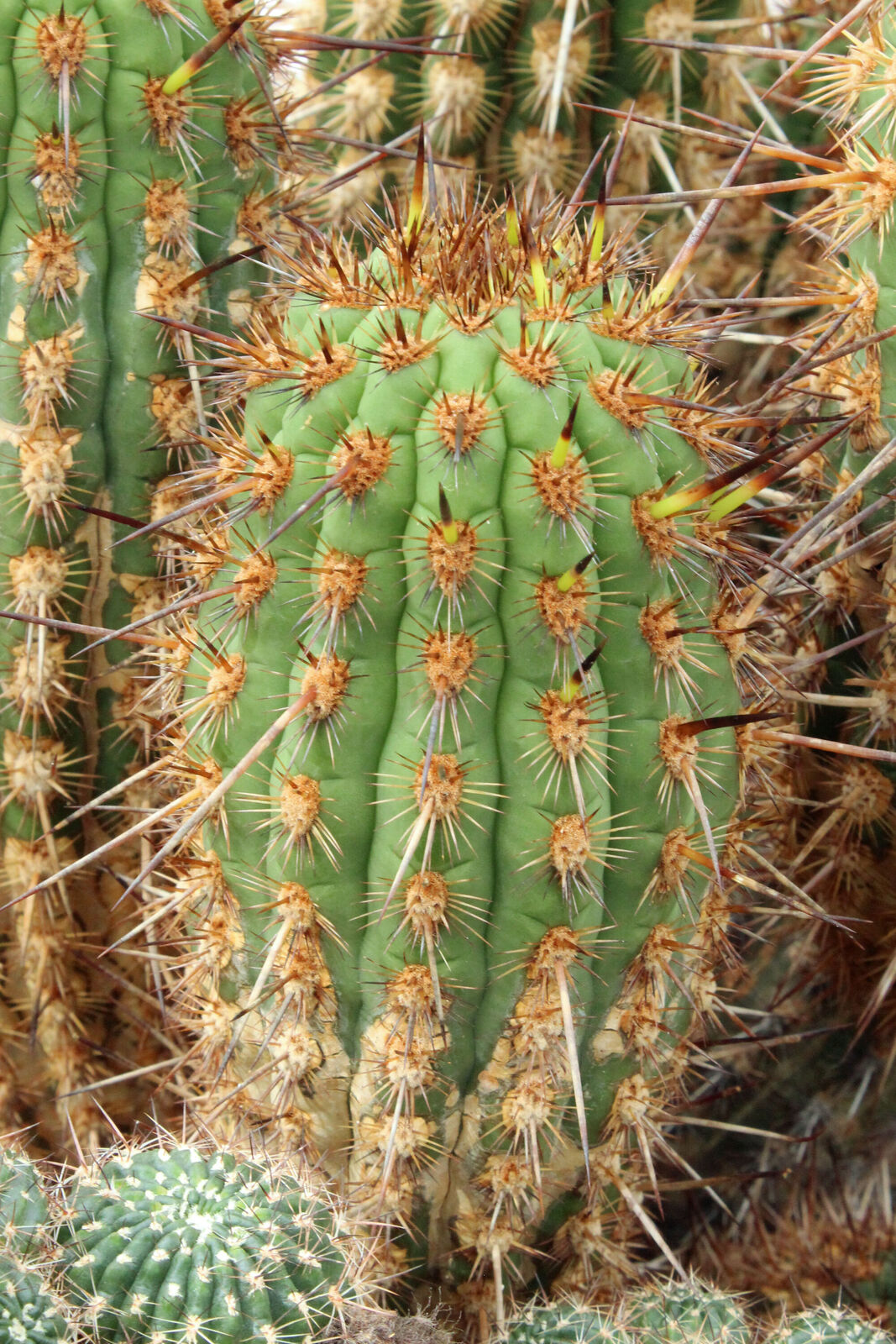
Haageocereus acranthus forms semi-erect, columnar stems that branch from the base, reaching heights of 1 to 2 meters. Each stem features 12 to 20 distinct ribs. Areoles carry dense, rigid, yellowish-brown to grayish spines. The nocturnal, tube-shaped flowers are greenish-white to cream in color, appearing in summer and giving off a mild fragrance 2.
In cultivation, it requires a position with full sun exposure and excellent air circulation. The potting medium must be highly porous and mineral-rich. Water thoroughly during the spring and summer active growth phase only when the soil is completely dry, and keep almost dry in winter.
Overwatering and using heavy, clay-heavy soils are the most common causes of root rot. Keeping the cactus in damp, poorly ventilated rooms during winter will quickly lead to fungal infections.
Requires full, direct sunlight throughout the year to maintain its shape and spine density.
Water only when the substrate is fully dry. Keep dry and cool during winter dormancy.
Use highly porous cactus soil mixed with plenty of pumice, perlite, and coarse sand.
Possesses sharp, rigid spines. Handle with thick gardening gloves and keep away from pets.
Moderately easy for growers who can provide bright sunlight and prevent overwatering.
Occurs along the arid, stony slopes and coastal valleys of Peru, adapting to dry desert regions that rely on Pacific sea fogs for moisture.
