
Light
Bright Indirect Light
Prefers bright, indirect light or filtered sun; insufficient light leads to thin, pale growth.
 Reference image
Hairy Haageocereus
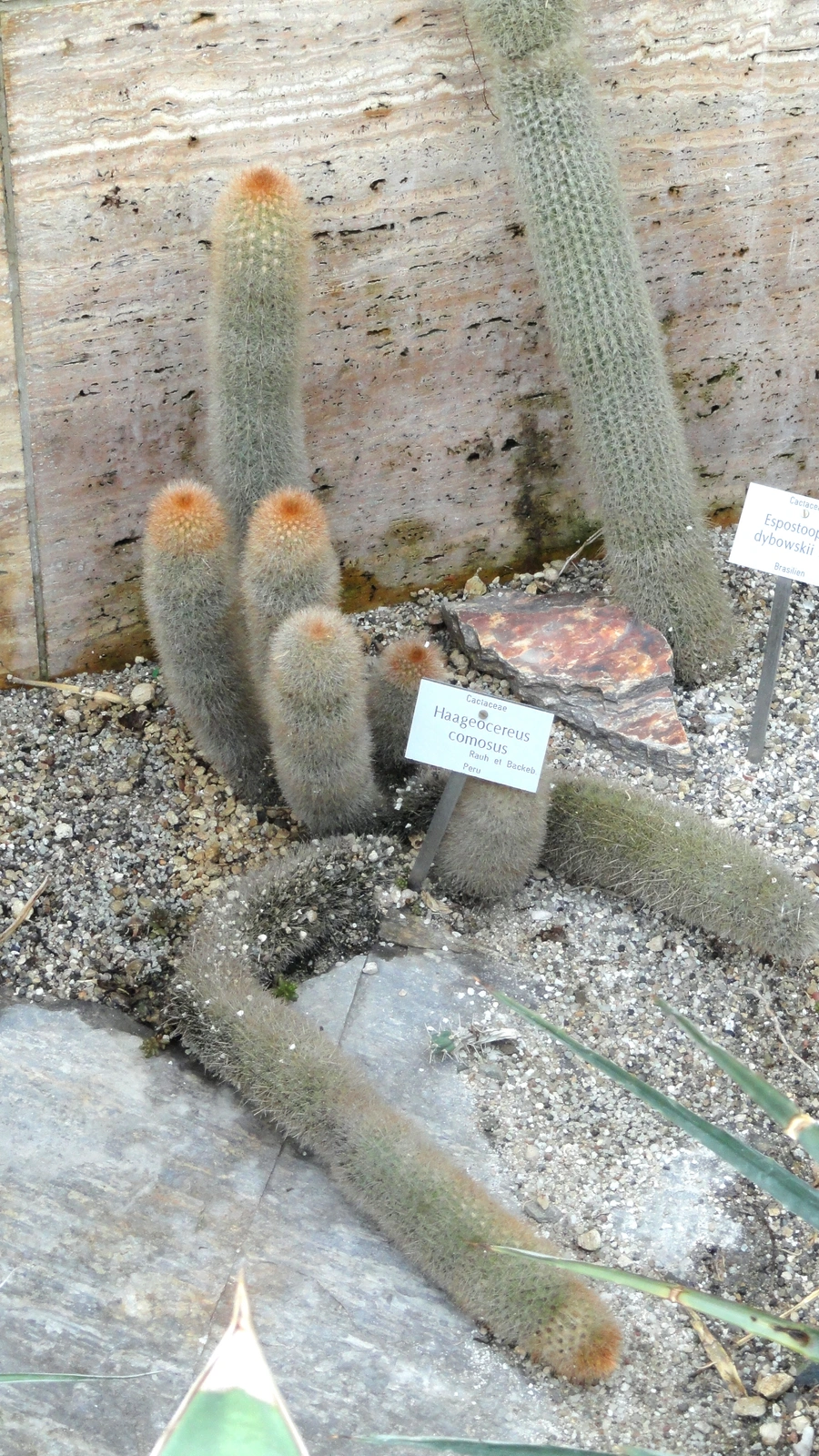
Haageocereus × comosus is an intriguing natural hybrid cactus species in the family Cactaceae 1. Native to the arid slopes and valleys of Peru, this succulent shrub forms clumps of erect to decumbent cylindrical stems heavily adorned with dense spines. It is a resilient taxon adapted to thrive in highly mineralized soils.
This plant belongs to the genus Haageocereus, well-known for its columnar species native to western South America. The specific epithet comosus is derived from Latin, meaning 'hairy' or 'tufted', referring to the characteristic dense, hair-like spines concentrated at the stem apexes 2.
Its primary distribution range covers Western South America, specifically in Peru 1. It inhabits seasonally dry tropical biomes, prevailing on gravelly rocky cliffs and dry coastal river valleys where drainage is rapid and direct sunlight is intense.
This hybrid features cylindrical, ribbed stems that can grow in clusters. The stems are covered with numerous radial and central spines of varying colors, from golden yellow to dull brown. Its distinguishing feature is the long, soft, hair-like spines near the growing tips. The nocturnal flowers are tubular and mostly light pink or whitish.
In cultivation, Haageocereus × comosus requires extremely porous soil mixes with a high proportion of pumice, sand, and grit 2. Watering should be thoroughly applied during the active spring and summer growth phases, allowing the soil to dry completely between cycles.
The most prevalent issue is root rot caused by overwatering and lack of soil drainage. Low light coupled with excess humidity leads to etiolation, stretching, and fungal pathogens, which can rapidly deteriorate the plant's health.
Prefers bright, indirect light or filtered sun; insufficient light leads to thin, pale growth.
Allow the potting mix to dry out completely before watering again. Keep almost dry in winter.
Use a specialized mineral-rich cactus soil mixed with plenty of pumice or perlite.
Equipped with sharp spines. Keep away from pets and children; always wear protective gloves when handling.
Moderately easy for indoor growers who can successfully manage watering cycles and soil drainage.
Native to the arid coastal and Andean foothill regions of Peru, surviving in rocky soils under seasonally dry tropical conditions.
