
Light
Full Sun
Requires full sun, minimum 6 hours of direct sunlight daily.
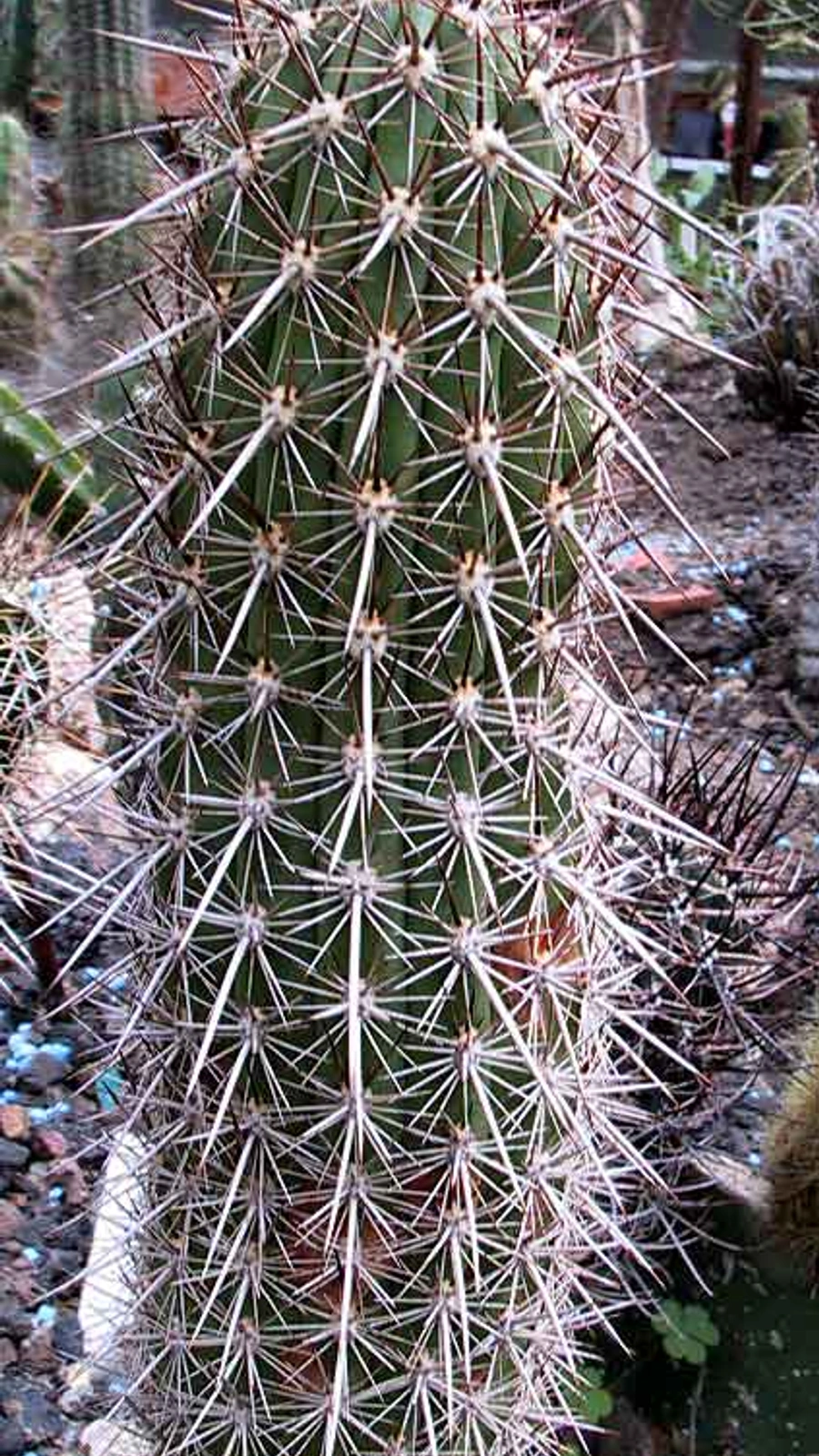 Reference image
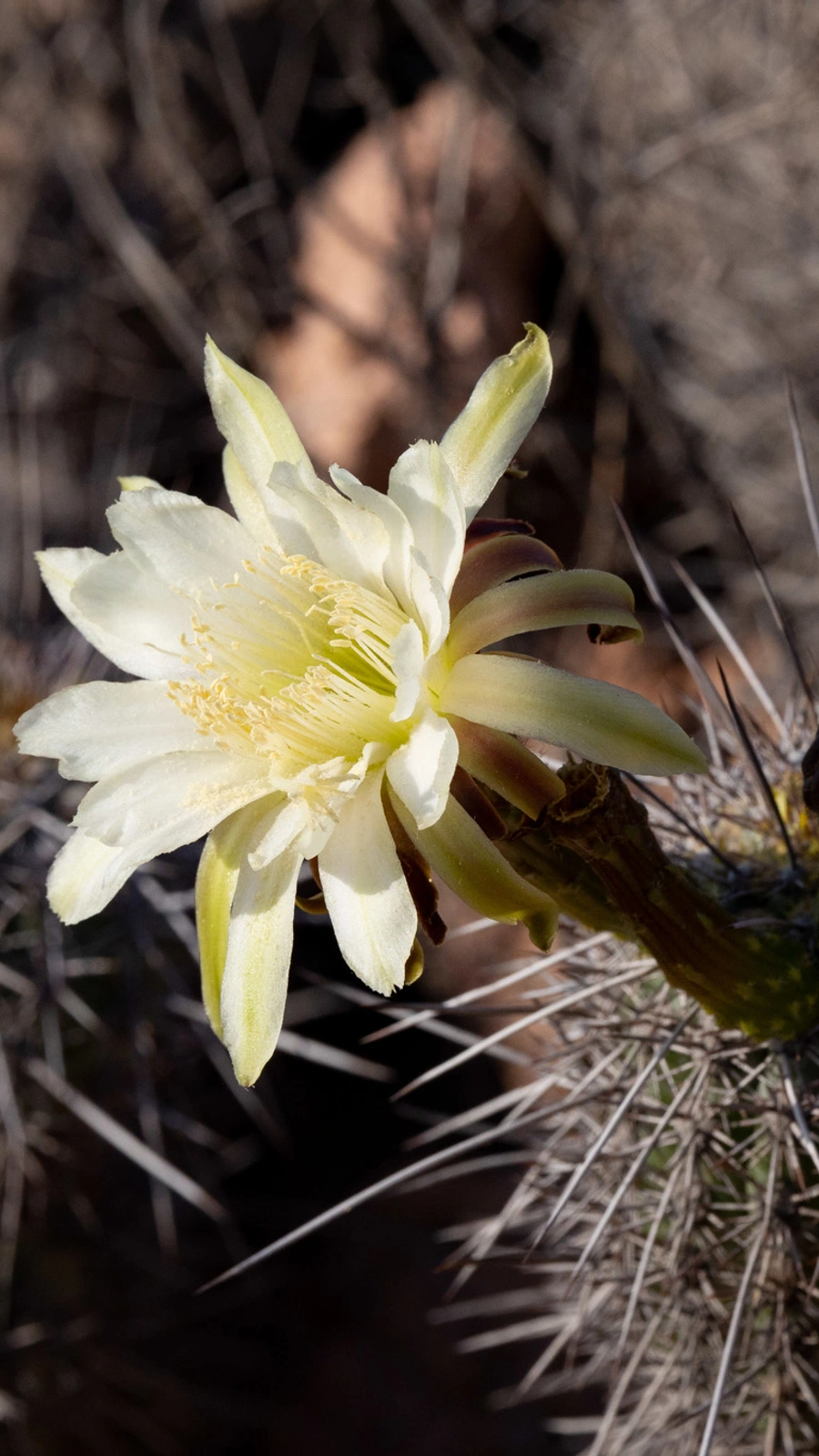 Reference image
Platinum Spined Haageocereus
Haageocereus platinospinus is an elegant, column-forming cactus species belonging to the Cactaceae family 1. Famed for its distinctive platinum-to-silver colored spine armature, it is highly valued by xerophytic plant enthusiasts and collectors for its structural form.
Belonging to the genus Haageocereus, its specific epithet 'platinospinus' highlights its metallic-looking silver spines. In older botanical literature, it has sometimes been classified under Cereus. Taxonomists distinguish this species by its dense radial spine arrangement and rib count 2.
Native to Western South America, particularly the dry, coastal regions and lower western Andean slopes of Peru 3. It thrives in hyper-arid desert biomes and rocky shrublands where soils are predominantly mineral-based and fast-draining.
This succulent subshrub produces upright to decumbent, grayish-green stems branching mainly from the base. The prominent ribs are densely packed with sharp, needle-like platinum-colored spines. Its nocturnal flowers are large, tubular, and creamy-white, designed for moth pollination.
It demands full sun exposure and a well-ventilated, low-humidity environment. Water thoroughly only when the growing medium has dried completely. During winter dormancy, keeping the plant completely dry prevents root rot.
Overwatering is the primary cause of plant failure, leading to rapid root rot. Lack of sufficient direct sunlight causes etiated, weak growth, while poorly draining peat-heavy soils suffocate the shallow root system.
Requires full sun, minimum 6 hours of direct sunlight daily.
Allow soil to dry fully before watering; keep dry in winter.
Extremely porous mineral-rich soil with high pumice content.
Sharp, rigid spines can cause injury. Handle with care. Non-toxic.
Moderately easy if overwatering is strictly avoided.
Naturally distributed along the arid western slopes of the Peruvian Andes, inhabiting rocky soils within desert and dry shrubland ecosystems.
