
Light
Full Sun
Requires full, direct sun for several hours daily to preserve its dense spination.
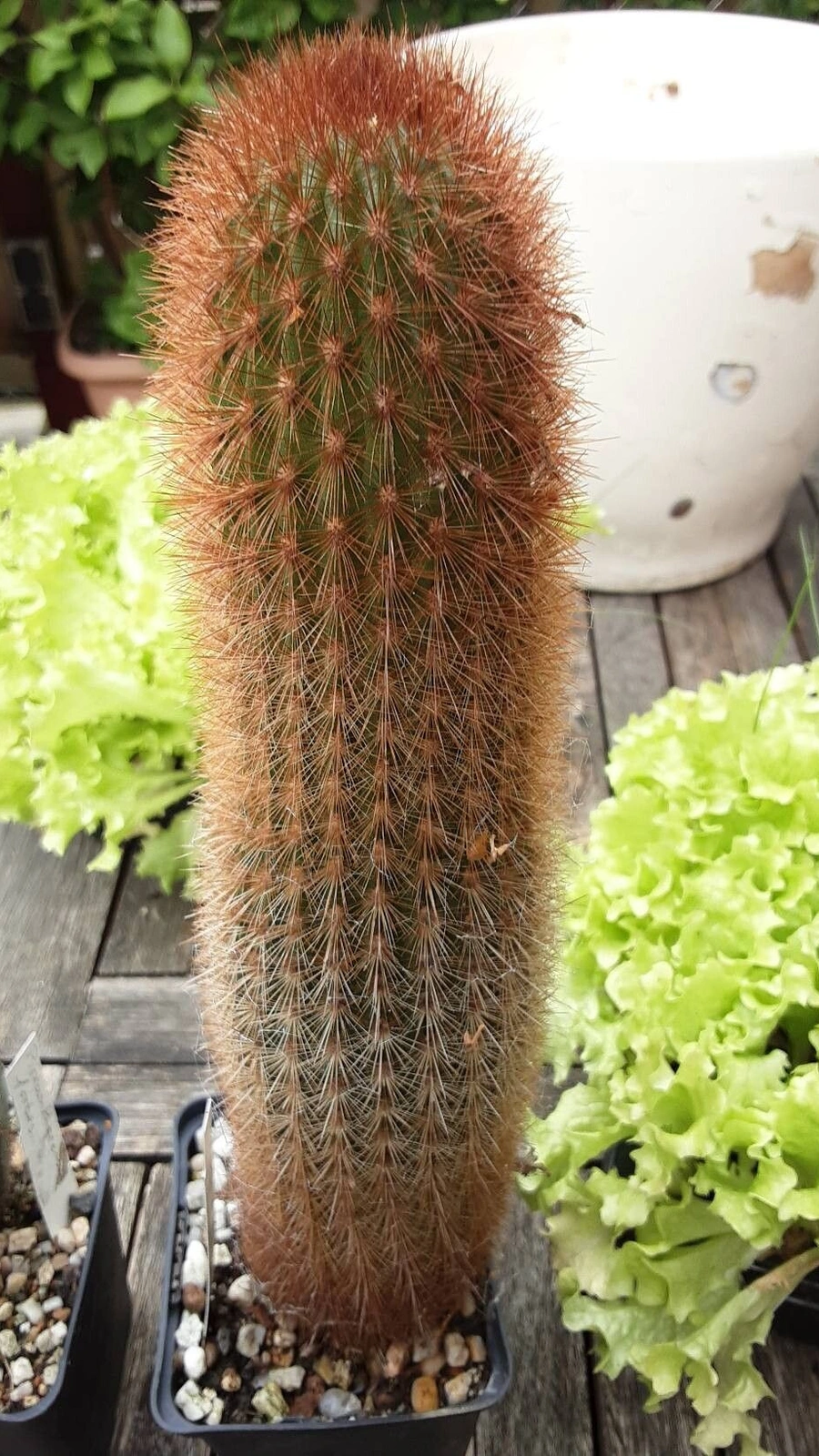 Reference image
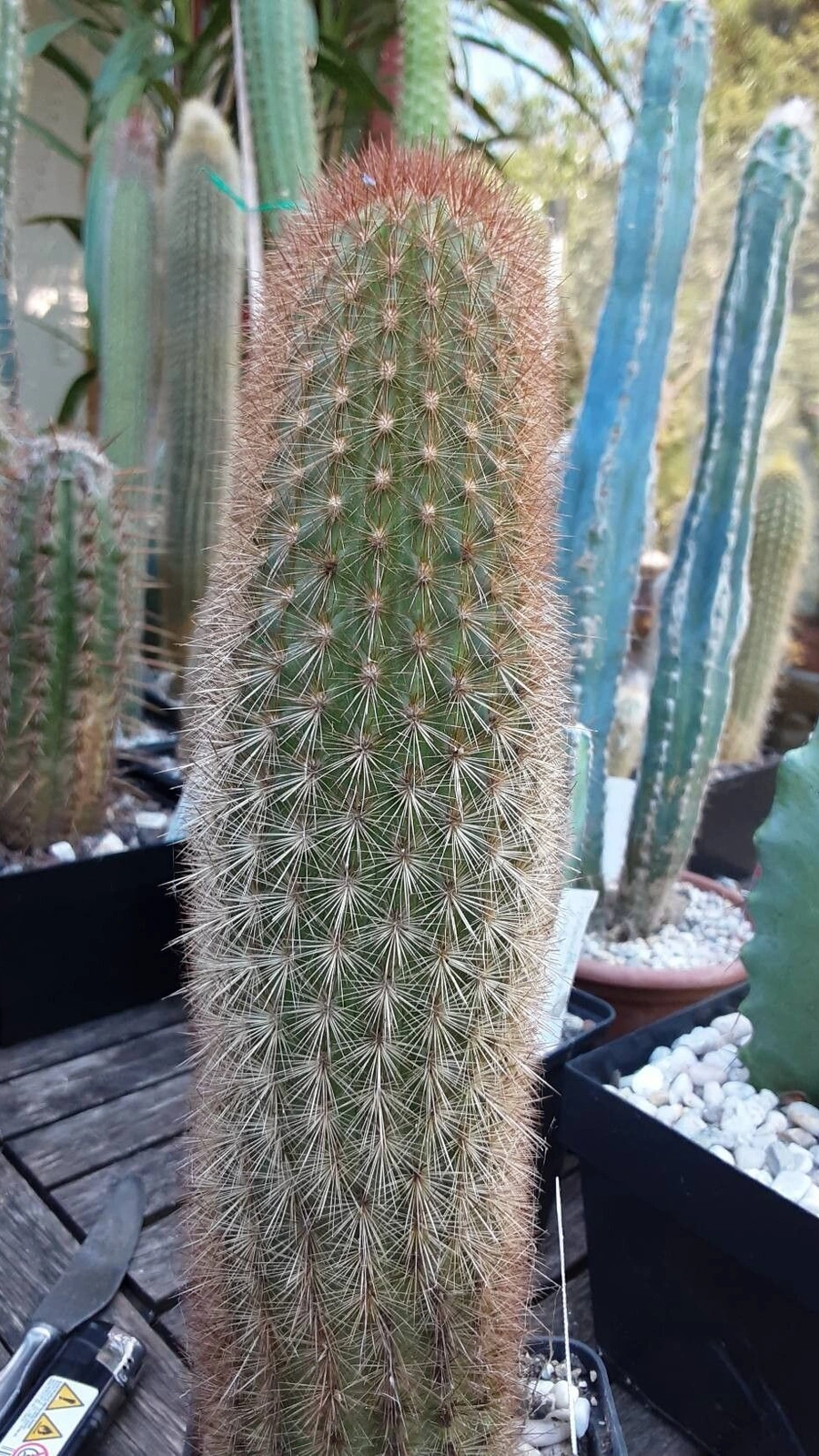 Reference image
Creeping Haageocereus
Haageocereus repens is a rare and distinctive prostrate cactus species in the family Cactaceae, native to the arid coastal strip of Peru. Unlike most columnar or globose cacti, this species is highly specialized for crawling horizontally across sandy ground, forming dense mats 1.
Belonging to the genus Haageocereus, it was first formally described by the German botanist Curt Backeberg. The specific epithet repens is Latin for "creeping" or "prostrate," which perfectly encapsulates its unique decumbent growth habit along the desert floor 2.
This species is endemic to the coastal deserts of northern Peru, particularly in the La Libertad region. It thrives in seasonally dry tropical environments, growing primarily on sandy soils and dunes near sea level. These habitats receive almost no rainfall but are characterized by high air humidity due to coastal fog (garúa) 3.
The stems of Haageocereus repens are cylindrical, pale green, and grow horizontally, rooting as they touch the ground to form new clonal colonies. They are densely covered with yellowish to brownish spines. The nocturnal flowers are funnel-shaped, typically white or cream-colored, adapted to moth pollination 3.
In cultivation, it requires a highly porous, gritty cactus soil mix with excellent drainage. It demands full sun exposure and good ventilation. Watering should be done thoroughly only after the substrate has completely dried out, with a strict dry period during the winter 2.
The most prevalent issue is overwatering combined with heavy, water-retaining soil, which causes the creeping stems to rot rapidly from the base. Insufficient sunlight will lead to etiolation, where the plant grows unnaturally thin and weak.
Requires full, direct sun for several hours daily to preserve its dense spination.
Water deeply but sparingly; always let the substrate dry out completely first.
Gritty, mineral-rich cactus mix with high sand and pumice content.
Spiny stems can cause injury; place away from pets and active pathways.
Moderately easy if you avoid overwatering and provide abundant light.
Endemic to the narrow, arid coastal desert of La Libertad in Peru, where it grows directly on sandy sea-level flats that are heavily influenced by Pacific ocean mists.
