
Light
Bright Indirect Light
Bright indirect light or partial morning sun. Avoid scorching afternoon sun.
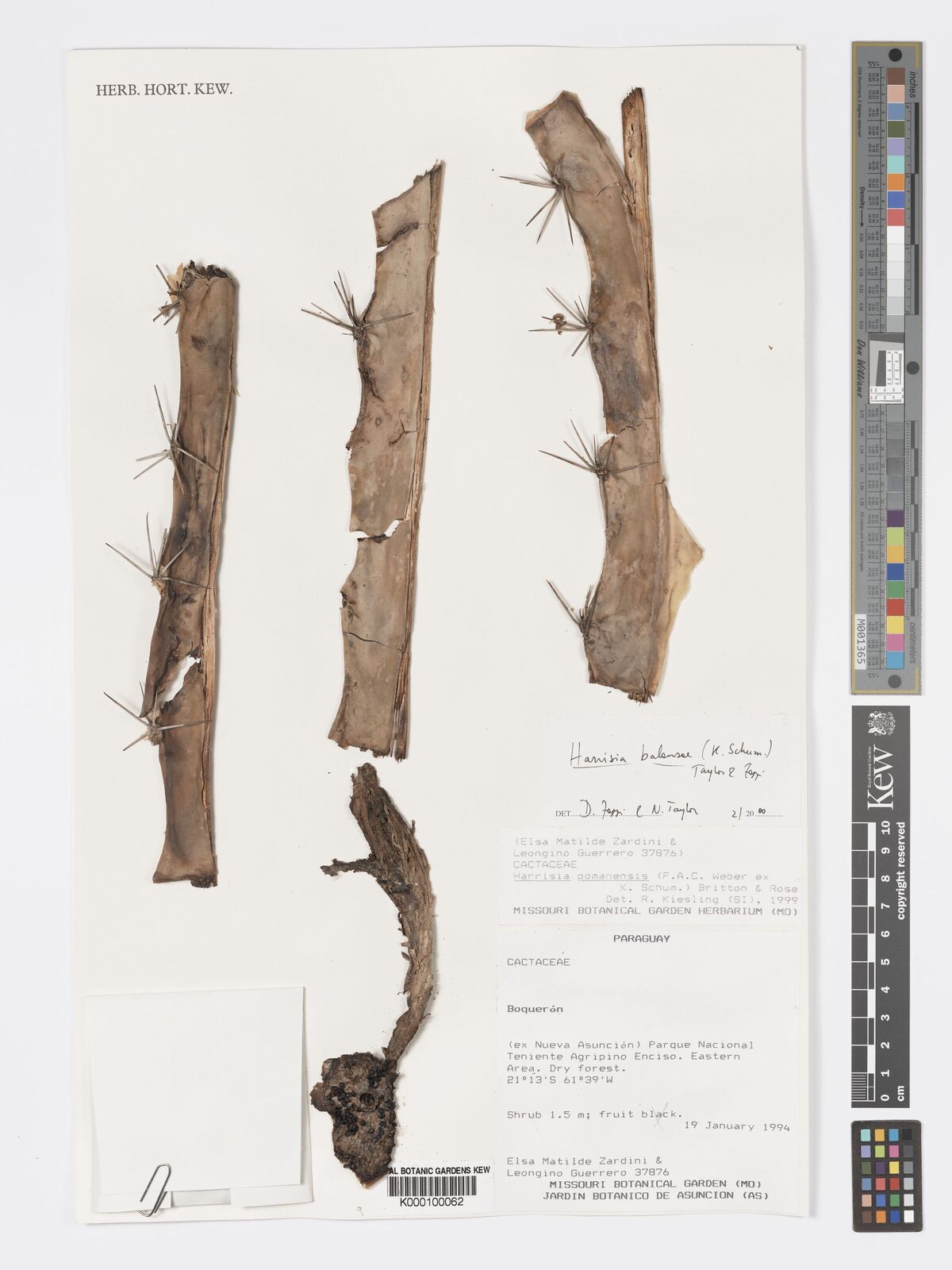 Reference image
Bonpland's Harrisia
Harrisia bonplandii is an exotic, night-blooming succulent subshrub belonging to the family Cactaceae. Known for its sprawling or climbing habit, it often relies on surrounding vegetation for structural support in its native habitats 1.
The species is named in honor of the French botanist Aimé Bonpland. It has been historically classified under several synonyms, including Cereus bonplandii and Eriocereus bonplandii. The genus name Harrisia honors William Harris, an Irish botanist who served as Superintendent of Public Gardens in Jamaica 2.
Native to southern South America, this species is widely distributed across Brazil (including Mato Grosso do Sul and Rio de Janeiro), Paraguay, Bolivia, and northern Argentina. It thrives primarily in seasonally dry tropical biomes, deciduous forests, and the scrublands of the Gran Chaco 1.
The stems are dark green or grayish-green, typically featuring 4 to 5 ribs, and can reach several meters in length. Areoles bear sharp, needle-like grayish spines. Its most striking feature is the large, funnel-shaped white flowers, measuring up to 25 cm long, which open at night and emit a sweet fragrance. The subsequent fruits are edible, globose, and bright red when ripe 2.
Harrisia bonplandii prefers bright, indirect light or filtered sunlight. It requires highly porous, mineral-rich, and well-draining soil. Water thoroughly during the active summer growing season, and keep the substrate completely dry during the winter dormancy period.
Overwatering is the most critical issue, rapidly causing root rot. Insufficient light leads to weak, etiolated stems that cannot support their own weight. Cold, damp winter environments must be strictly avoided.
Bright indirect light or partial morning sun. Avoid scorching afternoon sun.
Water moderately during spring and summer; keep almost completely dry in winter.
Highly porous cactus mix containing gravel, pumice, and coarse sand.
Features sharp spines that require careful handling. Keep away from pets due to mild sap toxicity.
Moderate care. Requires careful winter water management to prevent rot.
Mainly distributed in Brazil, Paraguay, Bolivia, and Argentina, occurring in dry forests and shrubby savannas.
