
Light
Full Sun
Requires full sun, ideally 6+ hours of direct sunlight daily to maintain structural integrity and bloom.
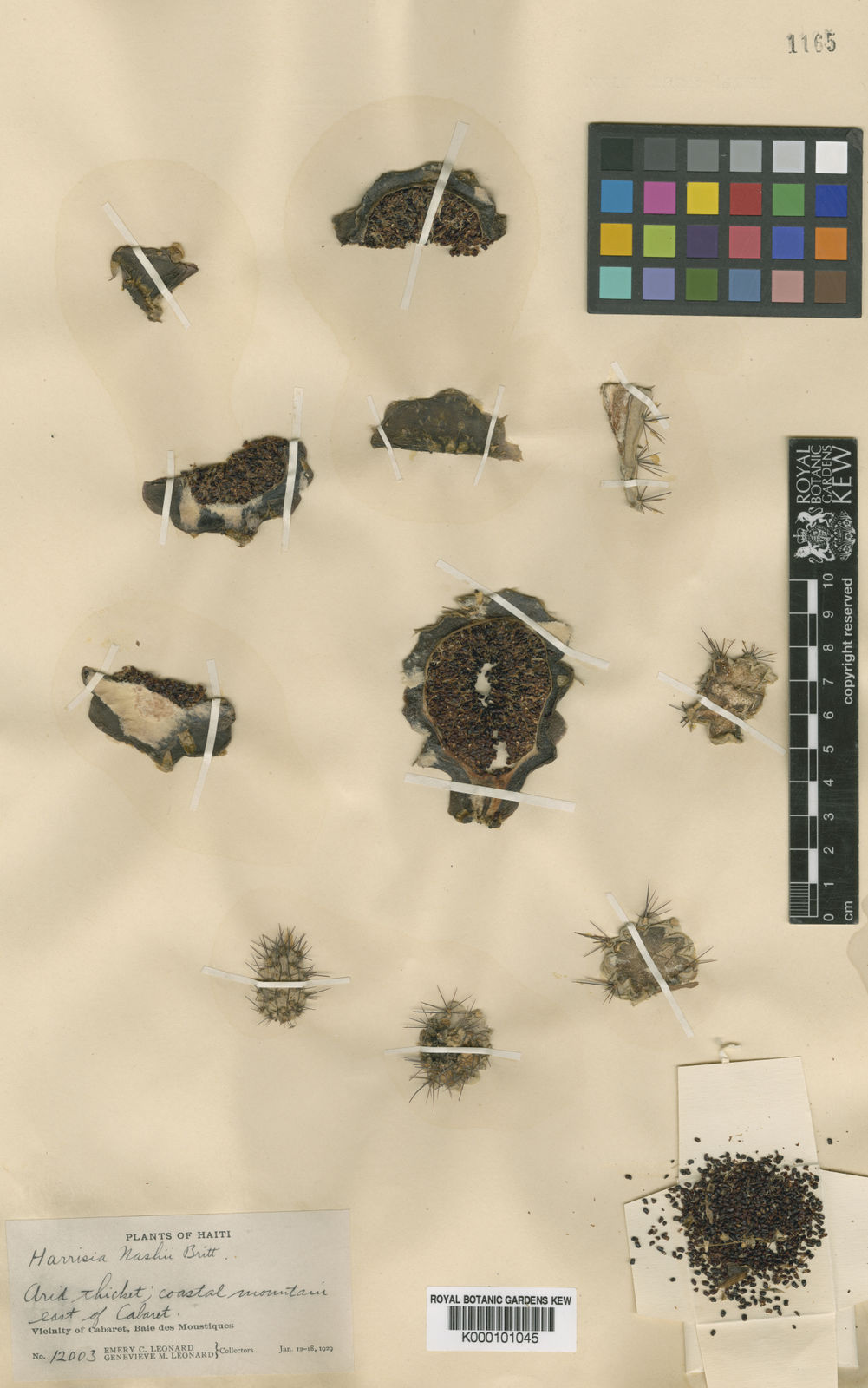 Reference image
Hispaniola Applecactus
Harrisia divaricata is a scrambling or shrubby succulent cactus native to the Caribbean. It is characterized by its sprawling growth habit, often leaning on surrounding vegetation for support. It is highly valued for its large, nocturnal white flowers and subsequent edible yellow fruits 1.
The species was originally described under the genus Cereus and later transferred to Harrisia. The genus name honors William Harris, an Irish botanist and superintendent of public gardens in Jamaica. The specific epithet 'divaricata' refers to its widely spreading, forked branching pattern 12.
This cactus is endemic to the island of Hispaniola (comprising Haiti and the Dominican Republic). It thrives in seasonally dry tropical biomes, coastal scrublands, and rocky dry forests. It is well-adapted to poor, limestone soils and dry coastal winds 2.
The stems are cylindrical, ribbed, and light green to grayish-green. It features 8 to 10 prominent ribs decorated with greyish felted areoles bearing sharp, yellowish-grey spines. The large, trumpet-shaped white flowers open at night and can reach up to 20 cm in length. The globose fruits turn bright yellow when fully ripe.
In cultivation, Harrisia divaricata requires full sun and exceptionally free-draining sandy loam. Water thoroughly only when the soil has completely dried out. In winter, keep the plant almost entirely dry and protect it from temperatures below 5°C to avoid tissue damage 2.
Overwatering and placing the plant in heavy, moisture-retaining soils are the primary causes of root rot. Lack of sufficient sunlight leads to etiolated, weak stems and prevents flowering.
Requires full sun, ideally 6+ hours of direct sunlight daily to maintain structural integrity and bloom.
Apply the 'soak and dry' method; never allow the pot to sit in standing water.
Highly porous mineral mix with coarse sand, perlite, and pumice is essential for success.
Armed with sharp spines; handle with care using thick gloves and keep away from pets.
Moderate. Easy if underwatered, but highly susceptible to rot if overwatered or kept in shade.
Naturally distributed in the dry coastal forests and arid scrublands of the Hispaniola island, where it tolerates salty sea breezes and prolonged dry spells in limestone crevices.
