
Light
Bright Indirect Light
Requires bright, indirect sunlight or partial direct sun for optimal growth and flowering.
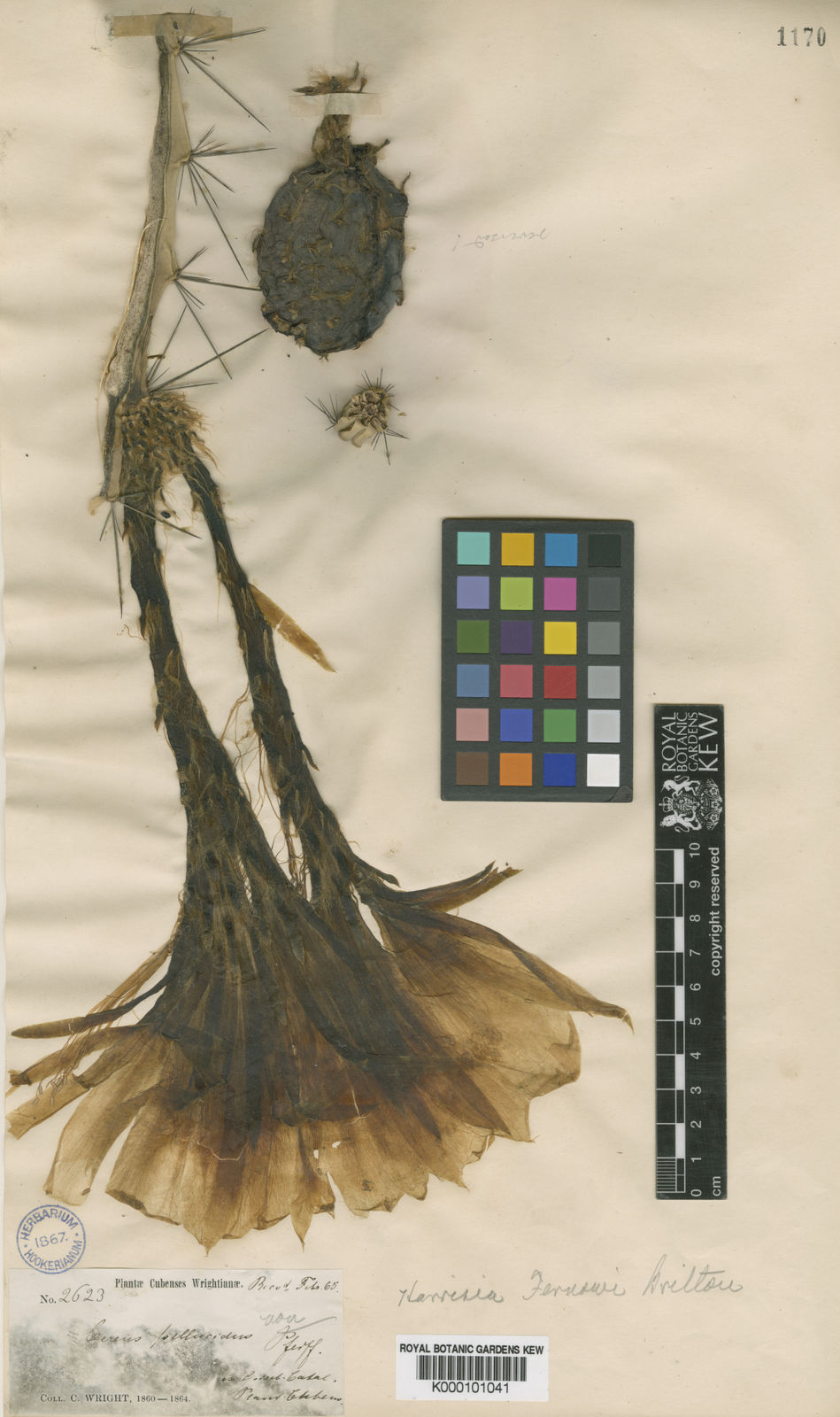 Reference image
Fernow's Harrisia
Harrisia fernowii is an exotic, scrambling or shrubby cactus species belonging to the family Cactaceae 1. It is highly appreciated for its large, nocturnal white blossoms and decorative red fruits.
Named in honor of the forestry expert Bernhard E. Fernow, this species belongs to the genus Harrisia. It features thin, ribbed cylindrical stems and is historically grouped under synonyms such as Cereus fernowii 2.
Endemic to Cuba, Harrisia fernowii thrives primarily in seasonally dry tropical biomes, coastal thickets, and rocky terrains where soil moisture is highly seasonal 1.
The slender, green stems are ribbed and armed with small spines. During summer, spectacular funnel-shaped white flowers open at night, emitting a strong fragrance to attract nocturnal pollinators, followed by bright red, fleshy fruits 2.
In cultivation, it requires very gritty, well-draining soil and a position with plenty of bright, indirect sunlight or filtered direct sun. Protection from cold drafts and frost is vital.
The most frequent issue is root rot caused by overwatering or poorly draining soil. Insufficient light leads to etiolation, causing thin and weakened stem growth.
Requires bright, indirect sunlight or partial direct sun for optimal growth and flowering.
Let the soil dry out fully between waterings; practice minimal watering in winter.
Requires a highly porous, gritty substrate containing plenty of pumice and coarse sand.
Spiny stems require careful handling. Non-toxic to humans and common domestic pets.
Moderately easy to care for, provided soil drainage is excellent and frost is avoided.
Native to Cuba in the Caribbean, where it grows in seasonally dry tropical forests, dry coastal shrublands, and rocky outcrops.
