
Light
Full Sun
Thrives in direct full sun; ideal for south-facing windows or sunny balconies.
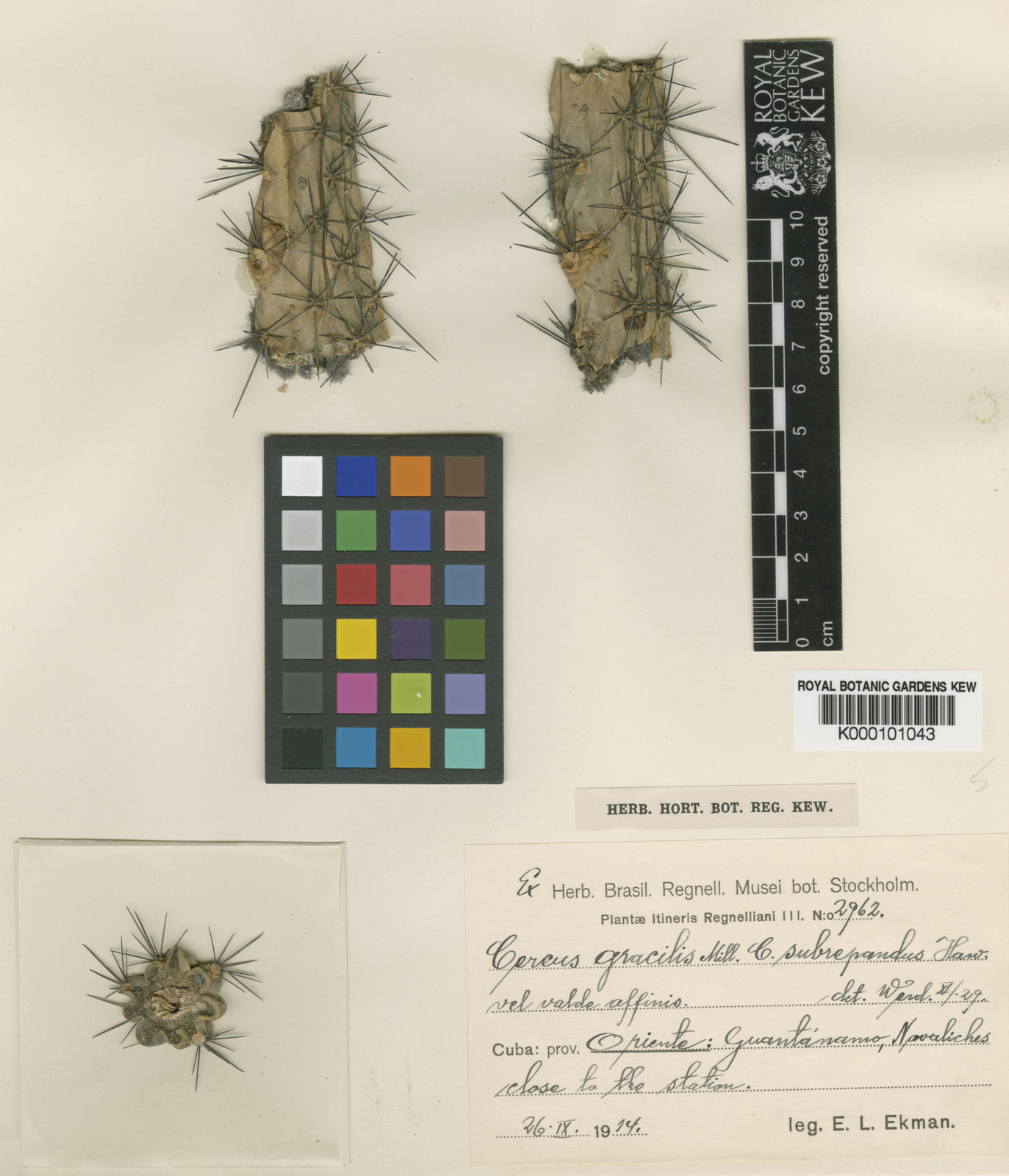 Reference image
Jamaican Apple Cactus
Harrisia gracilis is an erect to sprawling, night-blooming, shrubby perennial cactus species known for its spectacular fragrant white flowers and edible red fruits 1.
Belonging to the Cactaceae family, this species was originally classified under the genus Cereus. The genus name Harrisia honors William Harris, an esteemed superintendent of public gardens in Jamaica 2.
Endemic to Jamaica, this cactus thrives in seasonally dry tropical biomes, coastal scrublands, and limestone rocky cliffs 1. It is well-adapted to nutrient-poor soils and long periods of drought.
The stems are slender, cylindrical, light green to deep green, featuring 9 to 11 ribs. The areoles bear greyish-white needle-like spines. Night-blooming flowers are funnel-shaped, large, and white, followed by smooth, globose red fruits with white pulp 2.
It requires full sun and a very porous, well-draining soil mix. Water thoroughly during the active summer growing season, allowing the soil to dry completely between sessions. Protect from freezing temperatures in winter.
Overwatering is the primary cause of root rot and plant decline 1. Insufficient light exposure leads to etiolation, where the stems become weak, pale, and unnaturally thin.
Thrives in direct full sun; ideal for south-facing windows or sunny balconies.
Water deeply once a week in summer; keep virtually dry in winter.
Use a well-drained gravelly or sandy cactus mix supplemented with pumice.
Non-toxic, but features sharp, stiff spines. Keep out of reach of pets and children.
Easy to moderate care; resilient as long as it gets ample sun and dry soil.
Native to the coastal areas and dry, limestone-rich deciduous woodlands of Jamaica.
