
Light
Bright Indirect Light
Thrives in bright indirect light or partially filtered full sun.
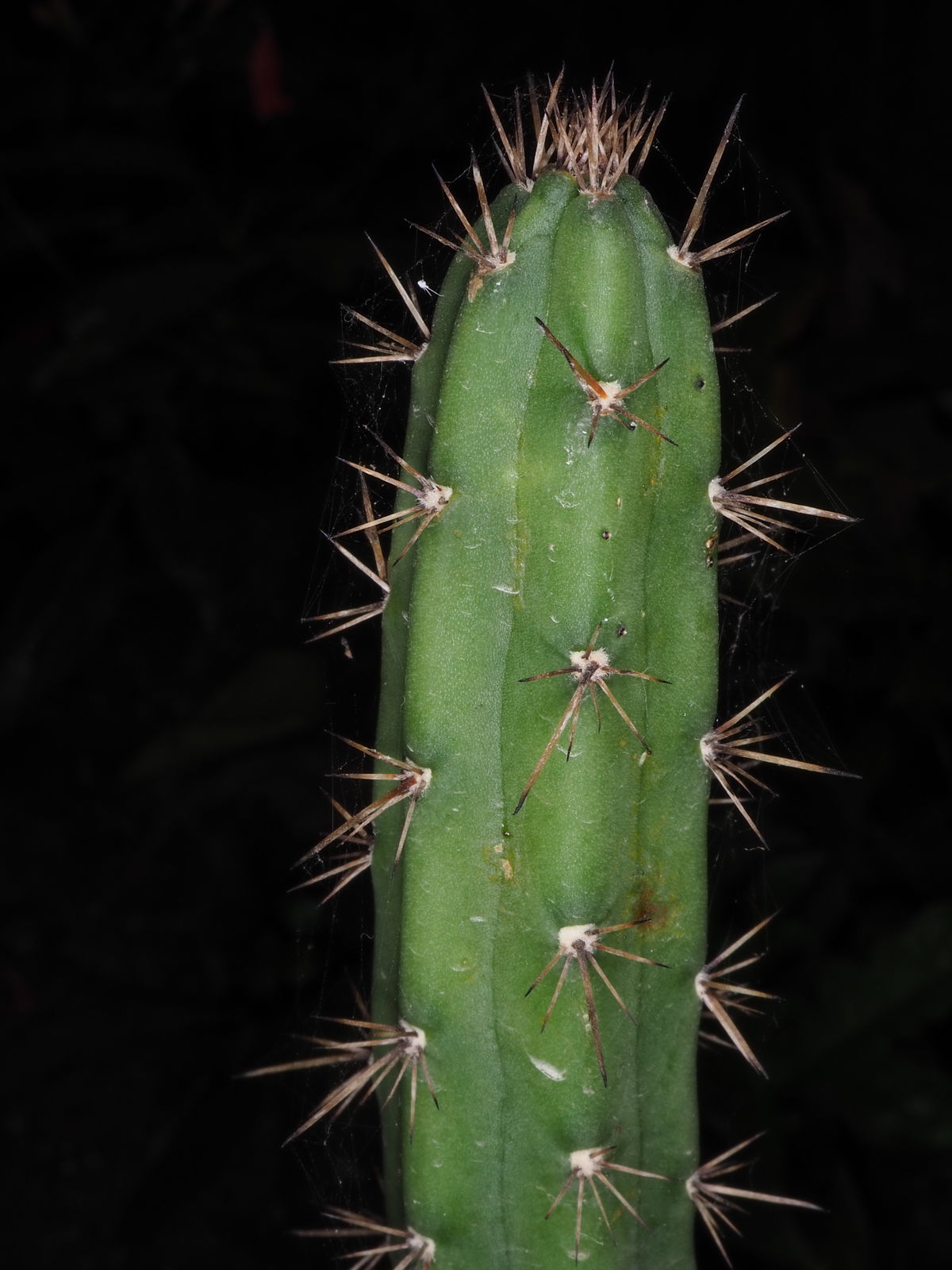 Reference image
Poman Harrisia
Harrisia pomanensis is a succulent subshrub belonging to the family Cactaceae. Known for its semi-erect, sprawling growth habit and spectacular nocturnal white flowers, this desert native is highly valued for its drought tolerance and minimal maintenance needs 1.
The species name 'pomanensis' refers to the Pomán Department in Catamarca, Argentina, where the plant was first documented 2. The genus Harrisia honors William Harris, an influential Irish botanist who worked in Jamaica. Synonyms include Echinopsis pomanensis.
This species is native to dry shrublands and arid desert regions of southern South America. Its wild populations are distributed across northwest Argentina, Bolivia, and parts of Paraguay, growing in sandy and rocky soils 1.
It features cylindrical, greyish-green stems that are 2-4 cm in diameter, generally displaying 4 to 6 ribs. Areoles carry prominent, sharp central spines accompanied by shorter radial ones. During summer, it produces large, funnel-shaped, fragrant white flowers that open exclusively at night. These are followed by edible, globose red fruits 2.
Harrisia pomanensis prefers bright indirect sunlight or filtered sun. It requires highly porous, sandy cactus soil with superb drainage. Water thoroughly during the active growing season only when the soil is completely dry, and suspend watering in winter.
Overwatering and poor soil drainage are the most common causes of root rot. Insufficient light exposure will result in etiolation, causing the stems to become weak, thin, and pale.
Thrives in bright indirect light or partially filtered full sun.
Water only when the substrate is completely dry. Keep nearly dry in winter.
Requires excellent drainage; use a coarse cactus mix rich in pumice and coarse sand.
Features sharp spines. Handle with thick gardening gloves and keep away from children and pets.
Very easy to grow, making it ideal for beginners who can avoid overwatering.
Naturally distributed throughout the dry Chaco forests and shrublands of northern Argentina, extending into the arid lowlands of Bolivia and western Paraguay.
