
Light
Bright Indirect Light
Thrives in full sun to bright, filtered sunlight.
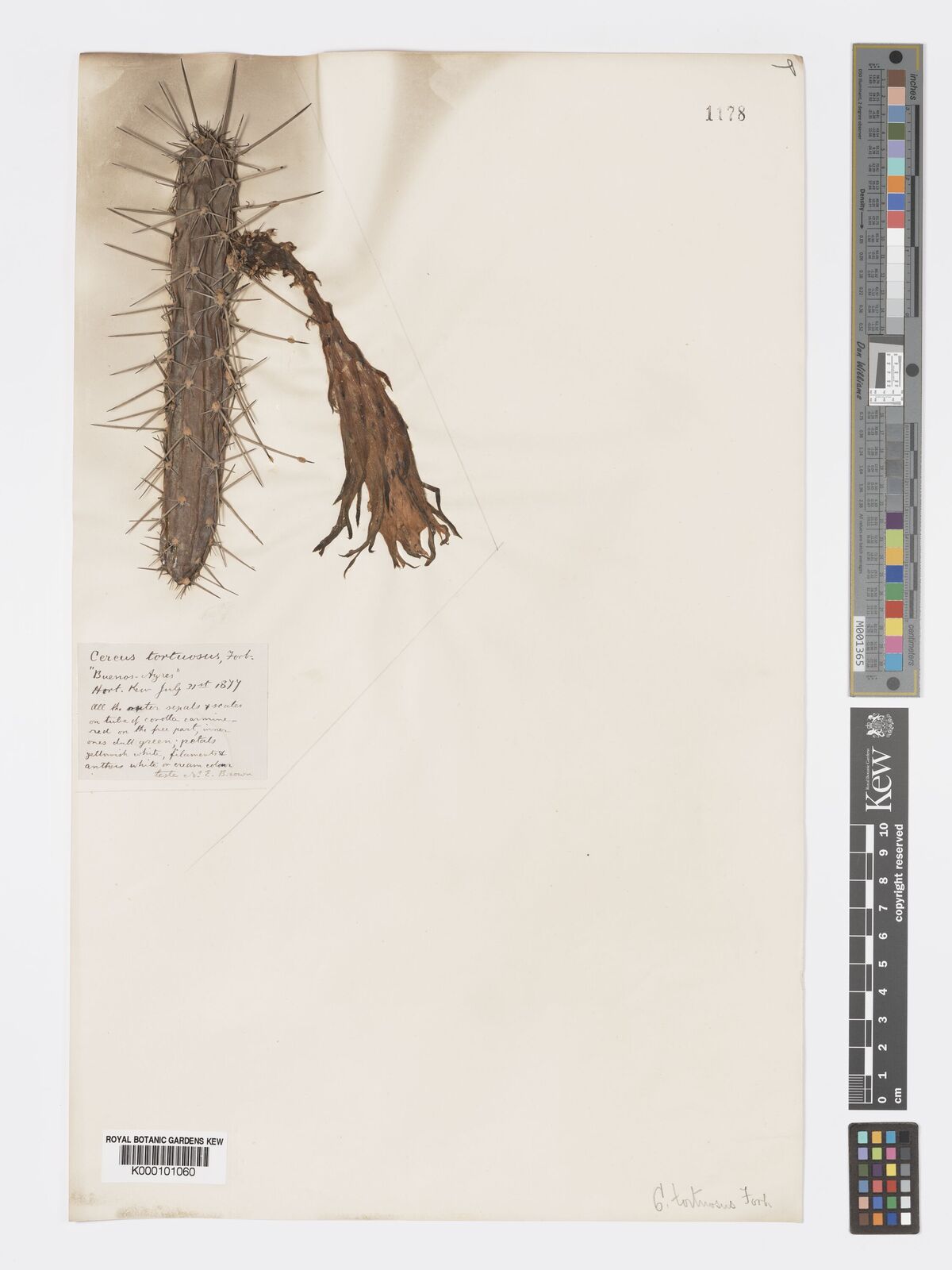 Reference image
Kangaroo Apple Cactus
Harrisia tortuosa is a distinctive, sprawling to semi-scandent cactus species belonging to the Cactaceae family 1. It is well-regarded for its dramatic nocturnal white flowers and highly decorative, bright red spherical fruits. It exhibits a hardy and resilient growth habit in both wild and cultivated settings.
Originally described under the genus Cereus as Cereus tortuosus, it was later classified under Harrisia. The specific epithet "tortuosa" translates from Latin to "twisted" or "winding," pointing directly to the plant's characteristic twisting and scrambling branches 2.
This cactus is native to southern South America, with its range encompassing Argentina, southern Brazil, Paraguay, and Uruguay 1. It typically thrives in subtropical biomes, sandy coastal scrublands, and deciduous forests. It has also naturalized and become an invasive weed in parts of Queensland, Australia 3.
The stems are cylindrical, deep green to grayish-green, measuring 2 to 4 cm in diameter, and can scramble for several meters. They feature 6 to 10 low, rounded ribs equipped with sharp, gray spines with darker tips. The spectacular nocturnal flowers are funnel-shaped, 12 to 20 cm long, pure white, and followed by spine-free, fleshy red fruits.
Harrisia tortuosa thrives in bright indirect light to full sun. It requires highly porous, mineral-rich soil that drains rapidly. Watering should be thorough during the warm growing season, allowing the medium to dry out completely between sessions, and significantly reduced in winter.
Overwatering and placing the plant in heavy, water-retaining garden soil are the most common causes of root and stem rot. Lack of adequate winter chill can also prevent the cactus from producing its magnificent summer blooms.
Thrives in full sun to bright, filtered sunlight.
Water thoroughly once soil dries out in summer; keep dry in winter.
Requires excellent drainage; use a sandy, pumice-rich cactus mix.
Features sharp spines. Keep away from pets and children; non-toxic.
Extremely easy and resilient, provided it is not overwatered.
Native to subtropical regions of Argentina, Brazil, Paraguay, and Uruguay, where it grows in dry shrublands and sandy plains.
