
Light
Bright Indirect Light
Bright, filtered light is ideal. Protect from direct, scorching afternoon sun.
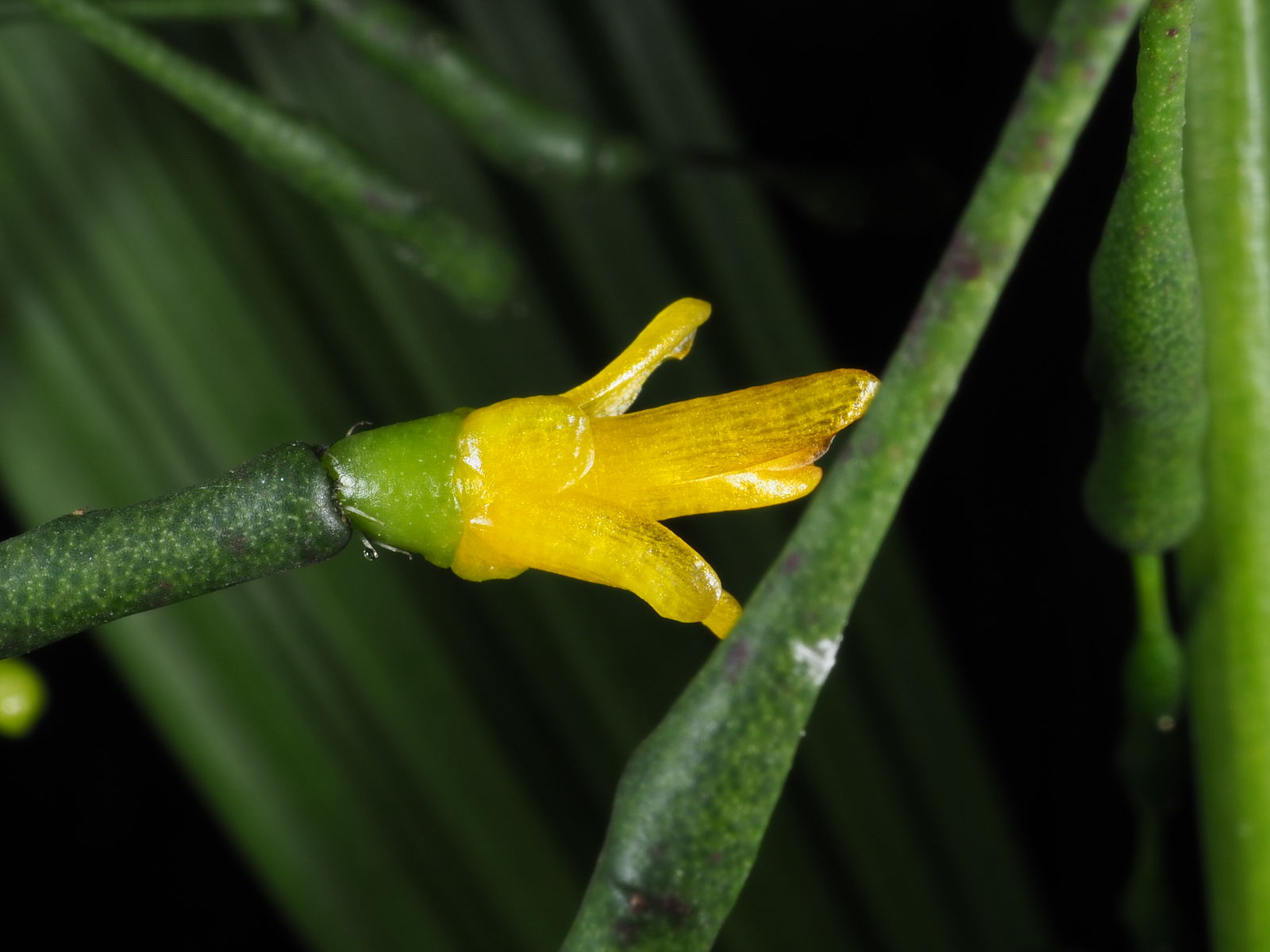 Reference image
Drunkard's Dream
Hatiora salicornoides, belonging to the family Cactaceae, is an unusual, spineless epiphytic cactus species. Known for its distinctively branched, jointed stems, it is commonly referred to as the "Drunkard's Dream", "Bottle Cactus", or "Dancing Bones Cactus" due to the shape of its stem segments.
Originally described by Adrian Hardy Haworth in 1819 as Rhipsalis salicornoides, the species was later reassigned to the genus Hatiora. The specific epithet salicornoides highlights its morphological resemblance to the salt-tolerant genus Salicornia (glasswort) 1.
This species is endemic to eastern and southeastern Brazil, spanning states such as Bahia, Minas Gerais, Rio de Janeiro, and São Paulo 2. It grows primarily in the humid and seasonally dry Atlantic Forests (Mata Atlântica), thriving as an epiphyte on trees or a lithophyte on shaded rocks 1.
Hatiora salicornoides forms a bushy, heavily branched shrub growing up to 1 meter. The green, leafless stem segments are club- or bottle-shaped, measuring 1.5 to 5 cm in length, narrowing at the base. In spring, terminal areoles produce small, bell-shaped flowers of a vibrant yellow to deep orange color.
Unlike desert cacti, this forest epiphyte prefers bright, filtered light and high humidity. It thrives in well-draining, slightly acidic, organic-rich soil mixes containing orchid bark and perlite. Regular watering is required, allowing the medium to dry slightly between waterings.
Overwatering and poorly drained clay soils quickly lead to root rot. Exposure to direct, harsh sunlight causes bleaching and scorching of the delicate segments, while deep shade inhibits blooming and leads to weak, leggy growth.
Bright, filtered light is ideal. Protect from direct, scorching afternoon sun.
Water when the top of the soil feels dry. Never let the roots sit in stagnant water.
Well-aerated, slightly acidic mix with orchid bark, perlite, and peat moss.
Non-toxic and spineless, making it completely safe for households with pets and children.
Easy for growers accustomed to tropical epiphytes like Christmas Cacti.
Endemic to the lush, montane Atlantic rainforests of Eastern Brazil, where it grows naturally on tree canopies and shaded rock faces.
