
Light
Full Sun
Requires full sun, ideally 6+ hours of direct sunlight daily to maintain dense spine growth.
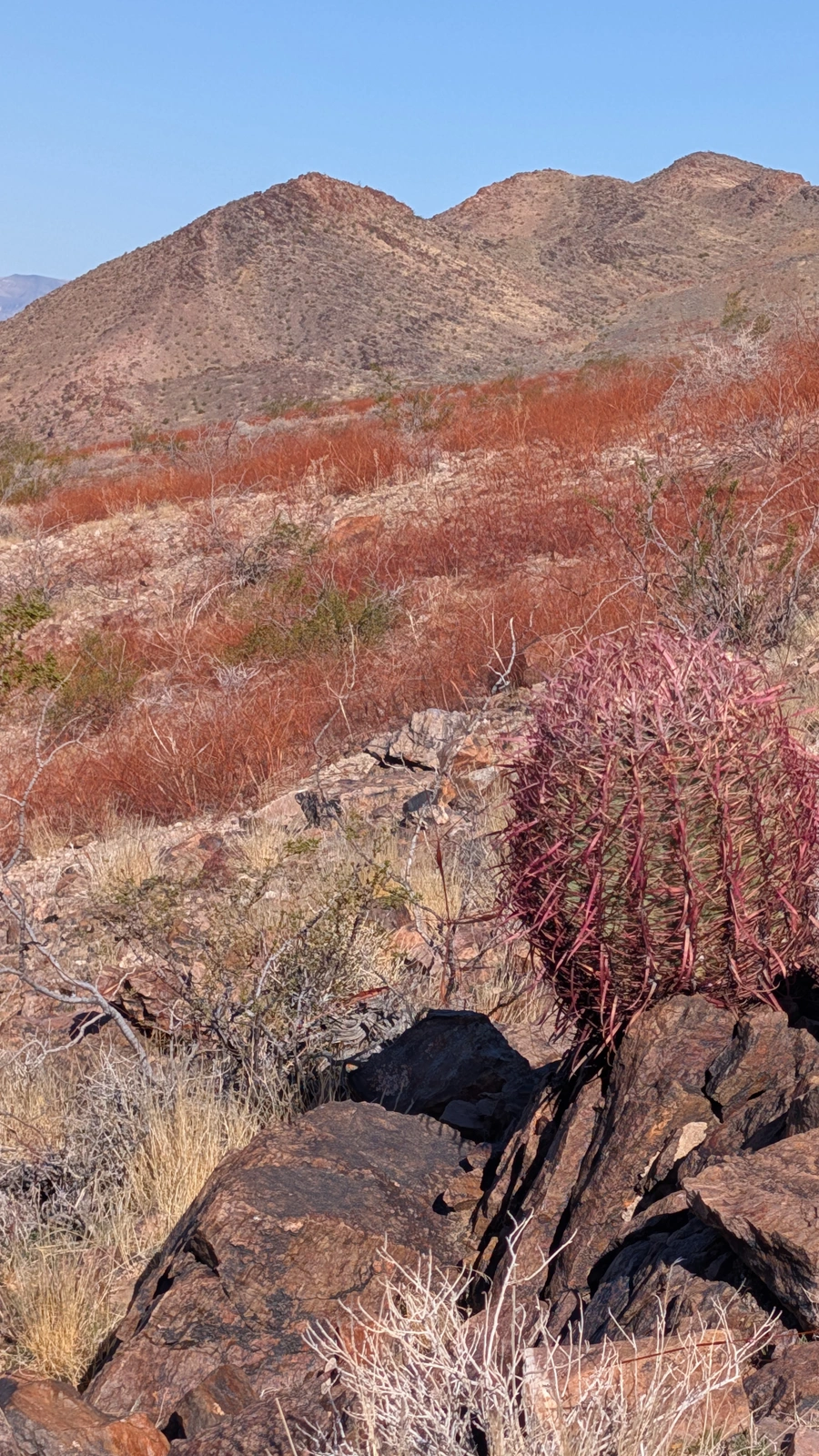 Reference image
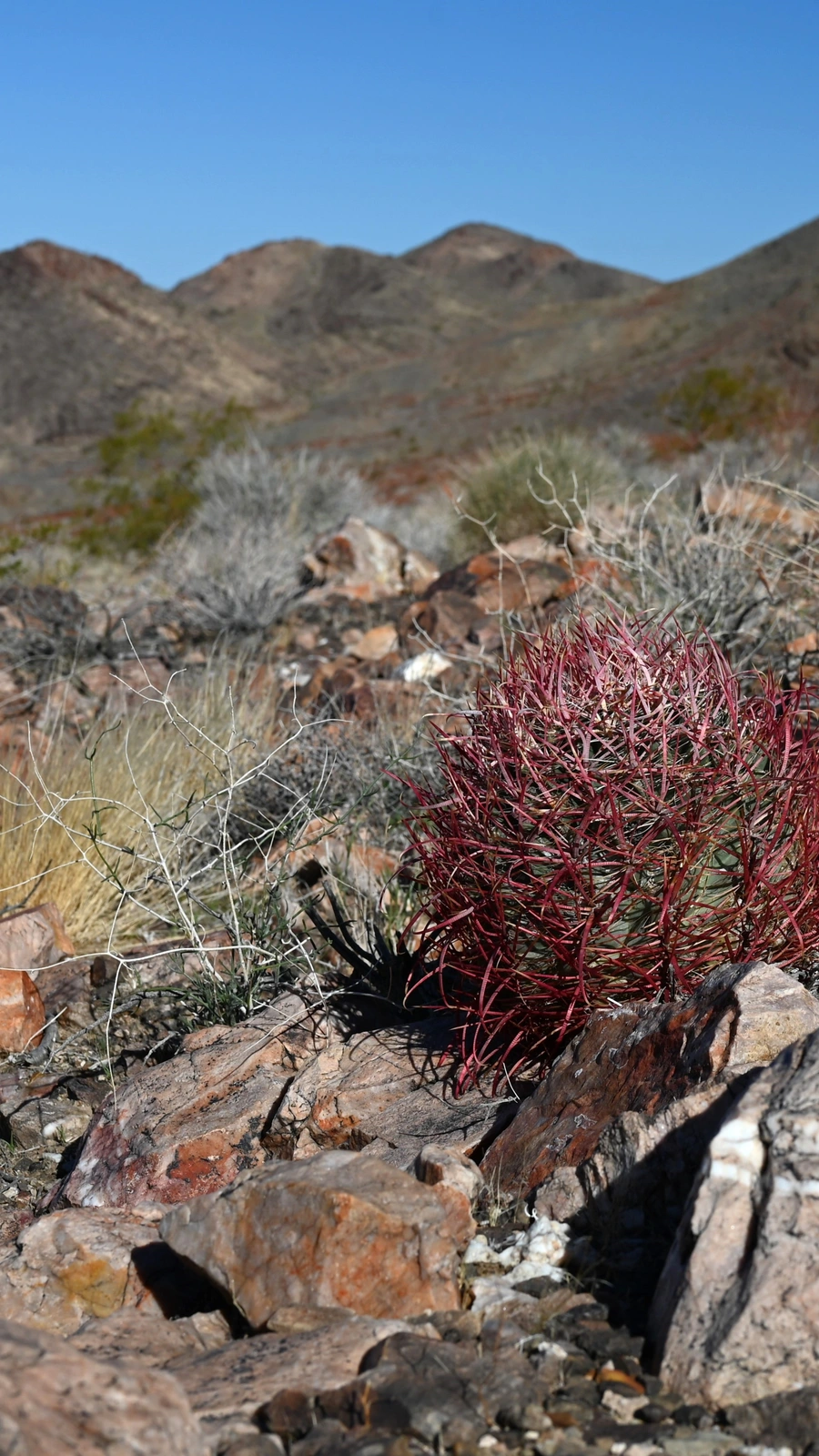 Reference image
Many-Headed Barrel Cactus
Homalocephala polycephala (syn. Echinocactus polycephalus), commonly known as the Many-headed Barrel Cactus, is a slow-growing, heavily spined clumping cactus in the family Cactaceae 1. It is renowned for its extreme drought tolerance.
Historically classified under Echinocactus, recent phylogenetic studies have resurrected the genus Homalocephala for this species. The specific epithet polycephala translates from Greek as "many-headed," describing the plant's characteristic cluster growth 2.
Native to the southwestern United States (California, Nevada, Arizona, Utah) and northwestern Mexico (Sonora, Baja California) 1. It thrives in hyper-arid Mojave and Sonoran desert habitats, on rocky slopes and gravelly bajadas under intense sun.
The stems are globose to cylindrical, growing up to 60 cm tall. Mature specimens form dense mounds of up to 30 or more heads. The plant is heavily armed with thick, ringed, reddish-gray spines that obscure the stem. Funnelform yellow flowers with reddish centers emerge from a dense mass of wool at the stem apex 2.
In cultivation, it demands maximum direct sunlight and an almost entirely mineral-based potting medium. Water should be applied only when the substrate is bone dry. If kept completely dry during winter, it possesses notable frost tolerance down to -10°C.
Overwatering is the primary cause of failure, quickly leading to root and stem rot. Placing the plant in low-light environments causes etiolation, weak spine growth, and compromises the plant's structural integrity 1.
Requires full sun, ideally 6+ hours of direct sunlight daily to maintain dense spine growth.
Allow soil to dry out 100% between waterings. Strictly avoid water in winter.
Inorganic-dominant mix containing pumice, lava rock, and coarse sand.
Features extremely sharp, rigid spines. Handle with heavy-duty leather gloves.
Moderate difficulty due to strict watering and light requirements.
Naturally distributed across the extremely dry, gravelly plains and rocky hillsides of the Mojave and Sonoran deserts.
