
Light
Full Sun
Needs at least 6 hours of direct sunlight daily. Low light results in loss of shape and vigor.
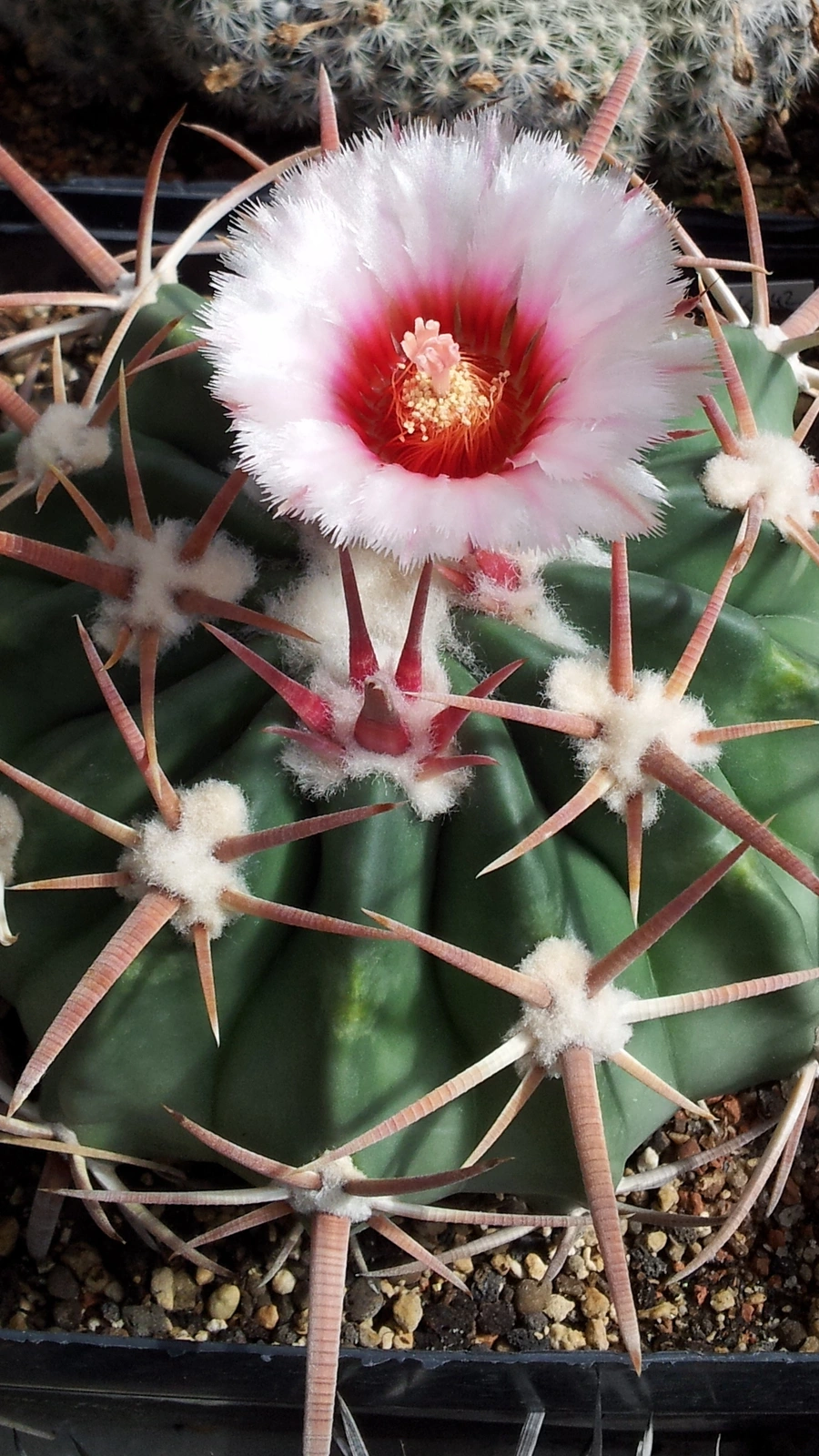 Reference image
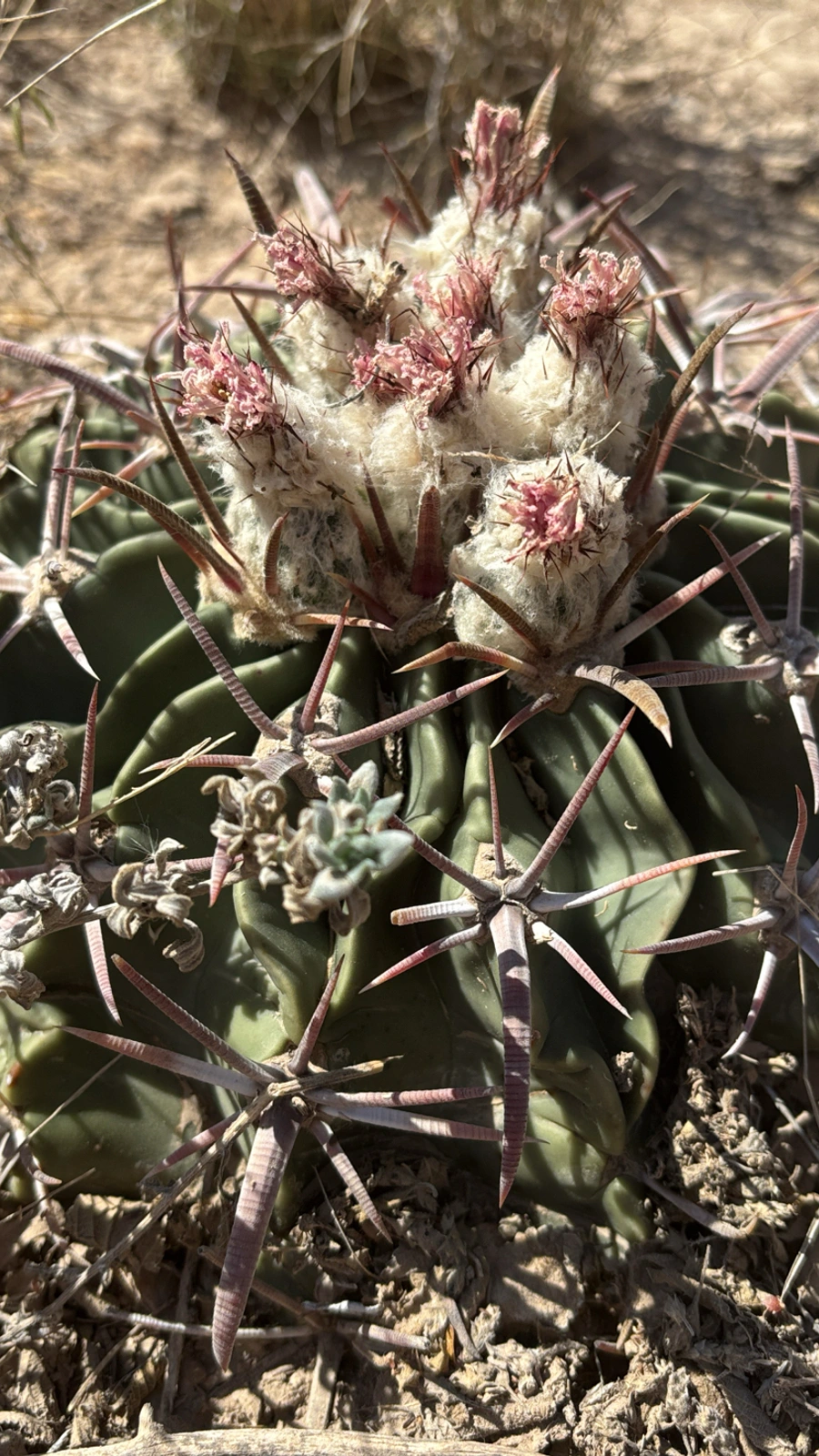 Reference image
Horse Crippler Cactus
Homalocephala texensis, commonly known as the Horse Crippler or Devil's Head cactus, is a robust, globose cactus species belonging to the family Cactaceae 1. It is infamous for its incredibly stiff, heavy spines that can easily puncture the hooves of livestock.
Originally described by George Engelmann in 1845 as Echinocactus texensis, recent phylogenetic analyses have placed it within the reinstated genus Homalocephala based on distinct seed morphology and rib structures 2.
This species is native to the arid desert grasslands and dry shrublands of Texas, New Mexico, and northeastern Mexico 1. It thrives in limestone soils, alluvial plains, and rocky slopes at low to moderate elevations.
The plant body is solitary, low-growing, and highly flattened-globose, reaching up to 30 cm in diameter. It features 13 to 27 prominent ribs. The stout, heavily ringed, slightly curved spines are pinkish-grey to brown. In late spring, it produces beautiful, funnel-form pinkish-white flowers with feathered margins, followed by striking bright red, fleshy ornamental fruits 2.
This cactus requires full sun exposure and extremely well-drained soil. Watering should be infrequent, allowing the substrate to dry out completely. During winter dormancy, watering must be suspended entirely. It is remarkably cold-hardy, surviving temperatures as low as -15°C if kept completely dry.
Overwatering and the use of heavy, moisture-retentive soils are the leading causes of root rot and plant loss. Insufficient light leads to etiolation, weak spine development, and lack of flowers 1.
Needs at least 6 hours of direct sunlight daily. Low light results in loss of shape and vigor.
Water only when the substrate is fully bone-dry. Stop watering completely in winter.
Requires very porous soil with high grit, pumice, and sand content to prevent moisture retention.
Possesses extremely heavy, sharp spines that can cause severe puncture wounds. Handle with thick leather gloves.
Relatively easy for collectors who understand strict dry-winter dormancy and sun requirements.
Naturally occurs in dry grasslands, plains, and rocky hillsides of Texas, New Mexico, and northeastern Mexico, especially on limestone substrates.
