
Light
Full Sun
Thrives in full sun, requiring hours of direct sunlight daily.
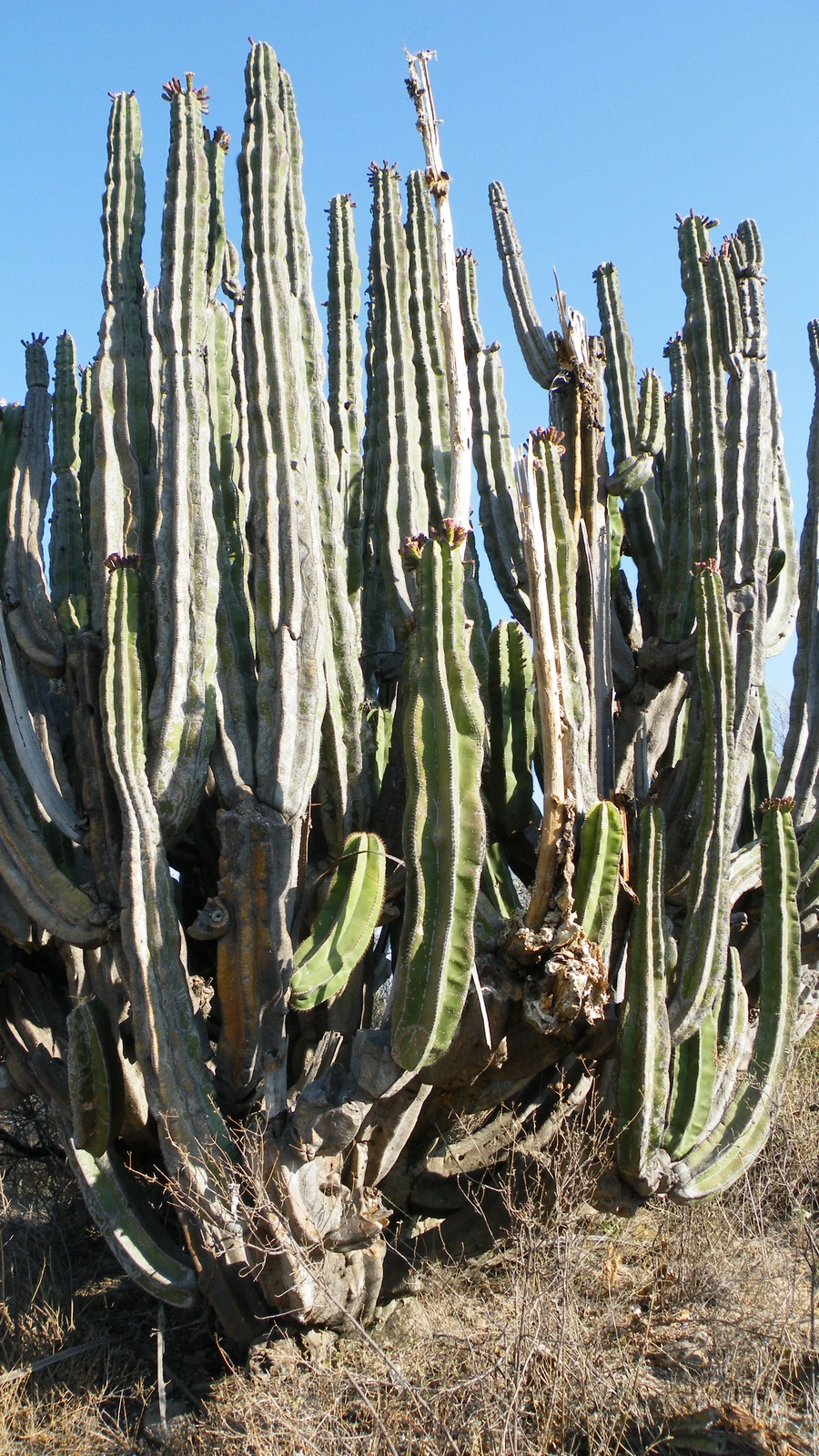 Reference image
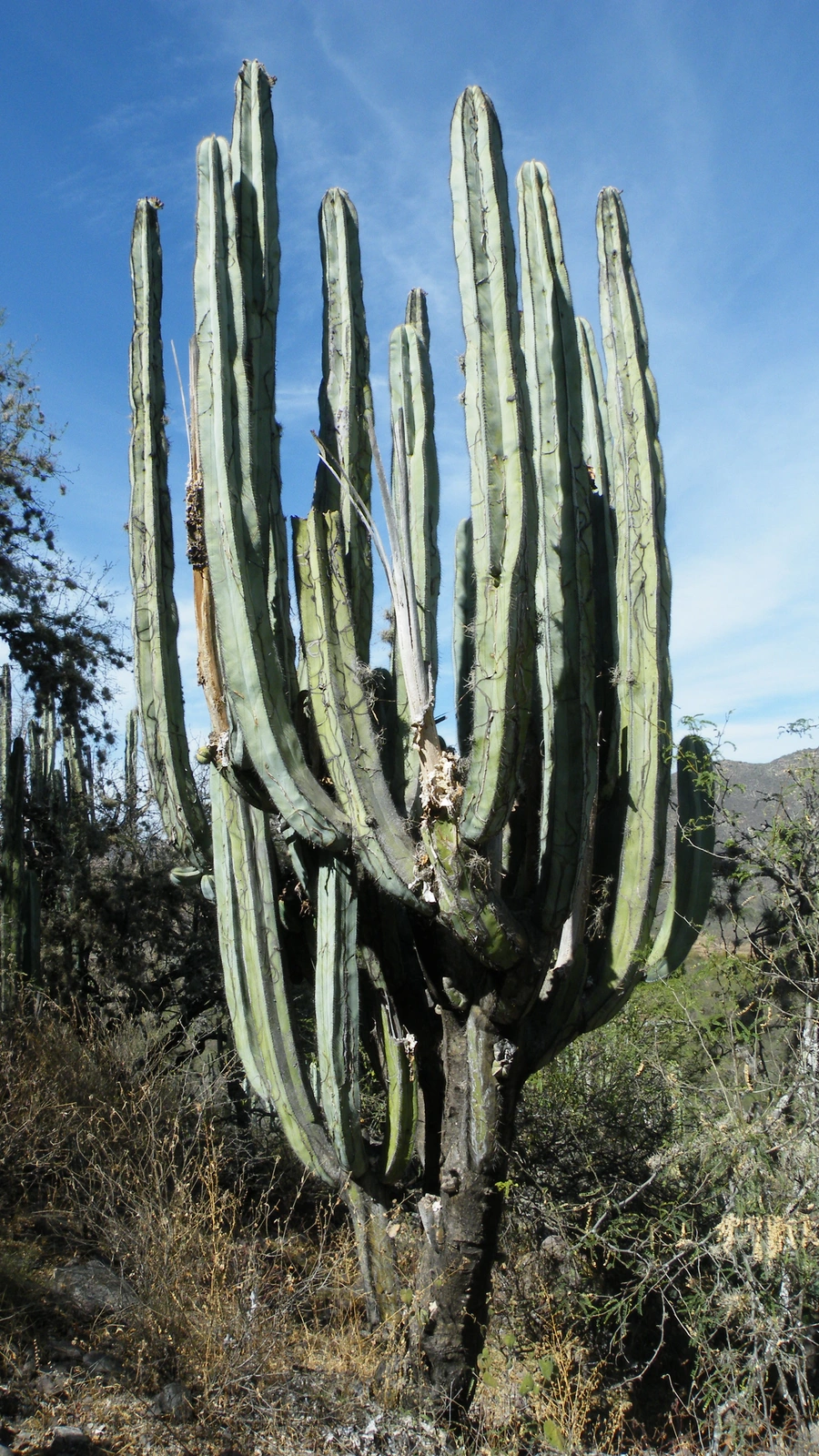 Reference image
Candelabra Cactus
Isolatocereus dumortieri is a majestic, tree-like columnar cactus belonging to the family Cactaceae. Known for its bluish-green stems and dense spines, this species can reach massive, tree-like dimensions in its natural habitat, making it a dramatic architectural plant 1.
Originally described as Cereus dumortieri by Scheidweiler in 1855, it was later placed into the genus Isolatocereus by Curt Backeberg 2. It is commonly known as the Candelabra Cactus due to its striking, multi-branched growth habit that resembles a candelabrum.
This species is native to central and southern Mexico, with populations documented in states such as Hidalgo, Querétaro, Guanajuato, Guerrero, Michoacán, and Oaxaca 1. It thrives in dry deciduous forests, arid shrublands, and on steep rocky slopes at elevations up to 2,000 meters above sea level.
Isolatocereus dumortieri forms a short trunk from which numerous upright branches emerge. The stems are pale green to glaucous-blue with 6 to 11 deep ribs. Close-set areoles bear sharp, yellowish to brownish needle-like spines that turn grey as they age. Small, funnel-shaped, nocturnal flowers of a greenish-white hue appear in late spring 2.
In cultivation, it requires full sun and exceptionally well-draining mineral soil. Watering should be done thoroughly during the active summer growth period, allowing the soil to dry out completely in between. Keep completely dry and cool during winter dormancy.
Overwatering and compact, clay-heavy soils are the leading causes of root rot 1. Lack of adequate direct sunlight leads to etiolation, where the stems stretch and lose their robust form.
Thrives in full sun, requiring hours of direct sunlight daily.
Allow soil to dry out completely. Keep bone dry during the winter.
Requires highly porous, sandy mineral substrate with excellent drainage.
Non-toxic to pets, but has sharp, needle-like spines that can cause physical injury.
Moderate. Easy if provided with enough sun and spared from overwatering.
Hailing from the arid valleys and dry deciduous forests of central and southern Mexico, where it grows on rocky slopes under intense sun.
