
Light
Bright Indirect Light
Requires at least 5-6 hours of bright indirect sunlight or slightly filtered sun daily.
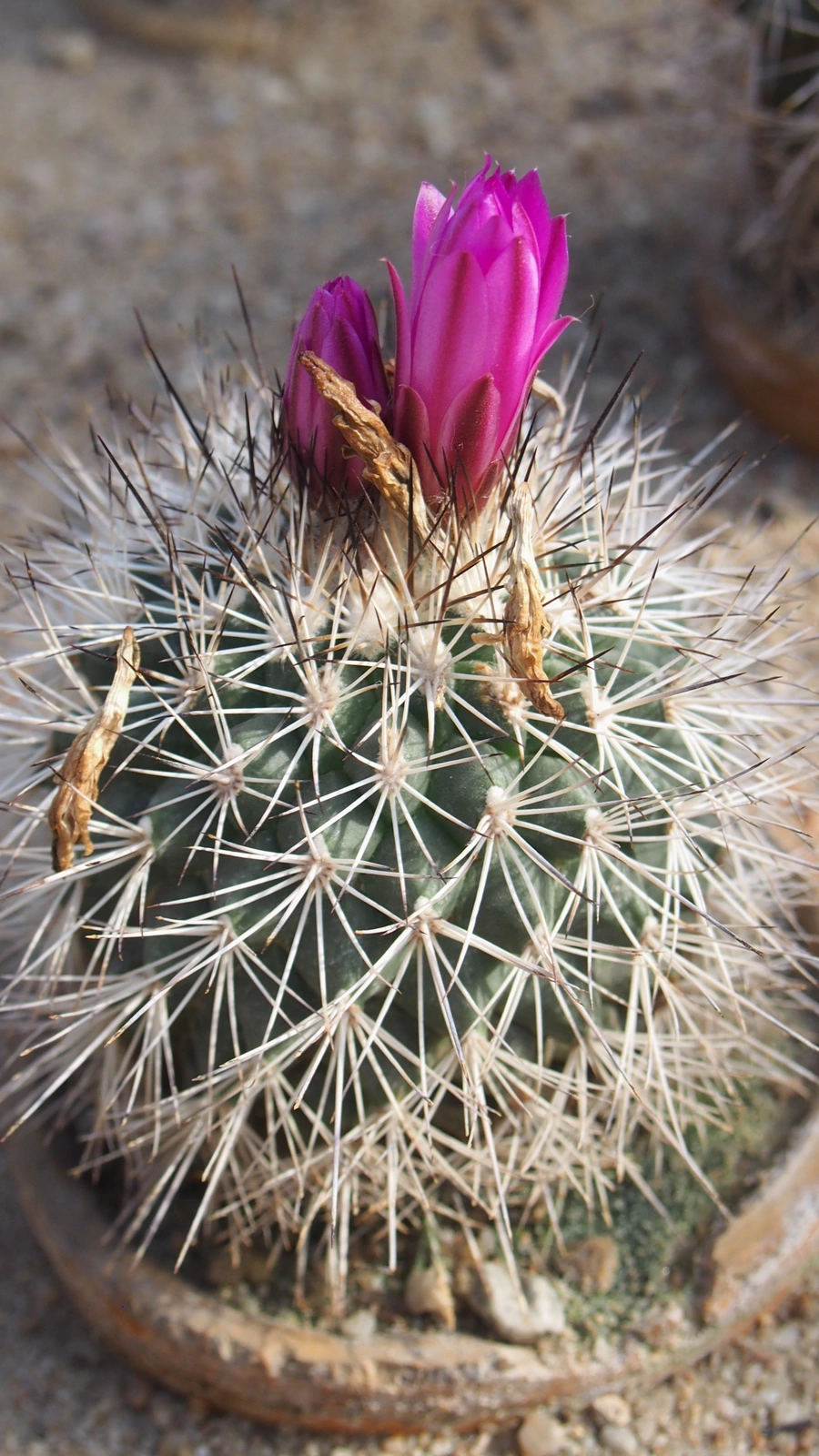 Reference image
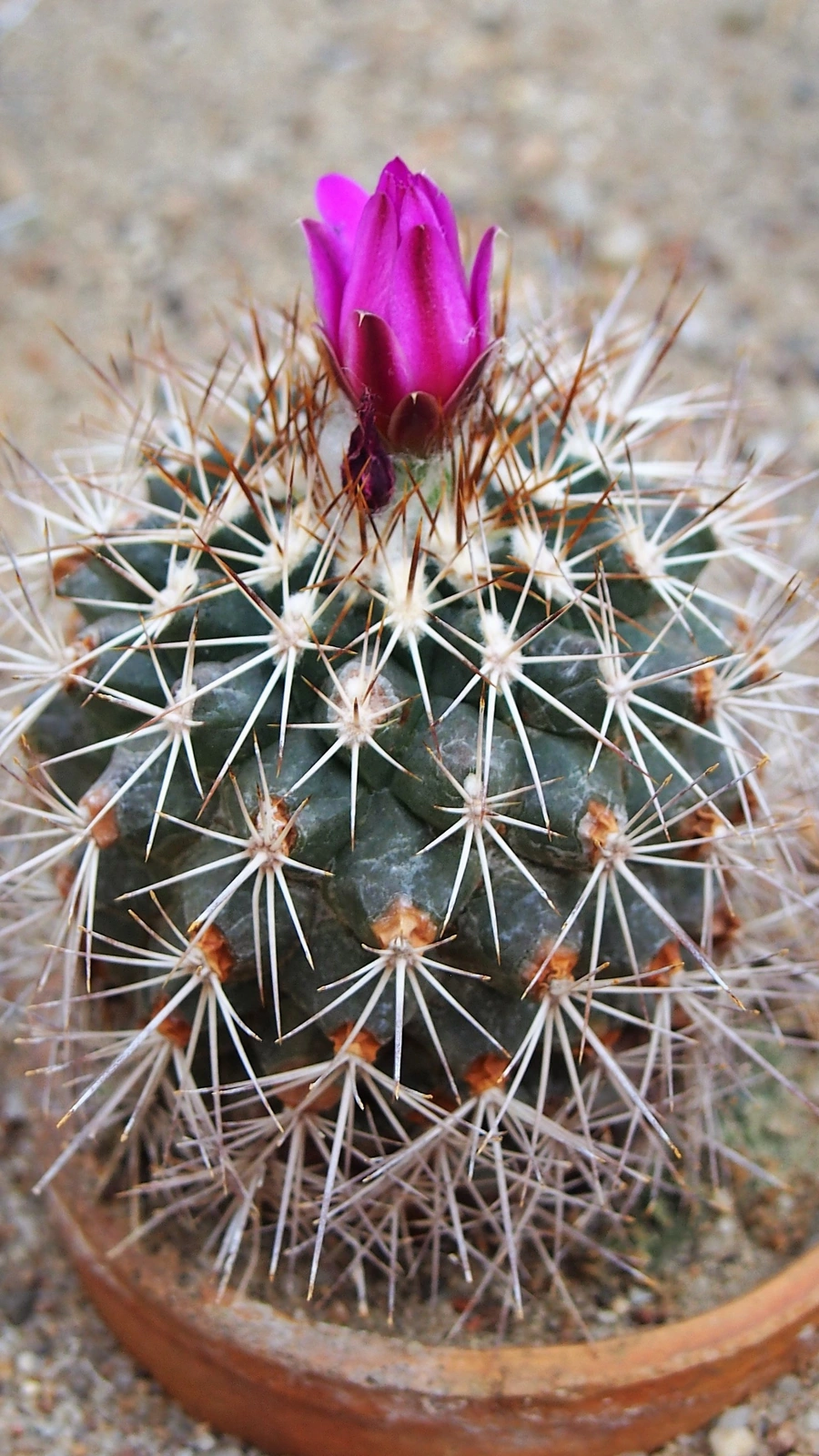 Reference image
White-spined Kadenicarpus
Kadenicarpus horripilus (synonym: Turbinicarpus horripilus) is a small-growing, highly ornamental cactus species belonging to the Cactaceae family 1. Highly sought-after by collectors for its striking spination and vibrant flowers, this species is unfortunately threatened in its native habitat due to land degradation and illegal collection.
Originally described under the genus Mammillaria as M. horripila, subsequent morphological and molecular studies relocated it to Turbinicarpus, and later to the resurrected genus Kadenicarpus 2. The specific epithet horripilus translates from Latin to "bristly" or "standing on end," reflecting the dense, rigid spines that cover its stem.
This species is endemic to Mexico, with localized populations in the states of Hidalgo, Querétaro, and San Luis Potosí 3. It thrives on steep limestone cliffs, rocky slopes, and semi-arid scrublands within desert biomes, often growing in cracks where organic matter accumulates.
The plant body is globose to shortly cylindrical, with a bluish-green epidermis divided into prominent tubercles. Each areole bears numerous radiating white-to-gray spines with darker brown tips. In spring and summer, showy, bright magenta to pink flowers emerge from the plant's apex, creating a beautiful contrast.
In cultivation, it requires an extremely porous, mineral-based substrate 2. Water should be applied only when the soil is completely dry during the growing season, and withheld entirely during the winter. It demands bright, filtered sunlight to retain its compact shape and produce dense spines.
The most prevalent error is using standard potting soil that retains too much moisture, leading to rapid root rot. Insufficient sunlight causes the plant to stretch (etiolate), weakening its structure and preventing flower formation.
Requires at least 5-6 hours of bright indirect sunlight or slightly filtered sun daily.
Water thoroughly when the soil is completely dry in summer; keep completely dry in winter.
Highly gritty mineral mix with limestone, pumice, and sand. Avoid heavy peat.
Non-toxic to pets, but possesses sharp, rigid spines that can cause minor injuries.
Moderate. Requires strict watering discipline and a proper mineral-heavy soil mix.
Native to the semi-arid, limestone-rich rocky terrains and steep canyons of central and northern Mexico.
