
Light
Filtered Sun
Prefers plenty of bright, filtered sunlight; protect from harsh direct afternoon sun.
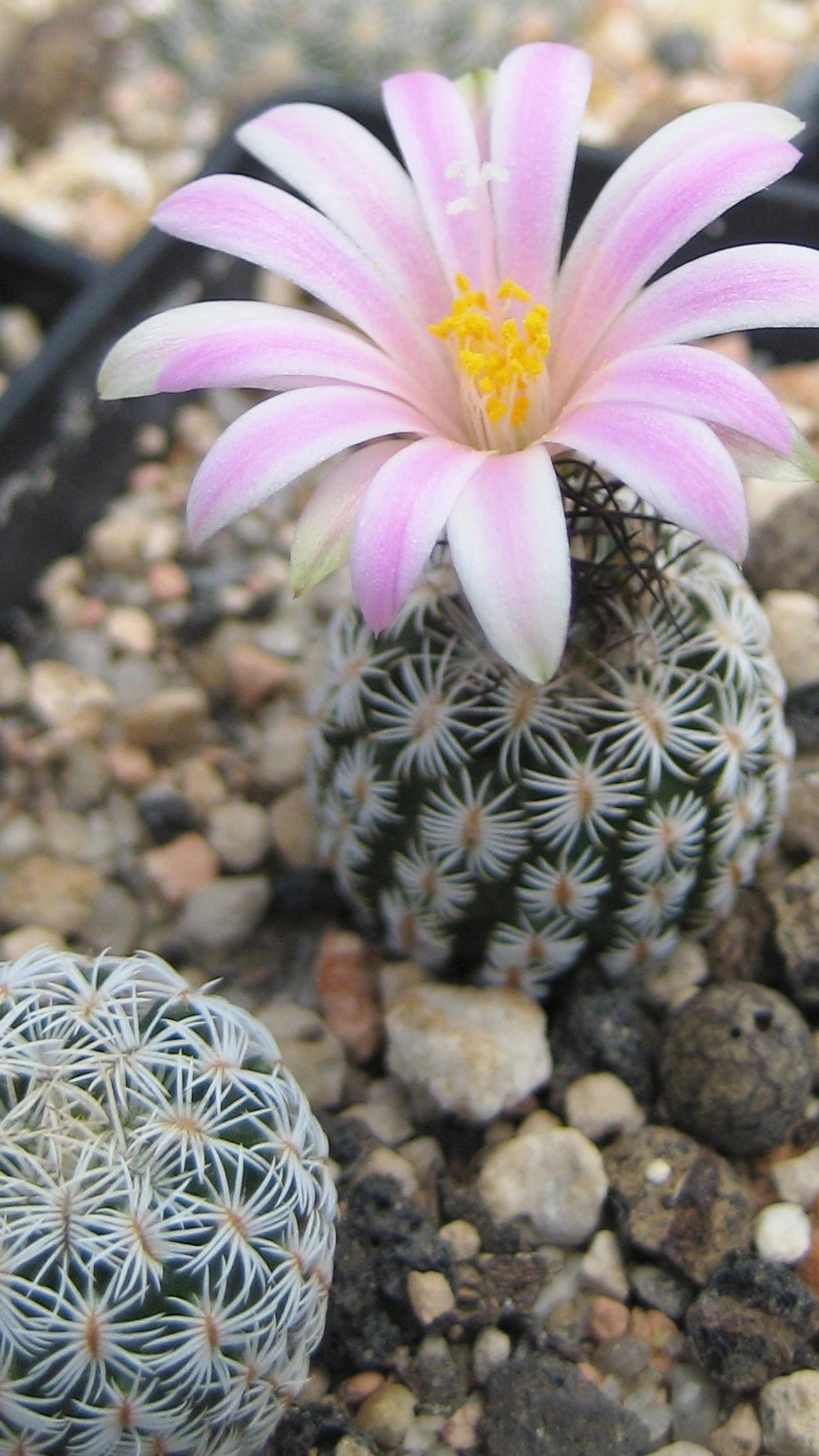 Reference image
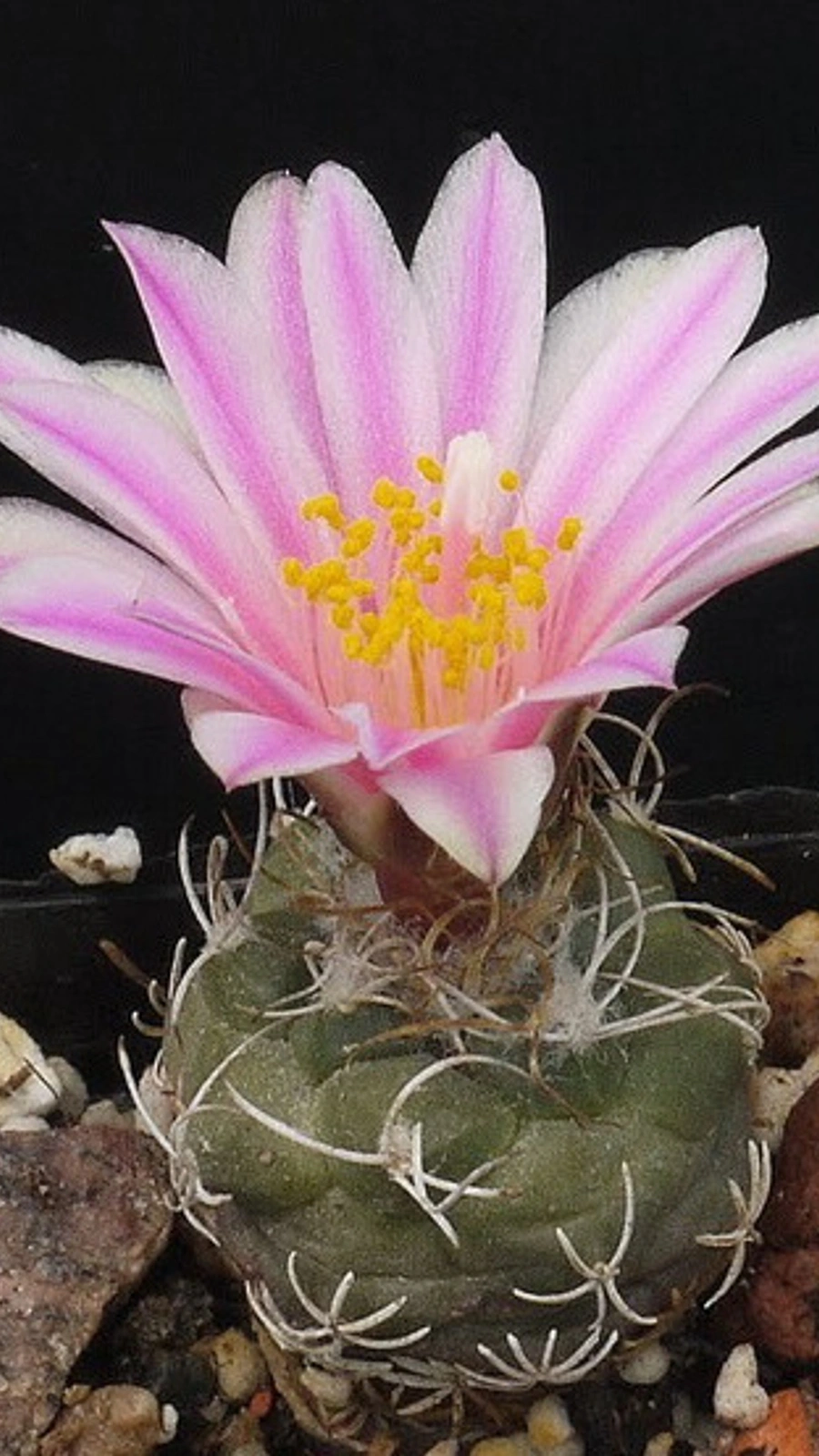 Reference image
Kadenicarpus pseudomacrochele is a highly prized, miniature, globose cactus species belonging to the Cactaceae family 1. Known for its extremely slow growth rate and unique appearance, this species is a jewel among succulent collectors.
Historically classified under the genus Turbinicarpus as Turbinicarpus pseudomacrochele, recent molecular and morphological analyses have placed it into the separate genus Kadenicarpus 2.
Endemic to the Mexican states of Hidalgo and Querétaro, it grows in semi-arid desert shrublands, restricted to limestone rock crevices 1. Due to illegal wild-collecting and urban pressure, it is listed as Critically Endangered (CR) on the IUCN Red List.
The stem is globose to shortly cylindrical, greyish-green, with distinct low tubercles. The spines are soft, paper-like or bristly, often twisted and not sharp to the touch. It produces attractive, funnel-shaped flowers in shades of pale pink, magenta, or white at the apex during spring and summer.
This species demands highly specialized cultivation. It requires a strictly mineral-based substrate to prevent moisture retention. Watering must be done sparingly during the growing season and withheld entirely during winter dormancy.
Using standard organic peat soils and watering during winter are the leading causes of root rot, which rapidly destroys the sensitive taproot of this slow-growing species 2.
Prefers plenty of bright, filtered sunlight; protect from harsh direct afternoon sun.
Water only when the substrate is completely dry. Keep absolutely dry during winter dormancy.
Requires a strictly mineral, non-peat based soil mix containing pumice, gravel, and limestone.
Non-toxic, but features soft, hair-like spines that should be handled gently.
Moderate to hard due to high sensitivity to overwatering and root rot.
Native to the high-elevation rocky slopes and limestone crevices of central Mexico, primarily within the states of Hidalgo and Querétaro.
