
Light
Full Sun
Requires full sun and bright direct light for proper stem growth.
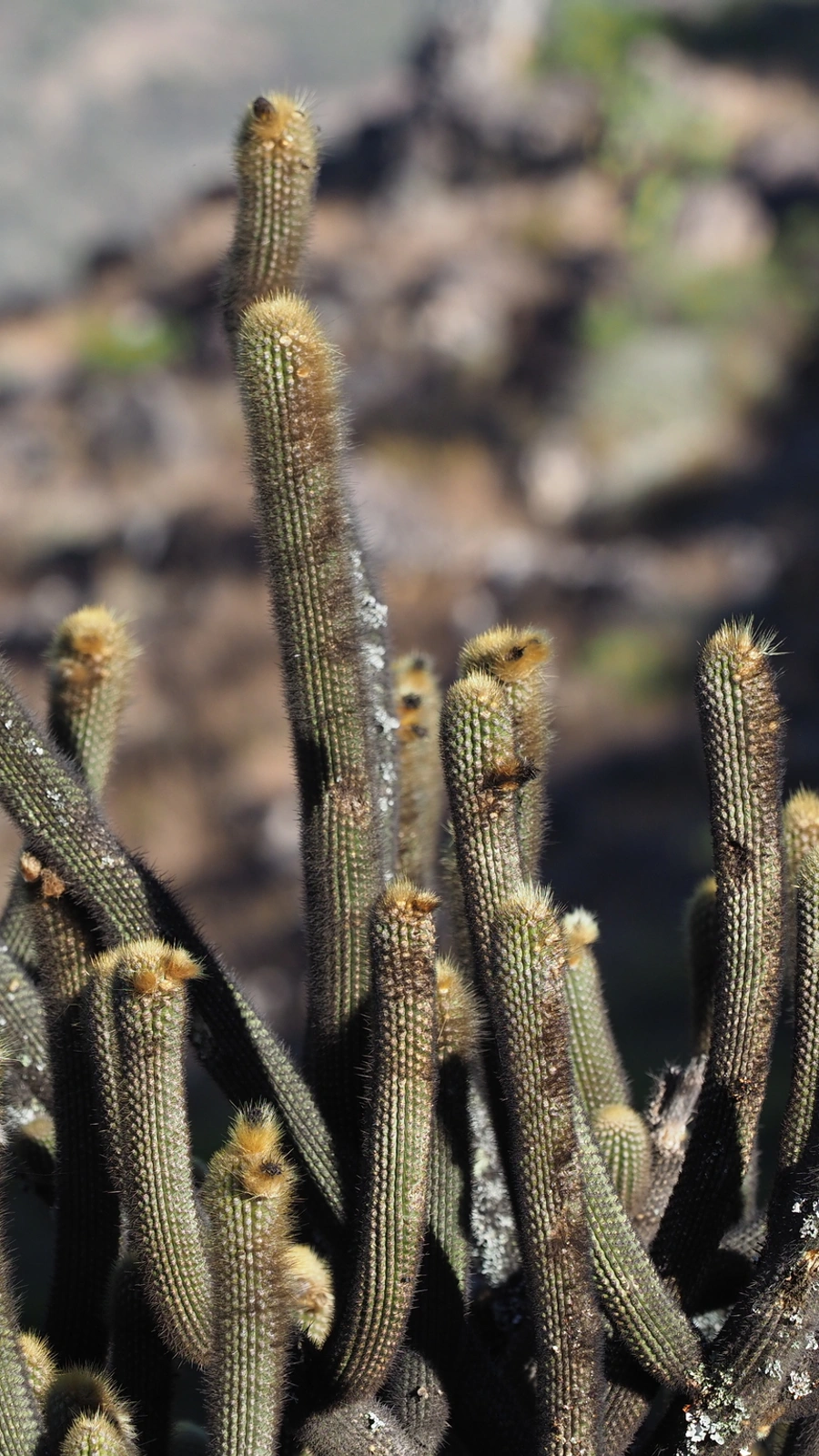 Reference image
Rock-Loving Lasiocereus
Lasiocereus rupicola is a rare, arborescent columnar cactus belonging to the Cactaceae family. Known for its rock-dwelling habit and woolly stem details, it represents a unique architectural element in succulent collections.
Belonging to the genus Lasiocereus, the specific epithet rupicola translates from Latin as 'dwelling among rocks.' The genus name refers to the woolly (lasio) appearance of its flowering parts and stems, which distinguishes it from related columnar cacti 1.
This species is native to Western South America, particularly restricted to the arid and rocky slopes of Peru. It thrives in desert or dry shrubland biomes, adapting to severe drought and poor mineral soils 2.
It grows as a succulent, semi-woody tree with ribbed stems. The rib margins are adorned with distinct, densely felted or woolly areoles. Night-blooming, tubular white to cream flowers emerge from these woolly structures during the growing season.
In cultivation, Lasiocereus rupicola requires an extremely porous substrate, high sun exposure, and careful watering. Provide deep but infrequent watering during spring and summer. Keep completely dry in winter, maintaining a minimum temperature above 5°C.
The most prevalent failure is root rot caused by waterlogged soil or poor drainage. Inadequate solar radiation results in etiolation, causing the stems to stretch, weaken, and lose their beautiful woolly characteristics.
Requires full sun and bright direct light for proper stem growth.
Water thoroughly only when dry; keep dormant and dry in winter.
Mineral-rich, sandy, and porous cactus soil with plenty of pumice.
Non-toxic, but the woolly areoles can contain tiny, irritating glochids or spines.
Moderately easy if overwatering is strictly avoided.
Found natively on the steep, barren cliffs and rocky slopes of Peru, adapting perfectly to extreme dry seasons and rocky terrains.
