
Light
Full Sun
Requires full, direct sunlight for several hours daily.
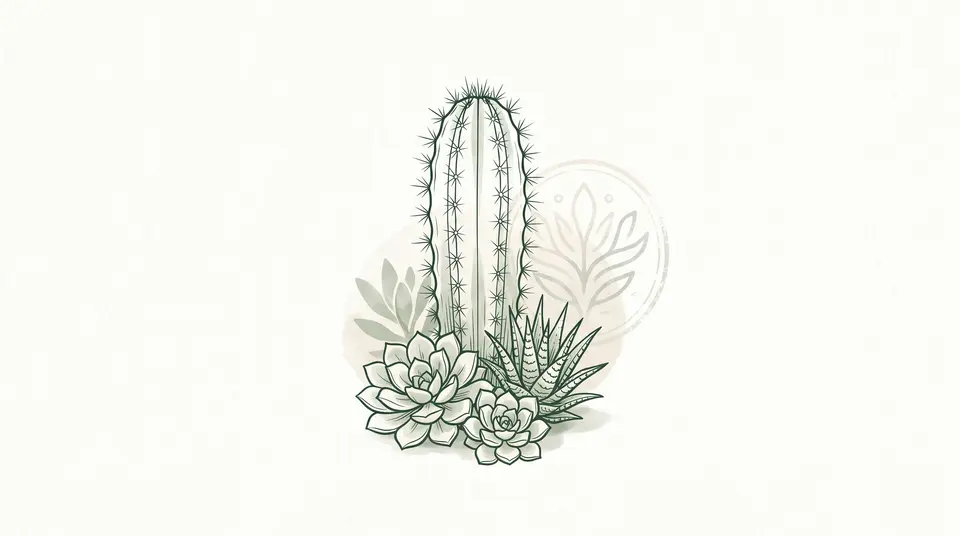 Reference image
Sword-Spined Lemaireocereus
Lemaireocereus gladiger is a striking columnar cactus belonging to the Cactaceae family 1. It is characterized by its dramatic, rigid spines and robust growth habit, suited to arid and semi-arid landscapes.
Historically classified under the genus Lemaireocereus, the specific epithet gladiger translates from Latin to mean 'sword-bearing,' referencing the large, flat, and sharp spines that guard its ribs 2. It shares close affinity with the Stenocereus complex.
This species is native to the arid valleys and scrublands of Mexico 1. It thrives on steep slopes, rocky volcanic soils, and limestone outcrops where water drainage is instantaneous.
The plant develops an erect, cylindrical green stem with prominent, deep ribs. Prominent areoles hold thick, sword-like greyish-white spines. Mature specimens may branch from the base and produce nocturnal, creamy-white flowers near the growing tips 2.
In cultivation, it requires full sun exposure and extremely porous potting media. Watering must be managed carefully, allowing the soil to dry out completely between sessions. It is frost-sensitive and must be kept dry during winter.
Overwatering in low-temperature periods is the primary cause of root and stem rot. Insufficient sunlight results in weak, thin growth (etiolation), which permanently disfigures the column.
Requires full, direct sunlight for several hours daily.
Allow soil to dry out 100% before watering again.
Gravelly, fast-draining cactus mix with low organic matter.
Highly dangerous spines; handle with extreme caution.
Moderate, demanding strict watering discipline and high light.
Native to the arid regions and volcanic slopes of Mexico, growing in mineral-rich, limestone-heavy environments.
