
Light
Full Sun
Requires full sun or direct bright light. Best placed on south-facing windows or outdoor patios.
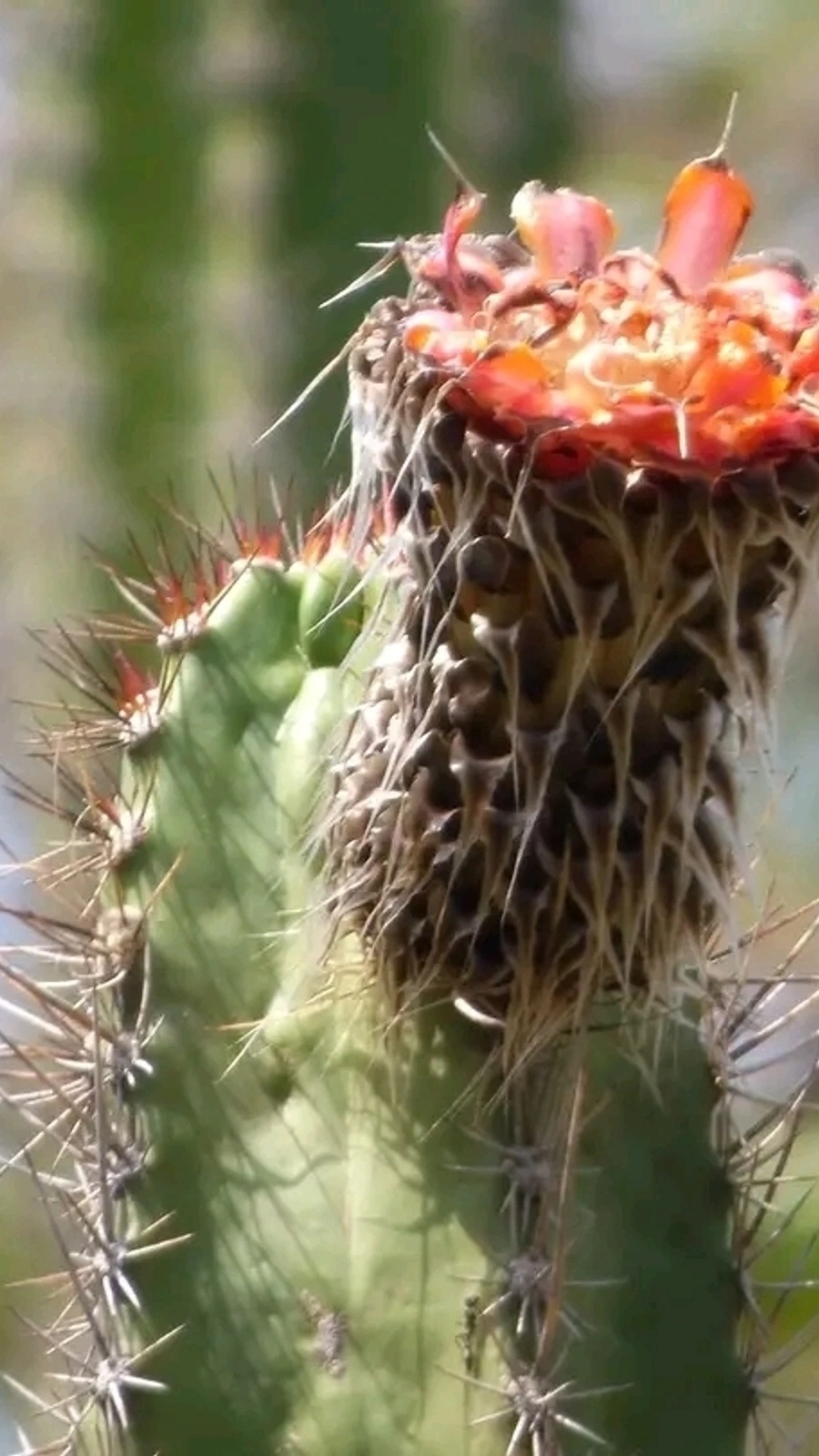 Reference image
Scaly-flowered Columnar Cactus
Lemaireocereus lepidanthus is a striking, slow-growing columnar cactus that develops a shrubby or treelike habit in its natural environment 1. Known for its impressive rib structure and unique scaly flowers, this species is highly prized by succulent collectors worldwide.
Originally described as Cereus lepidanthus, the species has undergone several taxonomic revisions, being placed in Pachycereus before modern consensus accepted its position within Lemaireocereus 2. The specific epithet 'lepidanthus' refers to the scaly appearance of the floral bracts.
This species is native to Central America, primarily found in dry valleys of Guatemala and Honduras 1. It thrives in seasonally dry tropical biomes, typically growing on rocky slopes and shallow, well-draining soils at elevations between 200 and 800 meters.
In the wild, Lemaireocereus lepidanthus can reach heights of up to 4 meters, branching mainly from the base to form a candelabra-like structure. The stems are light green to yellowish-green with prominent ribs. Large, woolly areoles bear sharp, yellowish-brown spines. The nocturnal flowers are yellowish-cream, featuring distinctive scaly scales on the outer tube 2.
This cactus requires full sun exposure and warm temperatures to thrive. A gritty, mineral-heavy potting substrate with low organic matter is crucial. Water thoroughly only when the soil is completely dry, and suspend watering during the cold winter dormancy period.
Overwatering and poor drainage are the leading causes of root rot and plant loss 1. Keeping the plant in dark, unventilated indoor spaces will cause etiolation and weaken its immune system.
Requires full sun or direct bright light. Best placed on south-facing windows or outdoor patios.
Water deeply in summer once soil dries out completely. Keep completely dry in winter.
Highly porous mineral mix with pumice, grit, and very little organic peat.
Equipped with sharp spines. Keep away from pets and small children to prevent injury.
Moderate. It is very easy to care for if watering is strictly controlled and light is abundant.
Discovered in the arid and semi-arid valleys of Central America, specifically within rocky slopes of Guatemala and Honduras.
