
Light
Bright Indirect Light
Prefers bright, indirect light; keep away from harsh direct midday sun.
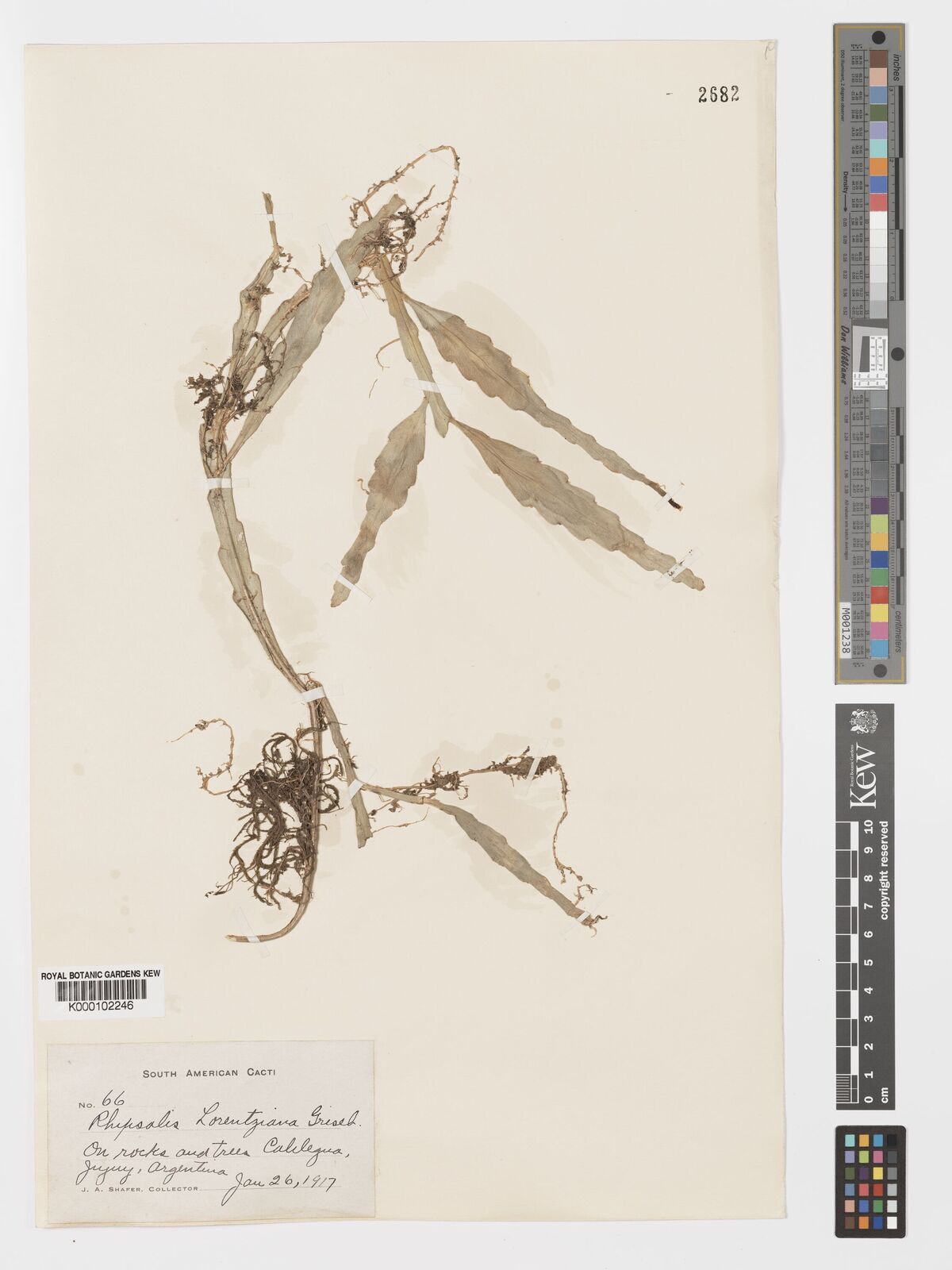 Reference image
Lorentz's Lepismium
Lepismium lorentzianum is a hanging, epiphytic cactus belonging to the Cactaceae family 1. Thriving naturally on tree trunks without soil, this plant serves as an excellent, low-maintenance choice for indoor hanging baskets.
Originally classified under the genera Rhipsalis and Pfeiffera, this species is currently accepted under the genus Lepismium by modern taxonomists 2. The specific epithet "lorentzianum" honors the German-Argentine botanist Paul Günther Lorentz.
It is native to the seasonally dry tropical forests of Bolivia and northwestern Argentina 1. In its natural habitat, it grows epiphytically on tree forks or lithophytically in rocky crevices.
The stems are flat or occasionally 3 to 4-angled, with wavy (crenate) margins and a bright green color. The areoles lack significant spines, making it smooth and safe to handle. Small, bell-shaped, creamy-white or pale yellow flowers bloom in late winter or spring, followed by spherical, purplish-black decorative berries 2.
It thrives in bright, indirect light, mimicking the filtered canopy of its natural habitat. Because of its epiphytic nature, it requires a highly porous, chunky soil mix containing orchid bark and perlite. Water thoroughly once the top layer of the substrate dries out.
Overwatering leading to root rot is the most common issue. Conversely, extremely low humidity and prolonged drought can cause the stems to shrivel and lose their vigor.
Prefers bright, indirect light; keep away from harsh direct midday sun.
Allow the top half of the potting soil to dry out before watering again.
Requires an airy epiphyte mix with orchid bark, perlite, and peat.
Non-toxic to pets and humans, and lacks any sharp, dangerous spines.
Highly resilient and easy to grow if not overwatered.
Native to the humid, seasonally dry subtropical forests of Bolivia and northern Argentina, growing on tree canopies.
